
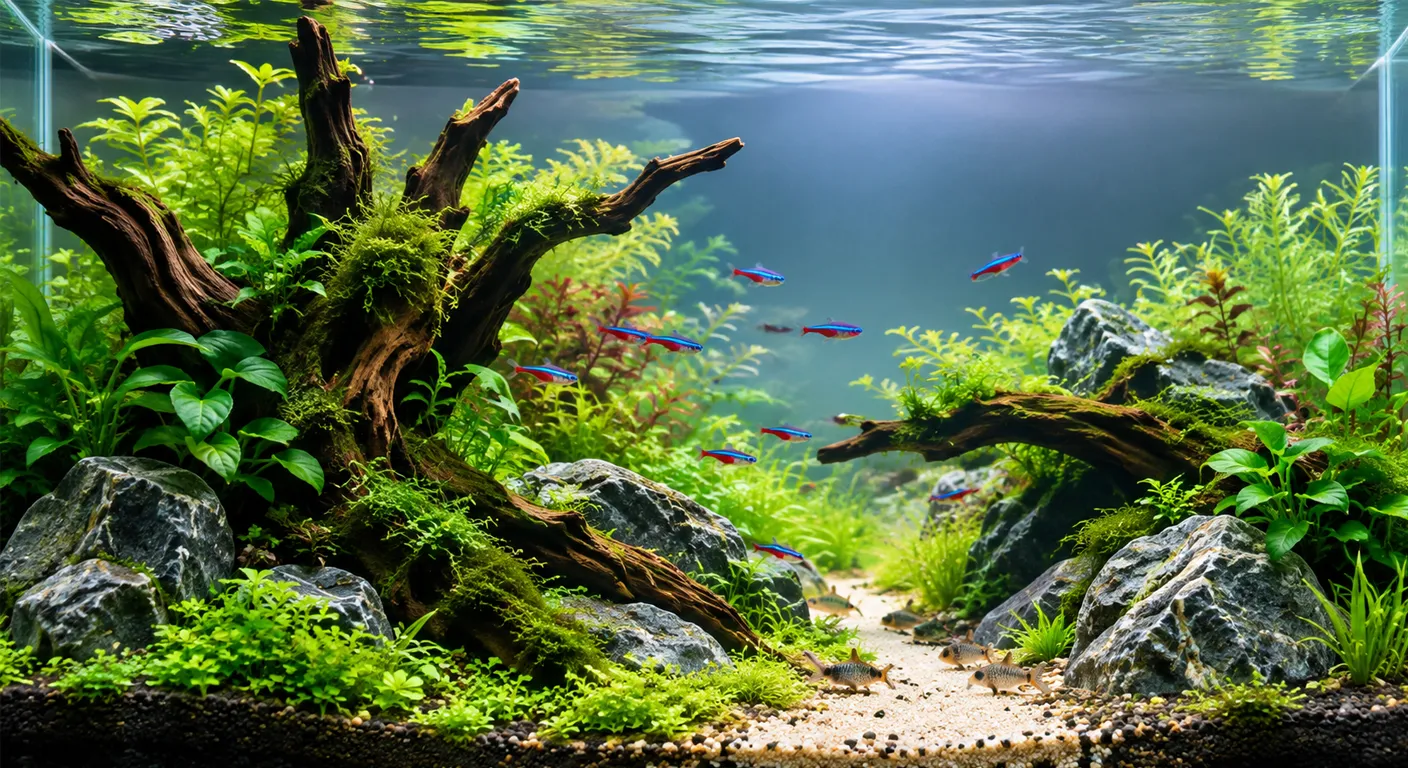
A beautiful aquascape is more than a collection of rocks, driftwood, and plants that happen to look good together. Every material you place in a tank interacts with the water in some way, and that interaction affects fish comfort, plant health, and long-term stability. Choose elements purely on appearance, and you can end up with a pH swing that stresses your fish, a piece of driftwood that refuses to sink, or a layout with nowhere for shy species to hide.
This guide breaks down the four core elements of aquascaping: hardscape, substrate, plants, and layout. You will learn how to choose and combine them so the finished tank is not just attractive but also practical and healthy for the animals living in it.
What Is Aquascaping? The Four Core Elements
Aquascaping is the practice of designing a tank’s underwater landscape using natural materials instead of plastic ornaments or generic decorations. Done well, it mimics a slice of a riverbed, a lakeshore, or a forest floor, giving fish an environment that feels closer to their natural habitat.
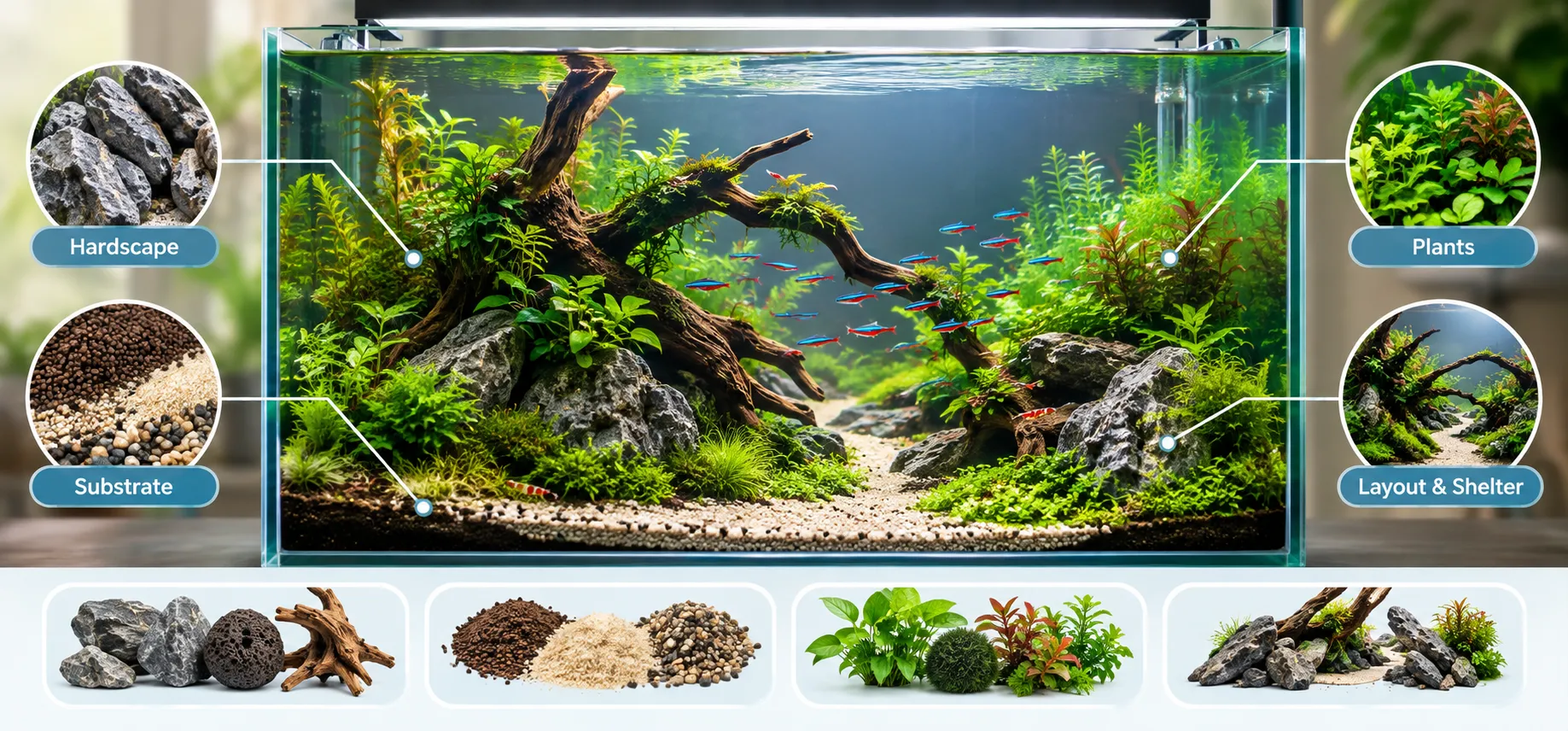
The four elements covered in this guide are hardscape (rocks and driftwood), substrate, plants, and layout and shelter. Each plays a role in how the tank looks, but each also plays a role in water chemistry and fish welfare. That distinction matters more than most beginners realize. A rock that looks perfect on the shelf can quietly raise your water hardness for months.
A piece of driftwood chosen for its shape might leach unwanted tannins or refuse to stay submerged. Keeping the chemistry side of these choices in mind, not just the visual side, is what separates a tank that thrives from one that constantly fights you.
Hardscape Foundations: Rocks
Rocks form the skeleton of most aquascapes, giving the layout its sense of scale and structure. Before you choose anything based on color or texture, it helps to know how different rock types behave once submerged.
Why Rock Choice Isn’t Just Visual
Some rocks are chemically reactive. They will slowly shift your water’s pH, KH, and GH over weeks or months, often before you notice any visible change in the water itself. That slow drift can stress fish and plants that are adapted to a narrower range of conditions. By the time symptoms show up, the underlying cause is easy to miss.
We cover the full chemistry behind this in our guide on how to choose rocks to match your aquarium water, so if you want a deeper explanation, that is the place to go.
Inert vs. Reactive Rocks: Quick Decision Guide
Here is the condensed version you can use while shopping.
Inert rocks, such as granite, slate, and lava rock, will not meaningfully alter your water chemistry. These are the safer default for soft or neutral water, planted tanks, and shrimp setups.
Reactive rocks, like limestone and Texas holey rock, will raise hardness and pH over time. Save these for hard water species like African cichlids, where the mineral boost actually matches what the fish need.
If you are unsure what type of rock you are holding, a simple vinegar test can help. Reactive rocks containing calcium carbonate will fizz slightly when a drop of vinegar touches them.
Hardscape Foundations: Driftwood
Driftwood adds texture and vertical interest that rocks alone cannot provide, but it comes with its own set of practical hurdles that catch a lot of new aquascapers off guard.
Picking Wood That’s Actually Safe for Your Tank
Good aquarium driftwood should be dead, fully dry, and sourced from a species known to be safe for aquatic use. Some woods release tannins into the water, which can tint it a tea-like color. Depending on your setup, that tint might be a desirable blackwater aesthetic or an unwanted surprise. A smaller number of wood species are outright toxic to fish, so buying from a dedicated aquarium supplier rather than a random outdoor find is worth the extra cost.
Getting Driftwood to Sink
New driftwood almost always floats at first, and watching a beautifully placed centerpiece bob to the surface is one of the more frustrating early experiences in this hobby. Rather than repeat the boiling and soaking process here, we have laid out the full method, along with a few shortcuts, in our post on the top five tips for sinking driftwood quickly.
Substrate: The Layer Everything Else Sits On
Substrate does more work than most beginners expect. Broadly, it falls into two categories: inert substrate, like plain sand or gravel that provides no nutrients, and nutrient-rich substrate, often called aquasoil, that feeds root systems directly.
Grain size matters as well. Very fine sand tends to compact over time, which can trap gas and create anaerobic pockets that smell of sulfur when disturbed. Very coarse gravel, on the other hand, does not hold plant roots well and lets debris fall straight through to the tank floor.
A common approach borrowed from the Nature Aquarium style is to layer nutrient-rich aquasoil underneath a thin cap of sand or fine gravel. This gives root-feeding plants access to nutrients while keeping the visible surface clean and easy to maintain.
Adding Plants & Anchoring Them to Your Hardscape
Plants tie the whole aquascape together, softening hard edges and giving the tank a lived-in feel. Getting them established correctly, however, trips up more beginners than any other step in this guide.
Anchoring Plants to Rocks and Driftwood
Many popular aquascaping plants, including several moss and fern varieties, are not meant to be buried in substrate at all. Instead, they need to be tied or glued directly onto a hardscape, where their roots will eventually attach on their own. Skipping this step, or burying a plant that should be anchored instead, is one of the most common reasons a new aquascape looks patchy within a few weeks.
We go through the entire anchoring method, including which materials work best, in our guide on how to anchor aquatic plants.
The Easiest Plant in the Hobby: Marimo Moss Balls
If you want greenery without dealing with anchoring or substrate planting at all, Marimo moss balls are close to foolproof. They work well in nano tanks, betta setups, and shrimp tanks, and they need little beyond an occasional gentle rinse and a roll to keep their round shape.
Technically, Marimo is a type of algae rather than a true moss, but for a beginner looking for low-effort greenery, that distinction rarely matters in practice.
Designing for Your Fish, Not Just for Looks
Hardscape and plants are not purely decorative choices. They determine whether your fish actually feel secure in the tank. A layout with no caves, crevices, or dense planting leaves fish with nowhere to retreat, which is especially hard on shy, territorial, or bottom-dwelling species that rely on cover to feel safe.
Building in a few hiding spots is not just about aesthetics; it directly affects how your fish behave day to day. For some affordable, easy-to-build options, see our guide to DIY aquarium hideouts.
Budget-Friendly Aquascaping for Beginners
Premium hardscape materials, particularly rocks like Dragon stone or Seiryu stone, can get expensive quickly once you start filling out a larger tank. The good news is that a striking first layout does not require a heavy investment.
For smaller or beginner-sized tanks especially, plenty of lower-cost decoration approaches still deliver a natural, thoughtfully arranged look. Our post on five DIY small aquarium decoration ideas for beginners is a good starting point if budget is a concern.
Common Aquascaping Mistakes to Avoid
A few mistakes show up again and again in new aquascapes, and most of them are easy to avoid once you know to watch for them.
Choosing rocks or wood based on looks alone, without checking how they interact with your water chemistry
Skipping the driftwood curing and sinking process, leading to floating wood and tannin surprises
Overcrowding the hardscape, which leaves fish with less open swimming space than the tank actually offers
Burying plants that are meant to be anchored to rocks or driftwood instead
Leaving no shelter at all, which can leave shy or territorial fish constantly exposed and stressed
Putting It All Together: A Simple First Layout Process
If you are building your first aquascape, following a rough sequence keeps the process manageable. Save this as a quick checklist.
Decide on your water parameters based on the fish you plan to keep.
Choose inert or reactive hardscape to match those parameters, not just their appearance.
Cure and sink your driftwood before placing it in the tank.
Layer your substrate, using aquasoil under a sand or gravel cap if you want root-feeding plants.
Arrange hardscape first to establish structure, leaving open pockets for shelter.
Add plants last, anchoring the ones that need it rather than burying them.
Let the tank settle for a few days before introducing fish, giving the layout time to stabilize.
Conclusion
A strong aquascape comes from how rocks, driftwood, substrate, plants, and layout work together, not from any single element chosen in isolation. Each material you add can influence water chemistry, ongoing maintenance, swimming space, and the amount of shelter your fish have access to, so appearance alone is never a reliable guide.
You do not need to master every technique at once. Start with a simple layout, get the fundamentals right, and build from there. A well-planned aquascape does not need to be complicated to look good or to give your fish a comfortable place to live.



Full Spectrum Aquarium LED Light (14W for 12″-18″)...
Original price was: $18.99.$13.99Current price is: $13.99.



Add comment
You must be logged in to post a comment.