
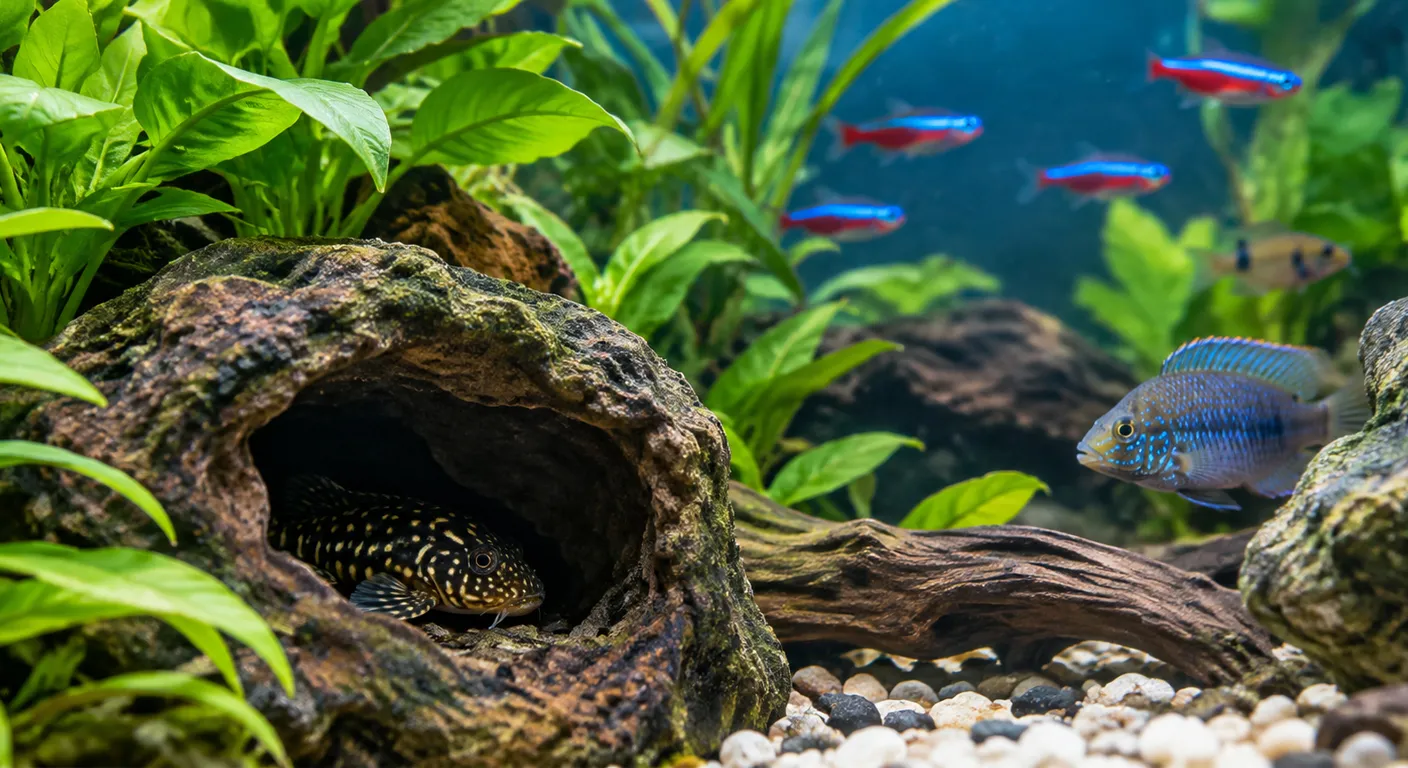
Finding your fish tucked behind a plant, wedged into an ornament, or hiding inside a cave can be alarming at first. Yet hiding is often completely normal fish behavior. Some species are naturally shy, nocturnal, territorial, or built to live in caves, and tucking away from open water is simply how they are wired. Sudden hiding, or hiding that continues for days without a clear reason, can point to something else entirely: stress, poor water quality, bullying from tank mates, or an early sign of illness.
In this guide, we will walk through the seven most common reasons fish hide, show you how to build hiding spots that actually support good behavior instead of masking a problem, and help you tell the difference between normal retreat and a warning sign that needs your attention.
Is Hiding Normal
Before assuming something is wrong, look at the species you keep. Loaches, plecos, and many catfish are largely nocturnal, meaning they rest during daylight hours and become active once the tank lights dim. Shrimp and many cichlids use caves and crevices as territory markers, retreating there between feeding and spawning activity. For these fish, spending large stretches of the day out of sight is not avoidance behavior. It is simply how the species has evolved to live.
The distinction that matters is between a fish that hides on its own schedule and comes out to eat, explore, or interact, versus a fish that has stopped doing those things altogether. The first pattern is routine. The second deserves a closer look.
7 Causes of Fish Hiding
Hiding behavior generally falls into one of seven categories, ranging from a simple adjustment period to a genuine medical concern. Working through them in order, from least to most serious, gives you a practical way to rule things out one at a time.
1. Your Fish Is New to the Aquarium
A newly introduced fish often hides for the first several days simply because everything around it is unfamiliar. New water chemistry, new tank mates, and new movement patterns can all feel overwhelming to a fish that was recently transported and rehomed.
This adjustment period typically resolves within three to five days as the fish settles in.
Reduce stress during this window by dimming lights and limiting how often you approach the glass.
Avoid adding food in excess just because the fish is not yet visible, since uneaten food will affect water quality.
2. Water Conditions Are Causing Stress
Poor water chemistry is one of the most common and most overlooked causes of hiding, and it should be one of the first things you check rather than the last. In a properly cycled tank, ammonia and nitrite should both read zero at all times.
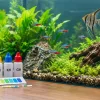
Test ammonia, nitrite, nitrate, and pH with a liquid test kit rather than relying on strips alone, since strips tend to be less precise.
Any detectable ammonia or nitrite indicates a cycling problem or an overstocked tank, both of which cause fish to seek shelter from the discomfort.
Sudden pH swings from large water changes or new decor can also send fish into hiding, even when ammonia and nitrite are stable.
3. Tank Mates Are Chasing or Bullying Them
Aggression from other fish does not always look dramatic. Chasing, fin nipping, and territorial guarding around favored spots can gradually push a quieter or smaller fish into permanent hiding. The behavior is not always obvious at a glance in the tank.
Watch feeding time closely, since bullying often intensifies when fish compete for food.
Check fins and body for small nips or torn edges, which point to nipping even if you never witness it directly.
Consider tank size and stocking levels. Territorial species need enough space to establish their own areas without constantly crossing paths with a more dominant fish.
4. The Aquarium Feels Too Exposed
A sparse tank with little to no cover can leave fish feeling constantly vulnerable, and this often creates more hiding, not less, once real shelter is finally added. Fish that feel exposed at all times tend to stay pressed into the one corner or object that offers any sense of security, rather than exploring the tank naturally.
The fix here is design rather than behavioral. Balance open swimming space with enough scattered shelter that no single fish feels like it has nowhere to retreat. Once fish trust that safety is available whenever they need it, they generally spend more time out in open water, not less.
5. Light, Flow, or Activity Is Too Intense
Environmental intensity affects sensitive species more than many aquarists expect. Overly bright lighting, strong current from an oversized filter, sudden tapping on the glass, or a major layout change can all push shy fish straight into cover.
Bright lighting without floating plants or shaded areas can feel harsh to species adapted to dim, tannin-stained waters.
Strong flow near the substrate can exhaust weaker swimmers, causing them to hide in low flow pockets instead of swimming freely.
Rearranging decor removes familiar landmarks and territory boundaries, which can trigger temporary hiding until the fish relearns the space.
6. Illness or Disease
Hiding is frequently one of the earliest signs that a fish is unwell, often appearing days before visible symptoms such as white spots or torn fins become noticeable. A fish that suddenly withdraws, even from feeding, deserves close observation over the following 24 to 48 hours.
Common culprits behind illness-related hiding include:
Ich, which causes tiny white spots and often appears after a temperature swing or the introduction of new fish.
Fin rot, usually linked to poor water quality and visible as ragged or discolored fin edges over time.
Internal parasites, which can cause hiding alongside weight loss even when the fish still appears otherwise normal.
A fish that is hiding and also refusing food is a stronger signal of illness than either symptom alone, and it warrants faster intervention than hiding by itself.
7. Spawning, Breeding, or Reproductive Stress
Some hiding behavior is tied directly to reproduction rather than distress. Livebearers close to dropping fry often isolate themselves in dense plants or quiet corners in the days before giving birth. Many cichlid species guard eggs inside caves and become noticeably reclusive during this period, which can look identical to stress-driven hiding at first glance.
The way to tell the difference comes down to pattern. Breeding-related hiding is usually brief, limited to one or two specific fish rather than the whole tank, and it happens without other warning signs like clamped fins, faded color, or appetite loss. If a single fish disappears for a short stretch while everything else about the tank looks normal, reproduction is a far more likely explanation than illness.
Safe Hiding Spots for Fish
Rather than treating hiding spots as an afterthought, think of them as a way to make hiding a healthy choice instead of a stress response. This directly addresses the exposure and intensity issues covered above, since fish with reliable shelter are far less likely to hide out of pure vulnerability.
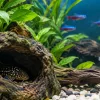
Rock caves work well for cichlids, plecos, and other territorial species that naturally claim a defined space.
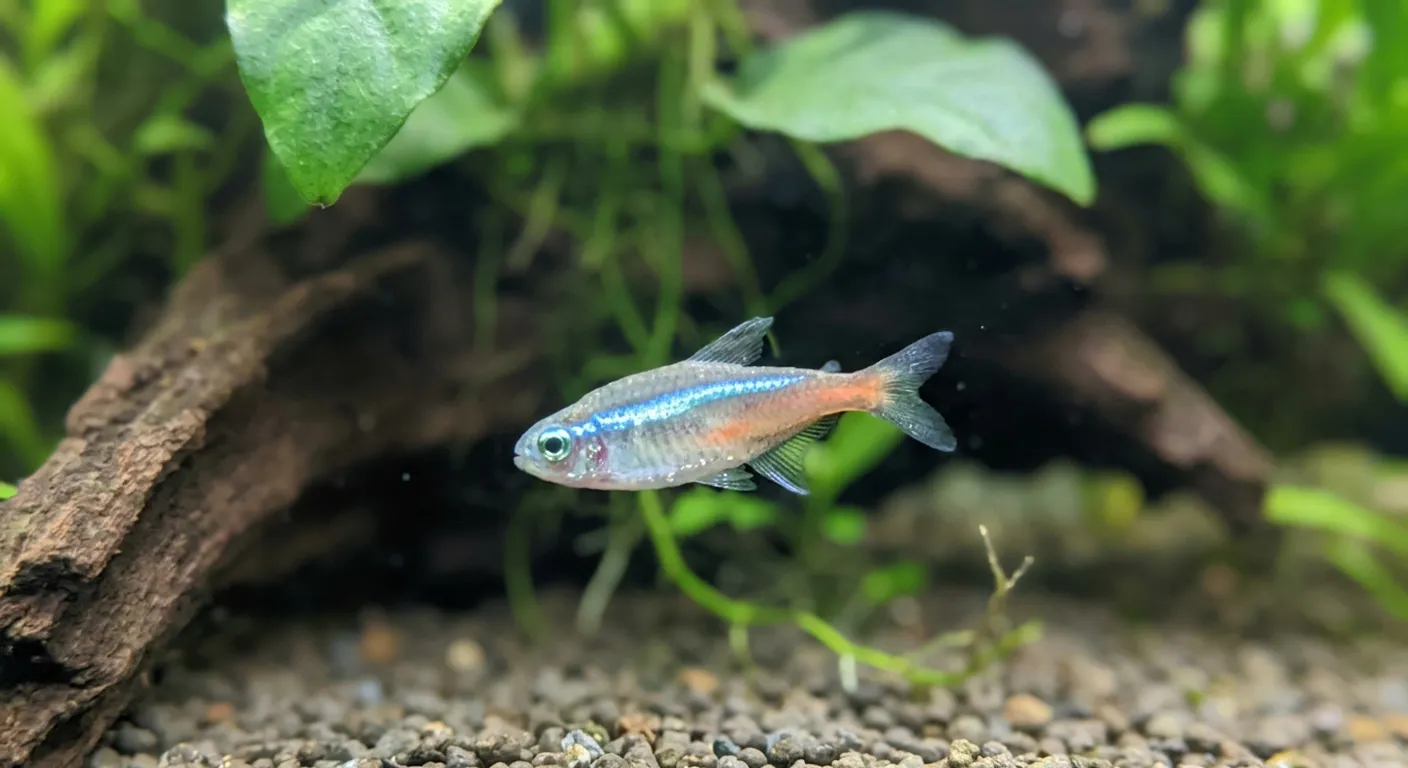
Driftwood offers both shelter and a surface for beneficial biofilm, which many fish and shrimp graze on throughout the day.
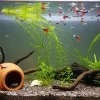
Ceramic caves and tubes suit shy or nocturnal species and are easy to clean compared to natural materials.
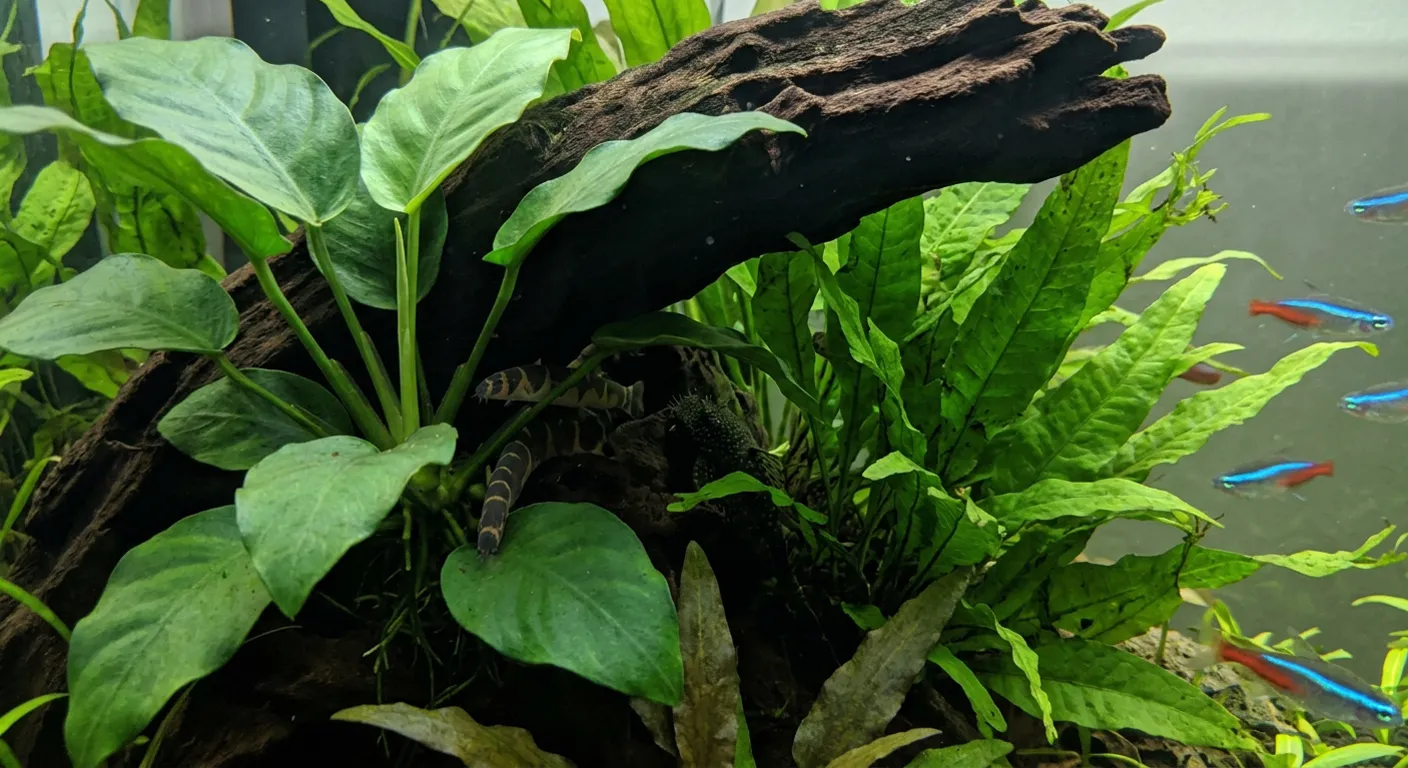
Live or artificial plants provide cover for smaller fish and fry, while also softening lighting for light-sensitive species.
Hollow logs and aquarium-safe ornaments add variety and give multiple fish separate places to retreat without competing for the same spot.
When choosing hiding spots, avoid anything with sharp edges, unstable stacked rock formations that could collapse, or narrow openings a fish could become trapped inside.
Adding several hiding options rather than just one also matters, since a single prime hiding spot often gets monopolized by the most dominant fish in the tank, leaving quieter fish with nowhere to go.
When Hiding Is a Warning Sign
Since illness now has its own dedicated section above, this list works best as a quick, scannable checklist rather than a repeat explanation. Contact a vet or take action quickly if you notice any of the following:
Refusing food consistently or visible weight loss over several days
Labored or rapid breathing at the surface
Clamped fins, faded color, sores, white spots, or torn fins
Loss of balance or unusual swimming patterns
Multiple fish affected at the same time rather than just one
A single symptom on its own may not mean much, but two or more appearing together is a much stronger indication that something needs attention.
What to Do Next When Your Fish Is Hiding
Rather than ending on uncertainty, here is a clear sequence to follow when you notice a fish hiding more than usual.
Test your water parameters immediately, since this rules in or out the most common cause within minutes.
Observe the fish for 24 to 48 hours before intervening further, since many causes resolve naturally within that window.
Set up a quarantine or hospital tank if illness seems likely, so you can treat the affected fish without exposing the whole tank.
Consult an aquatic vet or an experienced fishkeeping community if multiple fish are affected, or if symptoms continue to worsen despite stable water parameters.
Conclusion
Fish hide for seven main reasons, ranging from a normal adjustment period and natural species behavior to water quality problems, bullying, an overly exposed tank, environmental stress, illness, and breeding-related behavior. None of these should be assumed automatically. The smartest approach is to consider all of them together while watching closely for accompanying symptoms, rather than jumping straight to the worst-case scenario.
Pay closer attention when hiding is sudden, persistent, or combined with other changes like appetite loss or labored breathing. Fish that hide as part of their natural routine and still eat, swim, and interact normally are almost always fine. The fish that need real concern are the ones whose behavior has clearly changed from what is typical for them.
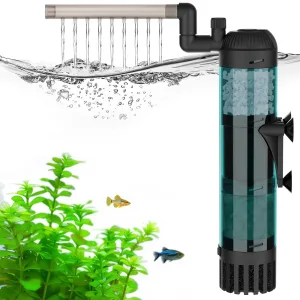
AQQA Internal Aquarium Filter with Sponge & Activated...
Original price was: $17.09.$16.02Current price is: $16.02.
800W AQQA Aquarium Heater, Submersible Fish Tank Heater...
Original price was: $33.99.$31.99Current price is: $31.99.
DC 24V AQQA Aquarium Wave Maker, Adjustable Flow...
Original price was: $59.21.$56.13Current price is: $56.13.

Add comment
You must be logged in to post a comment.