
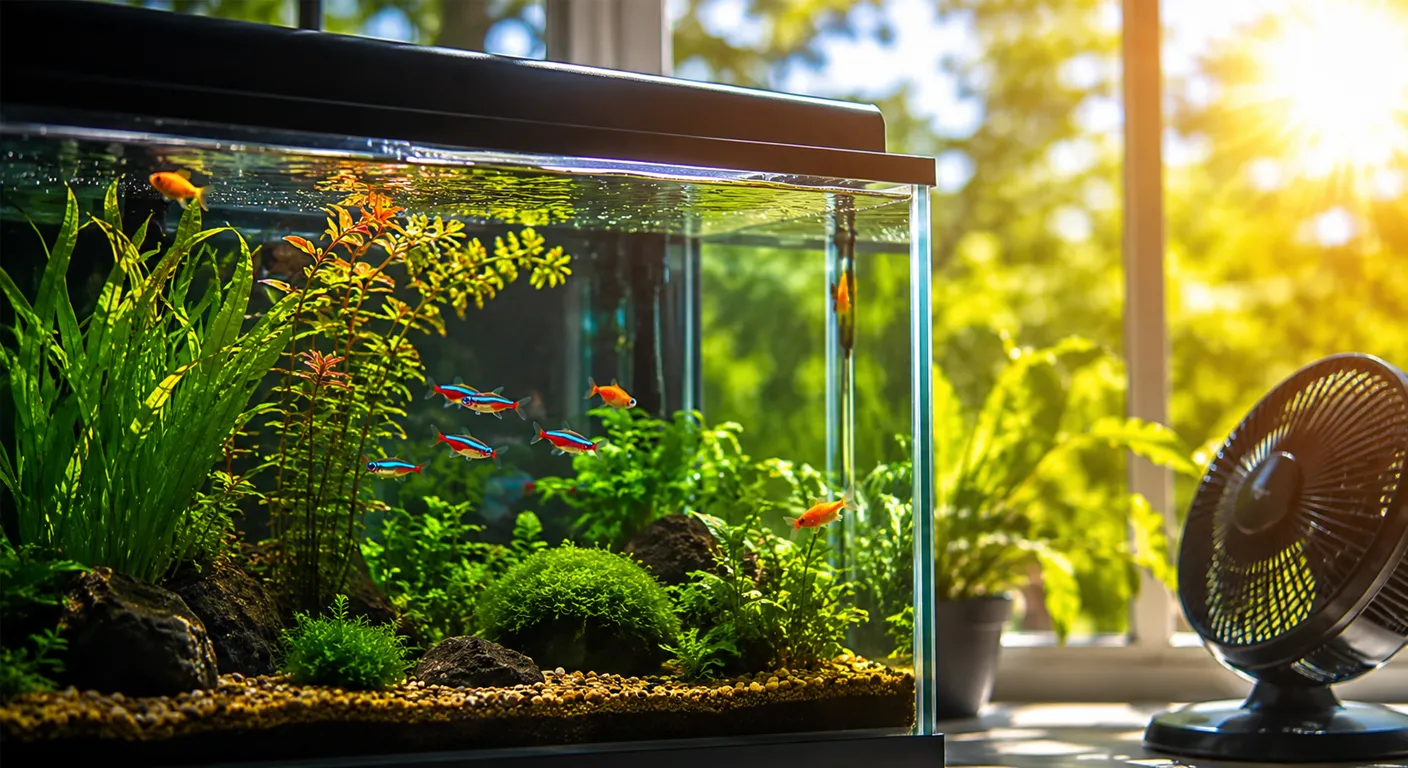
Summer changes things in a tank. Not suddenly, not dramatically, but in small, quiet ways that are easy to miss until the situation is already bad. A fish that normally patrols the middle of the water column is suddenly pressed up near the surface. Another one that would rush to the front of the glass at feeding time barely reacts. Gill movements look faster than usual. These shifts happen before any thermometer reading looks alarming, and that is exactly the problem.
Heat stress is one of those aquarium issues that tends to get caught late, because the early signs do not look like a crisis. They look like minor behavioral quirks, the kind that are easy to file away as “probably nothing.” When things look really bad, the fish have been struggling for hours.
This article covers what to watch for at each stage, what actually needs to happen when those signs appear, and how to set up the tank so summer does not keep catching you off guard year after year.
Why Hot Water Affects Fish Behavior
Fish do not regulate their own body temperature. Everything in their physiology tracks the water around them. When temperatures rise, their metabolic rate rises with it, meaning they need more oxygen to sustain basic functions. The problem is that warm water holds less dissolved oxygen than cool water. So fish end up needing more of something the environment is simultaneously providing less of.
On top of that, higher temperatures speed up the decay of organic matter in the tank. Uneaten food and waste break down faster, which accelerates ammonia production. An already stressed fish is now also dealing with declining water quality. The tank becomes genuinely unstable, not just warm.
Sensitivity varies considerably by species. Zebra danios and rosy barbs manage heat fluctuations reasonably well. Cardinal tetras, discus, and freshwater shrimp have much narrower tolerance ranges and show signs of distress sooner. Knowing where your fish sit on that spectrum matters when interpreting the early signals below.
The First Signs of Heat Stress
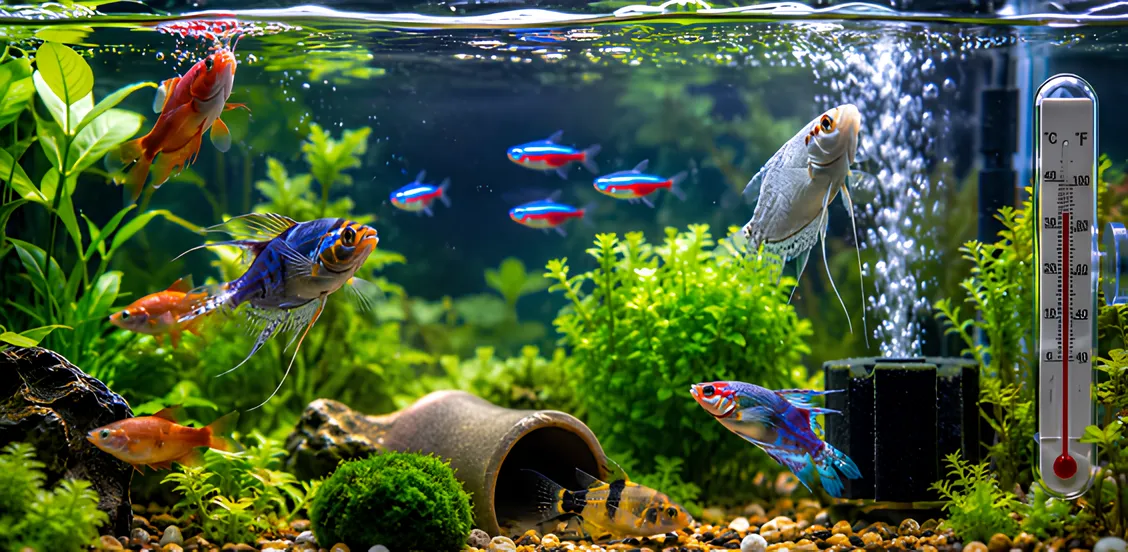
These are mild early indicators. The fish are managing, but only just. No single sign below is definitive on its own, but two or more appearing together, especially during a heat wave, should be taken seriously.
Breathing Changes
Faster gill movement is usually the first visible clue. A fish cycling its gills more rapidly than normal is compensating for lower oxygen availability. This is easy to miss if you are not in the habit of watching fish closely, but once you start looking for it, the difference between normal respiration and stressed respiration is fairly obvious. A fish breathing hard looks a bit like someone who just climbed a flight of stairs.
Surface Hanging
Fish lingering near the top of the water column are not exploring. They are seeking the slightly higher oxygen concentration that exists near the surface due to gas exchange with the air above. This is worth distinguishing from normal surface behavior. Bettas, gouramis, and other labyrinth fish naturally visit the surface to breathe. The sign to watch for is fish that do not usually surface, hanging suddenly, or multiple fish from different parts of the tank all drifting upward at once.
Appetite Loss
Stress suppresses feeding behavior across virtually all fish species. During a heat event, this often presents as fish that swim toward food and then ignore it, or simply do not come to the feeding zone at all. A single skipped meal during summer is worth monitoring. Two or three in a row, combined with warmer-than-usual water, means something needs to be looked at.
Hiding or Restlessness
Different fish respond to discomfort in opposite ways. Some withdraw. A fish that normally occupies open water suddenly disappears behind a decoration or wedges itself near the filter intake. Others become restless, moving around the tank with no clear purpose, pacing along the glass, or darting erratically. Both behaviors come from the same root cause. The fish is not comfortable and is trying to find relief somewhere in the tank.
Escalating Warning Signs
These signals mean the fish is no longer coping. The window for a calm, gradual response has narrowed. Action is needed now.
Gasping at the Surface
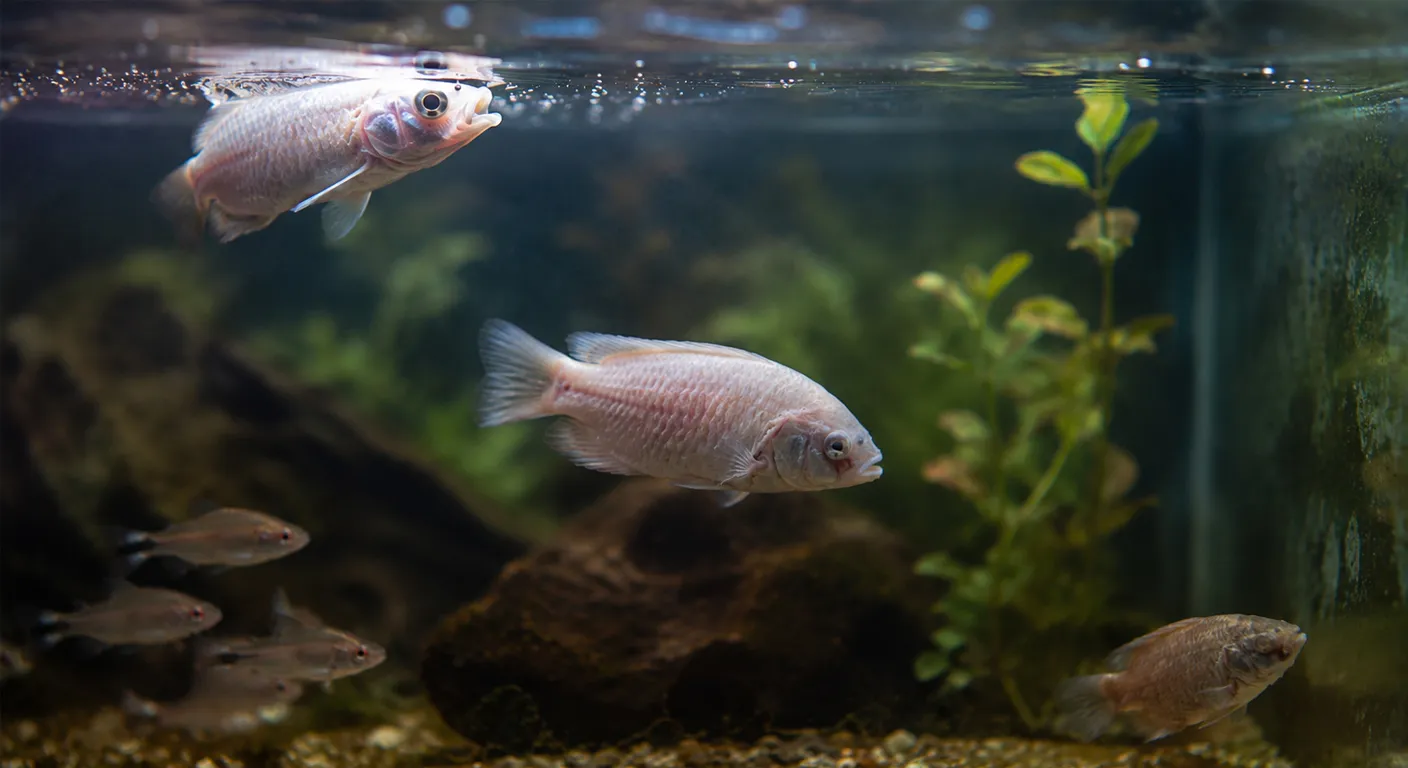
This is distinct from surface hanging. A fish gasping is at the waterline with its mouth breaking the surface repeatedly, pulling in air directly. Oxygen levels are critically low at this point. The fish is not seeking a slightly better spot in the water column. It has run out of options.
If one fish is gasping, check the others immediately. If multiple fish are doing it simultaneously, treat it as an emergency. Oxygen needs to rise now.
Clamped Fins
Fins held flat and tight against the body rather than fanned open are a consistent, reliable sign of significant stress or illness. In a heat context, clamped fins tell you the fish has been under pressure long enough that it has shifted its body into a conservation mode. Normal fin position is relaxed and open. Clamped fins are the opposite.
Color Fading
A fish showing noticeably duller, washed-out coloration compared to its usual appearance has been under sustained stress. Pigment cells in fish are controlled partly by stress hormones. Prolonged elevation of those hormones causes pigment cells to contract, which drains the vibrancy from the fish. A cardinal tetra that looks pale, or a betta whose fins have lost their depth of color, has not been fine up until this moment.
Isolation from Tankmates
Schooling fish that peel away from the group, or community fish that retreat to a corner and refuse to engage, are signaling serious weakness. This behavior tends to be a late sign rather than an early one. Combined with any of the above, it means the fish has been struggling for a while, and the situation needs to be addressed without delay.
Quick Reference: Signs by Severity
| Sign | Stage | Urgency |
| Rapid gill movement | Early | Monitor, check temperature |
| Surface hanging | Early | Check temperature, improve aeration |
| Appetite loss | Early | Investigate, observe closely |
| Hiding or restlessness | Early | Assess tank conditions |
| Gasping at the surface | Escalating | Act immediately |
| Clamped fins | Escalating | Act immediately |
| Faded color | Escalating | Act immediately |
| Isolation from the group | Escalating | Act immediately |
What to Do When You Notice Stress
Address problems in this order. Oxygen comes first because no other intervention matters if the fish cannot breathe adequately.
1. Increase Oxygen Immediately
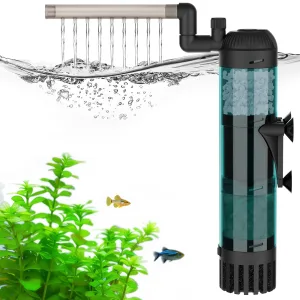
Increase surface agitation right away. A spray bar angled to break the surface, a powerhead pointed upward, or an air stone positioned near the top of the water column will all improve gas exchange within minutes.
If you have a spare air pump, add it. More movement at the surface means faster oxygen replenishment. Increasing filter flow rate also helps, as long as the current does not cause additional stress in small or weak fish.
Turn off the tank lid for a short period if the setup allows it safely. Even this small step can improve the surface oxygen gradient.
2. Reduce Heat Sources
Turn off any lighting that is not strictly necessary. Fluorescent and LED fixtures both add heat to the water over time, especially in smaller tanks where the surface area is limited. Even a few degrees of reduction matter.
If the tank is near a window receiving direct afternoon sun, block it. South and west-facing windows in summer are surprisingly effective at heating a tank. A simple curtain or blind makes a real difference.
Check what else is near the tank. Computers, televisions, and refrigerator motors all generate ambient heat. A tank wedged between warm appliances in a warm room has no buffer against rising temperatures.
3. Lower Temperature Gradually
Avoid pouring cold water directly into the tank or submerging sealed bags of ice. The goal is a slow reduction, not a sudden shock. Rapid temperature swings are themselves a significant stressor and can trigger ich outbreaks or secondary illness even after the fish recover from the initial heat stress.
Small, frequent water changes with slightly cooler treated tap water are a safer method. Replacing 10 to 15 percent of the tank volume with water a few degrees cooler than the current tank temperature, repeated over an hour if needed, brings temperatures down without the abruptness that causes additional harm.
Keeping Heat Stress from Happening Again
Build a Summer Maintenance Routine
Management habits that work in spring often need adjusting in summer. A tank that stays at a stable 76 degrees Fahrenheit in April can hit 82 to 84 degrees during a heat wave in August, particularly in rooms without air conditioning.
Check tank temperature twice per day during the hottest months, not just at feeding time. Morning and late afternoon readings will catch temperature swings before they become dangerous.
Reduce feeding portions slightly when the tank is running consistently warm. Uneaten food decays faster at higher temperatures, which spikes ammonia and nitrite levels and stacks a water quality problem on top of an oxygen problem.
Consider adding live or floating plants if the setup suits them. Plants consume carbon dioxide and produce oxygen during daylight hours, providing a small but meaningful buffer during heat events.
Choose the Right Tank Placement
Where the tank sits in a room has more impact on long-term temperature stability than most keepers realize.
Interior walls, away from windows and exterior-facing surfaces, stay cooler through summer. A tank placed along an interior wall in the coolest part of the room has a natural thermal advantage.
Avoid proximity to heating or cooling vents. A tank directly below a ceiling vent may receive inconsistent temperature fluctuations depending on when the system cycles on.
Match Fish to Your Setup’s Realistic Temperature Range
This is worth thinking through before buying fish rather than after. A tank in a room without air conditioning can reasonably hit 84 to 86 degrees Fahrenheit on a hot summer afternoon in many climates. That temperature range excludes some species entirely and stresses others significantly.
Species like zebra danios, white cloud mountain minnows, and rosy barbs tolerate warmer water with less strain than sensitive species like discus, ram cichlids in their optimal range, or most freshwater shrimp, which often struggle above 78 degrees.
If cooling options are limited, fish with a broader thermal tolerance are simply a safer, more sustainable choice for the long term.
Conclusion
Behavior is almost always the first clue that something is wrong with water conditions. The thermometer confirms what the fish are already communicating, but by the time a temperature reading looks alarming, the fish have usually been under stress for hours.
The pattern is consistent: faster gill movement, surface hanging, appetite loss, and withdrawal or restlessness appear first. Gasping, clamped fins, color fading, and isolation follow when the situation is allowed to continue. Catching heat stress at the first stage rather than the second is not about having specialized equipment or years of experience. It comes down to watching the tank regularly enough to notice when something is off.
The keepers who respond early are the ones who are paying attention. That is a habit, not a skill, and it costs nothing to build.



Add comment
You must be logged in to post a comment.