

We understand that aquariums require heaters when it is cold in winter to maintain the health and activity of fish. Nevertheless, what people forget is that, along with winter heat, summer heat can also harm aquariums equally. Fish live in an environment with the appropriate temperature, and excessive humidity may cause debilitating conditions. Once the water becomes too hot, oxygen concentrations decrease, and the fish will probably be unable to breathe.
It does not take long before several elements can make the temperature in your fish tank soar in summer. This is contributed to by direct sunlight, stuffy rooms, too much light, and even electronic appliances in the area of your aquarium. Unless managed, heat may accumulate quickly and create hazardous situations for your aquatic life.
That is why you need to notice ways of cooling down aquariums in hot seasons. Simple tricks include aquarium or monitoring room shading, which are ignored by many fish keepers. This article will inform you about the five key methods you need to know to make your aquarium cool. You will also learn overlooked tips and key signs of overheating in fish.
Why Does Aquarium Cooling Matter
Cooling animals not only makes the aquarium more pleasant, but it keeps your animals alive, too. Excessive heat in the water causes several adverse effects that could endanger your fish.
To start with, the increase in temperatures reduces the solubility of oxygen in water. This implies that fish, plants, and healthy bacteria receive less oxygen. Consequently, fish could become short of breath, plants could wither, and bacteria that perform biological water purification could become weak.
Second, elevated temperatures of water make fish move a lot, but they also become stressed. They consume oxygen at a higher rate, even though there is even less oxygen, and the stress increases tremendously. Under stress, the immunity weakens, making fish susceptible to disease.
Third, friendly bacteria in your filter could also decelerate or even perish. These are the bacteria that deal with the breakdown of ammonia and nitrite; do not have them and there is a buildup of toxins. This has a ripple effect, which can result in the death of the sensitive species rather quickly.
What’s the Sign of Hot Temperature in Your Fish Tank
Now you are aware of the reasons why it is dangerous to overheat, but the question now becomes: how do you notice it early? Fortunately, fish and aquariums provide visible indications of an overly hot temperature. You will be able to take action before your aquarium becomes life-threatening by being aware of its initial symptoms.
1. Fish Gasping at the Surface
When fish begin to rise to the surface and gasp, it’s a great caution. They are choking as the water has insufficient oxygen. You can also find them packed under the filter outlet, where there is a slight increase in oxygen, demonstrating how desperate they are to relieve themselves.
2. Rapid Gill Movement
Hot fish breathe at an irregular pace. You will see, with a little attention, those gill movements that are unusually quick. This indicates that your fish has to go out of their way to get oxygen intake. In some cases, this fast breathing is accompanied by stressed swimming habits, indicating clearly that the fish are unhappy and desperately require cooler water.
3. Behavioral Changes
Fish can easily get agitated and move more violently in the tank or even fly around the enclosure. Others acquire the habit of hiding even more frequently than normal to reduce stressful situations. Such actions are not accidental; they indicate that the high temperature makes you uncomfortable and can imply that you need to take a quick look and tweak water conditions.
4. Loss of Appetite
Most fish refuse to eat when this stress comes due to heating. Temperature might be a problem if your fish just stops eating. The omission of meals over several days only makes them weak and prone to low energy levels, a lack of bright colors, and susceptible to diseases that develop in overheated tanks.
5. Physical Signs
Fish, in extreme cases, can appear dull colored or have clamped fins. Such physical progressions are a statement that their bodies are strained by the heat. Abnormal spots or patchy scales may also arise on prolonged exposure, and they tend to indicate the onset of health problems caused by stressful waters.
Common Methods to Cool Your Aquarium in Summer
When summer arrives, it is crucial to employ proper cooling procedures to keep water in check. The most frequent methods are:
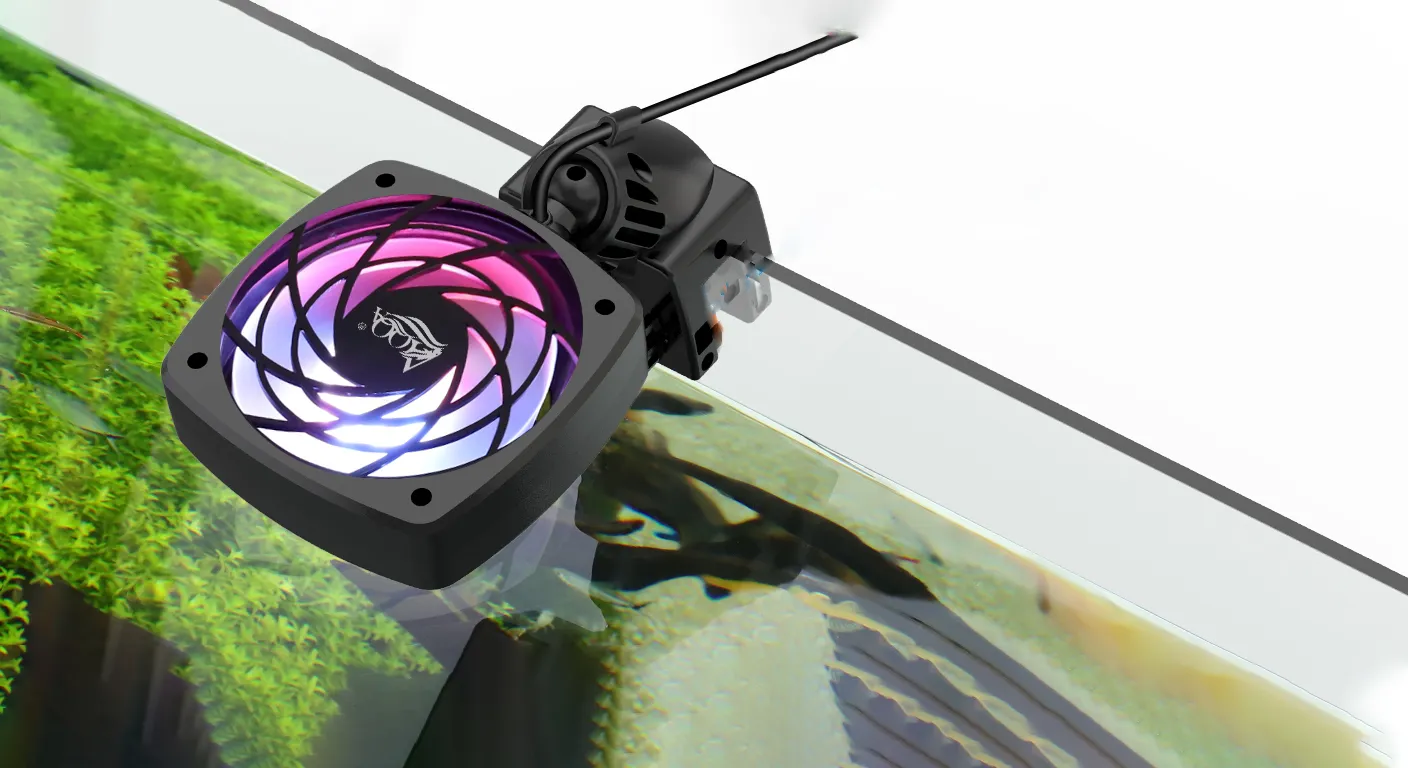
1. Evaporative Cooling with Fans
Small aquarium fans are a low-cost yet efficient cooling method. They serve to assist evaporation by blowing over the bodies of water. Evaporation takes away the heat and thereby decreases the temperature.
- Pros: Easy to use, low cost, suitable for most aquarium sizes.
- Cons: Increases water evaporation, so you’ll need to top up water regularly.
2. Using Ice Packs
When you need to cool your aquarium quickly, ice packing it in some sealed packs will help you. All it takes is to freeze plastic containers of water and place them in the tank. It is best to ensure that the bottles are well sealed to block contamination. Replace them when they melt.
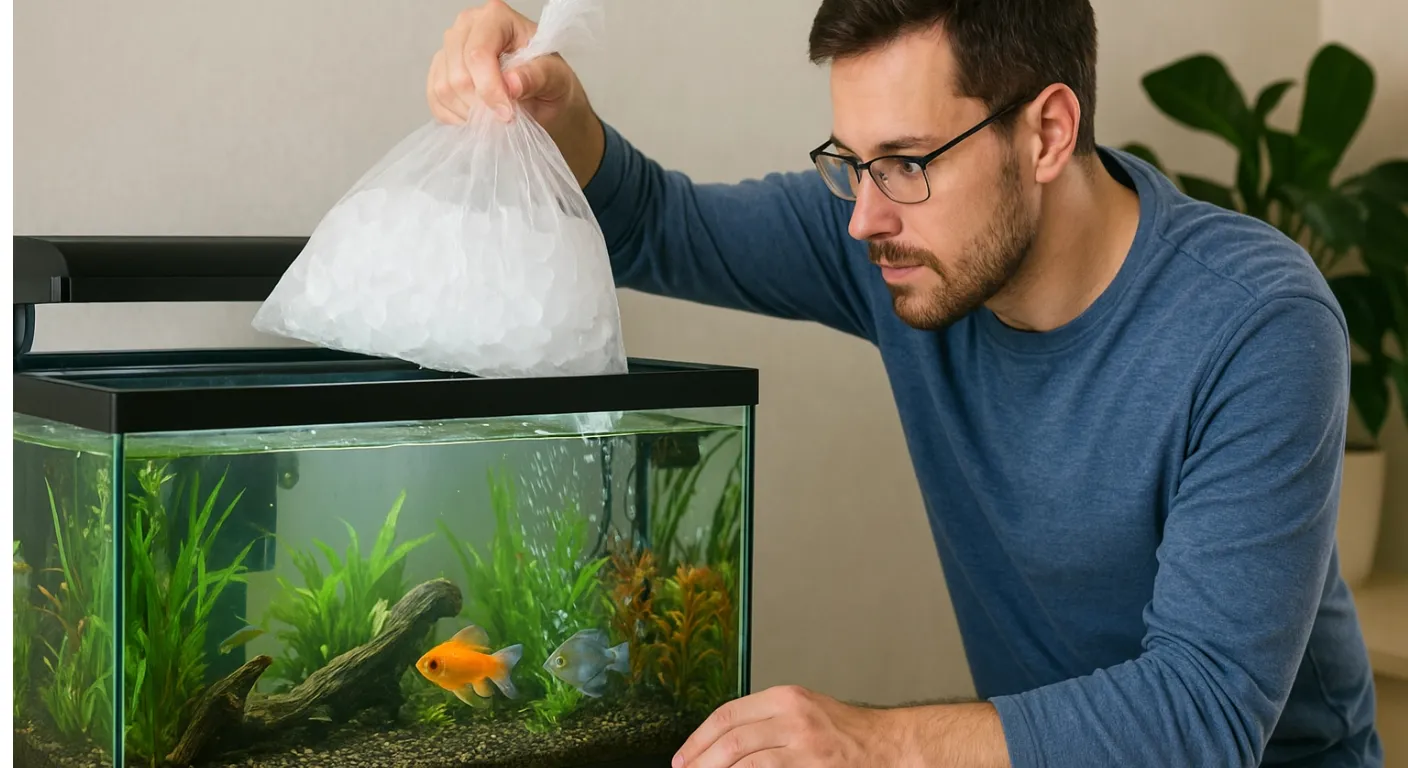
Tip: Never drop ice cubes directly into the tank, as they may introduce harmful chemicals.
3. Water Changes with Cooler Water
The temperature in the tank can be lowered by replacing the water with slightly cool water. Add approximately 10-15% water each time, but do not add water that is very cold. Slow changes help to avoid shocking your fish due to abrupt changes in temperature.
4. Adjusting Aquarium Lighting
In an aquarium, lights are heat producers, particularly the aged fluorescent or halogen bulbs. Limit lighting hours during the hottest time of the day. You can even change to another energy-efficient light, such as an LED light that generates less heat.
Indoor Vs Outdoor Aquarium: What’s the Difference
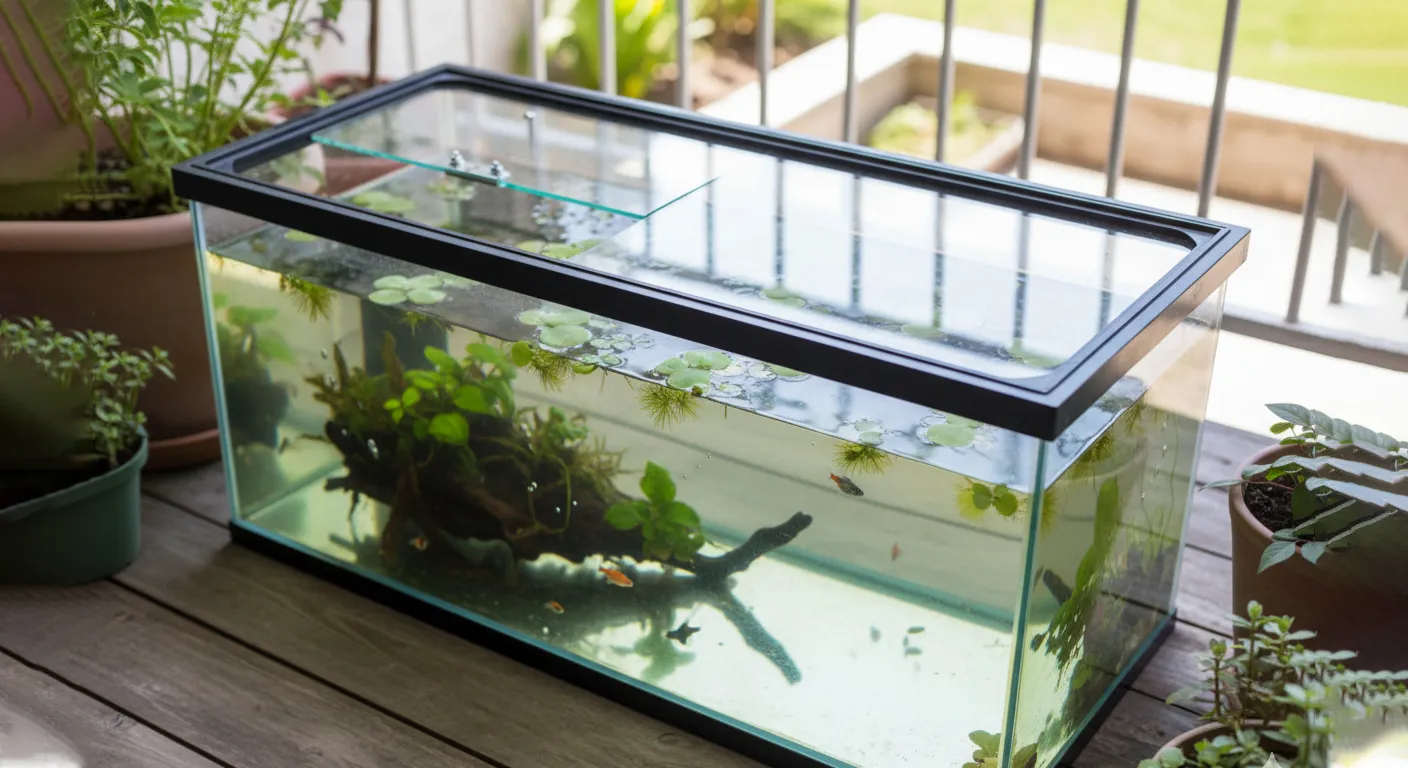
Indoor and outdoor aquarium experiences differ as the summer approaches. The difference enables you to select appropriate cooling procedures.
| Factor | Indoor Aquarium | Outdoor Aquarium |
| Sunlight Exposure | Controlled, unless near windows | High exposure requires shading or covering |
| Temperature Fluctuation | More stable with air conditioning or fans | Greater fluctuation depending on the weather |
| Cooling Methods | Fans, lighting control, room cooling, ice packs | Shade structures, water changes, pond fans |
| Maintenance Frequency | Moderate, based on equipment | Higher, as outdoor tanks heat up faster |
| Risk of Contamination | Low, controlled environment | Higher, due to outdoor dust, insects, and debris |
This analogy demonstrates that outdoor aquariums need special care and regular observation in the hot seasons.
Additional Tips Are Easily Overlooked
There are lots of fish keepers whose concern is limited to general ideas, yet the most troubling details are overlooked. The following are additional tips that are frequently neglected:
1. Monitor and Control Temperature
Whenever using an aquarium thermometer, it must be a reliable one. Digital alarm thermometers are even superior in giving instant alerts. Never give swift changes in temperature up or down because complete changes may cause the death or stress of the fish.
2. Risks of Exposure to Contaminants
When applying the ice pack or frozen bottles, make sure they are closed and food safe. It is important that the containers to be used must not have contained chemicals or non-food liquids in the past, because even minor leaks are toxic.
3. Ambient Room Temperature and Shading
Reducing the room temperature will assist in managing aquarium heat. Close the curtains or put tanks with no windows. The process of shading the room cuts off external heat sources and utilizes the fans more efficiently.
4. Right Location
Where the aquarium is located is important. Do not put it in the proximity of radiators, electronics, or unshaded windows. In the case of the outdoor tanks, it is advisable to use covers, shading nets, or even tiny types of shelters to minimize exposure to heat.
Conclusion
Maintaining coolness in your aquarium in summer is equal to having a heating system in winter. Both high water temperature and lower oxygen levels stress fish and, in turn, may cause damage to helpful bacteria. Detection of the symptoms of overheating can help you as a learner to take action before things get out of control.
Solutions such as fans, ice packs, changes in cooler water, and lighting are viable options. Outdoor and indoor aquariums pose various obstacles, and therefore, adopt cooling methods that correspond to the arrangement. Never leave your aquariums unattended and maintain their temperature at all times, prevent contaminants, and ensure a safe location.
These steps will save your fish and ultimately give it a safe atmosphere. Keeping an eye on water temperature will keep your aquarium a safe and healthy environment throughout the year.
FAQ
1. Do aquarium lids make tanks hotter in summer?
Yes, temperatures in lids may trap heat and slow evaporation, increasing tank temperatures. Opening the lid or removing it can enhance air flow, but can also enhance evaporation.
2. Can I use an air conditioner or fan in the room instead of aquarium equipment?
Yes, air conditioning or a big fan can be used to cool and stabilize the aquarium temperature. Nevertheless, even in hot seasons, you might have to employ direct aquarium cooling.
3. Will cooler water slow down my fish’s metabolism?
Yes, colder water may slow down fish metabolism and cause them to be less active. But so long as you keep their safe temperature range, it will not harm their health.





Add comment
You must be logged in to post a comment.