
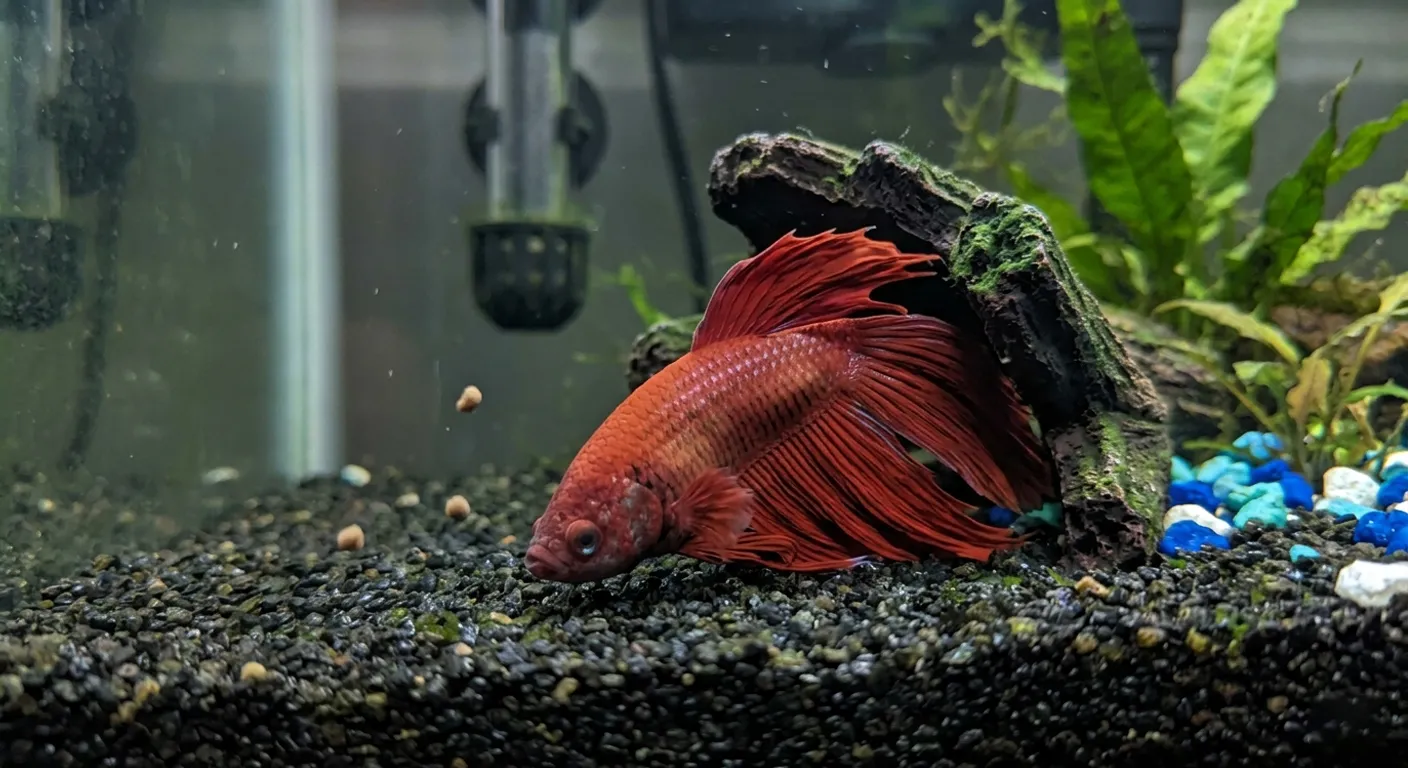
Imagine walking past your betta tank expecting that signature flare and food frenzy, only to find him slumped behind the filter. Fins pinched tight, colors faded to gray, ignoring pellets that drift past untouched. Heart drops instantly. That vivid shift from vibrant showman to shadowy recluse happens to every betta owner at some point, often within weeks of setup. What flipped the switch? Was it the water, a hidden illness, or just plain boredom in a bare glass box?
Bettas show clear unhappiness through body language: clamped fins, lethargy, hiding, faded colors, appetite loss, glass surfing, and fin damage. These aren’t random; they’re distress calls from poor water (ammonia/nitrite spikes), cold temps (<78°F), infections, reflections, or barren tanks lacking plants and space.
In this guide, we breaks down all 7 signs with visuals and causes, offers a diagnostic table, explores water/tank/diet triggers, delivers a step-by-step rescue plan, and shares prevention for 3–5 year lifespans.
Table of Content
Toggle7 Key Signs Your Betta Needs Help
Betta communication is all body language. Single quirks might be normal, but patterns scream distress. Here’s each sign broken down with visuals, causes, and urgency levels.
1. The Universal Stress Flag: Clamped Fins
Fins aren’t just decoration, they signal comfort. Healthy bettas fan dorsal (back), anal (belly), caudal (tail), and paired fins outward like a flowing gown. Clamped means all pressed flat against the body, sometimes trembling.
Visual cues: Tail looks “pinched,” no flow even when swimming slowly.
Common triggers: Ammonia as low as 0.25 ppm burns gills; temps below 76°F stiffen muscles; early fin rot infection.
Urgency: High, often first symptom, progresses fast if ignored.
Quick check: Tap glass lightly; relaxed fish flares or darts, stressed one freezes.
Act within 24 hours: test water, warm to 78°F. Clamping reverses quickly with fixes, unlike permanent damage later.
2. Faded Color and Stress Stripes
That metallic sheen dulls fast under stress, sometimes with thin dark horizontal lines (stress stripes) marching flank-to-flank—unlike thick vertical breeding bars.
What to spot: Washed-out reds/blues; stripes pulse wider with discomfort.
Why it happens: Cortisol floods from fear (reflections), toxins (nitrites >0.5 ppm), or cold shock.
Normal vs. problem: Slight fading during sleep ok; sudden full-body washout = alert.
Timeline: Colors rebound in 1–2 days post-fix if caught early.
Pair with hiding? Chronic issue. Healthy bettas glow brighter in perfect conditions—dull means “something’s off.”
3. Lethargy and Bottom Sitting
Bettas nap 12–14 hours but stay alert daytime, patrolling and flaring. Lethargy = hours motionless on gravel, heater side, or drifting mid-water.
Red flags: No response to food shadow; fin twitch only for breathing.
Top causes:
Temps <78°F slow metabolism to crawl.
Constipation (overfed pellets = white stringy poop).
Early illness (parasites, low oxygen).
Test it: Check our Fish Acting Weird? How to Tell Stress from Courtship. Ruling out mating dances points to health.
Duration check: >2 hours sitting = test water now.
Low energy mimics “depression” but fixes with basics: heat, fast, clean water.
4. Appetite Loss: Beyond Just Picky Eating
Food frenzy vanishes: pellets sink untouched or spat immediately. Healthy bettas gulp 3–4 pellets in <2 minutes.
Observe: Does he follow your hand? Surface dart? Beg?
Reasons ranked:
Stress/shock (new tank).
Sickness (swim bladder, worms).
Pellet fatigue (same food daily kills hunter instinct).
Constipation (swollen belly, no poop).
- Fix sequence: Fast 24 hours, offer frozen bloodworms, 90% eat if not sick.
New fish skip 1–2 days normal; longer flags trouble. Variety keeps them eager lifelong.
5. Glass Surfing and Erratic Movement
Pacing up/down glass, frantic loops, or rubbing sides—pure anxiety on display.
Exact looks: Repetitive vertical swims; flaring at own reflection.
Main culprits: Mirror image triggers endless fights; nitrite irritates gills; currents buffet weak swimmers.
Easy test: Cover tank sides. If stops, reflections guilty.
Bare tanks amplify this; plants break sightlines, calm instantly.
6. Frayed, Torn, or Melting Fins
Edges go ragged: splits, black/white tips, or backward “receding” like burning paper.
Stages: Mild = splits; moderate = fuzz; severe = tissue loss.
Triggers:
Fin rot bacteria (uncycled tanks).
Sharp decor nicks.
Self-aggression in tight spaces.
Progression: Daily worsening without water fix.
Cleanliness halts early; meds for advanced. Smooth flow prevents reinjury.
7. Excessive Hiding and Skittishness
Favorite cave ok; 90% daylight hidden + darting from shadow = fear.
Body language: Bolts on approach; peeks then retreats.
Why: Open tank = predator zone; lights too bright; vibrations nearby.
Solution: Silk Anubias, Indian almond leaves for security.
Bold bettas perch visibly, hiders feel hunted.
Diagnostic Matrix: Pinpoint Sick vs. Stressed vs. Bored
| Combo | Likely Issue | Priority Test/Fix |
| Clamped + stripes + hiding | Acute stress | Water params (NH₃/NO₂⁻=0), temp 78°F |
| Sitting + no eating + poop string | Illness/constipation | Fast 24h, peas, daphnia |
| Surfing + flaring glass | Boredom/reflection | Background, plants |
| Fins melting + fuzz | Infection | 50% change, Maracyn if severe |
| Lethargy + faded alone | Low stimulation | Enrich per below |
Water tests solve 80%; ignore = cascade failure.
Root Causes Deep Dive
Water Quality
Clear ≠ clean. Ammonia/nitrite must hit 0 ppm absolute—traces burn. Nitrates <20 ppm via 25% weekly changes. pH 6.5–7.5 stable. Maybe you wanna know, How Much Room Does 1 Betta Need? It shows stresses 5gal+ for buffer (bowls crash daily).
Test weekly with liquid kits (strips lie).
Conditioner essential. Chlorine kills slime coat.
Cycle first: beneficial bacteria eat waste.
Tank Design Flaws
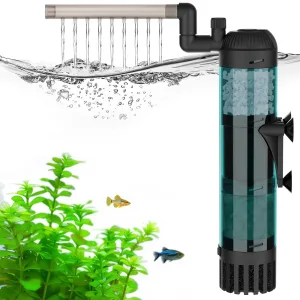
Strong HOB = drowning. Baffle with sponge.
Bare walls = mirror fights. Solid backgrounds.
No plants = exposure. Aquarium Plants for recommendation: Anubias nubs, Java moss.
Add leaf litter (catappa) for tannins, security.
Diet and Routine Gaps
Monopellets bore; rotate live/frozen 2–3x week. Overfeed clouds water.
Daily: 2–4 pellets, what they eat in 2 min.
Treats: Bloodworms, daphnia, brine shrimp.
Fast 1 day weekly prevents bloat.
Complete Rescue Blueprint
Audit Everything: Test strips insufficient, liquid kit for precision. Log results.
Emergency Change: 25–50% conditioned, matched-temp water. Siphon debris.
Customize: 4 Ways to Customize a Better Home Aquarium + HOB Vs Canister. Sponge intake, dim lights.
Feed Smart: Skip 24h, then variety. Shelled pea for constipation.
Prevent Future: New Tank Syndrome Guide + weekly maintenance log.
Track 72 hours; 90% improve fast.
Prevention Mastery
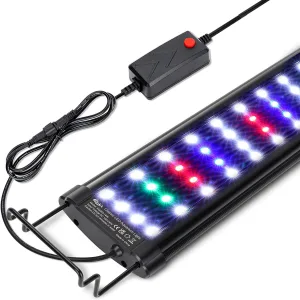
10gal ideal: heater (adjustable 78–82°F), gentle filter, 8h dim LED, pea gravel. Snails (nerites) clean algae. Self-sustaining? Layer plants, low-feed. Lifespan jumps 3–5 years vs. 1 in bowls.
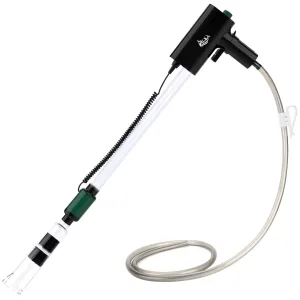
Weekly: 25% change, vacuum gravel.
Monthly: Filter clean in tank water.
Quarterly: Full equip check.
Urgent Escalation Signs
No poop/eat >3 days, pinecone bloating (dropsy), flashing (ich spots), gasping, side-lying? Hospital tank (2.5gal bare, airline), meds (Ich-X, Kanaplex). Vet if unsure—rapid kills.
Conclusion
Bettas signal distress via 7 clear signs, including clamped fins, fading, hiding, more. Tied to water, space, stimulation. Tables triage fast; basics restore 90%.
Ignored signals snowball to rot, disease, early death. Proper setups unlock personality, longevity, your pet deserves thriving, not surviving. Stable care builds confidence in every flare.
Test water tonight. Plant tomorrow. Watch transformation. Explore our stocking, filter, algae guides for perfection. Your betta’s kingdom awaits revival.
Related Reading
Related Products For Your Reference
3.7 Gal Aquarium Kit: Filter, 10-Color Light, Self-Cleaning,...



Add comment
You must be logged in to post a comment.