
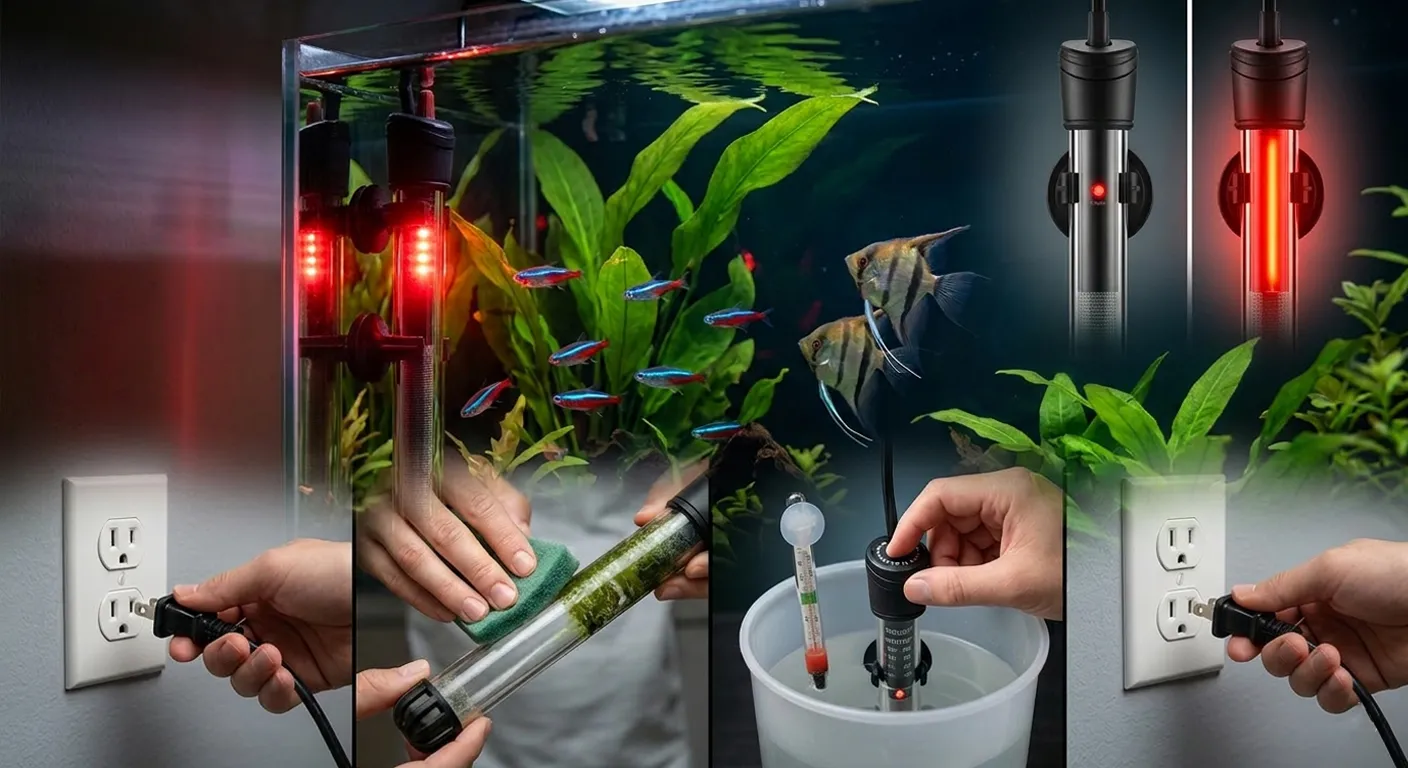
You’re doing your evening check on the tank. Everything looks normal. Then you see it. A red glow is coming from the heater. And your first thought is probably something like… wait, is that supposed to be there? This is the moment that gets a lot of fish keepers. Is it overheating? Are the fish in danger? Or is this just what heaters do?
Here’s the honest answer. Some heaters glow red while they’re heating the water. That’s just how they work; nothing wrong there. But that same glow can also mean something is actually broken. Bad water flow, a failing part, a heater running way too hot. The glow looks identical either way, so you can’t tell just from looking.
That’s what makes this confusing. You either ignore something that needs fixing, or you throw out a heater that had nothing wrong with it. This guide helps you figure out which one you’re actually dealing with, why it’s happening, and what to do about it.
What Does a Glowing Red Heater Actually Mean?
Not every red glow is a problem. Plenty of heaters are built to light up red while they’re heating. That’s normal, that’s by design. The hard part is figuring out when it’s just doing its job and when something is genuinely off.
Behavior | Meaning | Action |
Small red LED on | The heater is actively warming the water, and the indicator light is showing it is working. | Completely normal; no action needed |
Faint warm glow | The heating element inside the glass tube may glow slightly while heating | Normal for many heaters, especially older models |
Bright, constant red glow | The heater may be overheating, or the thermostat may be stuck on | Turn off and inspect immediately |
Flickering red glow | Electrical instability, failing thermostat, or poor connection | Disconnect the heater and test before reuse |
Why Is Your Heater Glowing Red? (Common Causes)
So the red glow isn’t actually the problem. It’s just a sign that something is off. Find the reason behind it, and you’re halfway done. Here’s what usually causes it:
Normal heating cycle: Honestly, most of the time, this is all it is. The heater glows when it’s warming the water. That’s just how it works.
Thermostat stuck on: The thermostat breaks, and the heater just doesn’t stop. Is the water already warm? Doesn’t matter. It keeps going anyway.
Water barely moving: Still water means heat just sits there building up. Makes the glow look way more intense than it should.
Algae on the tube: Algae builds up and basically acts like a blanket. Traps heat in. The heater runs hotter than it should.
Crusty mineral buildup: Hard water leaves stuff behind on the glass over time. Heat can’t pass through properly, so the heater just keeps running longer.
Wrong size heater: Too powerful for your tank, and it just overworks itself. Glow gets more noticeable.
Heater’s just old: Old heaters get weird. The thermostat starts failing, and things stop working the way they should.

Is It Dangerous? Risks You Need to Know
Usually, no. But sometimes ignoring it does real damage. Here’s what can actually go wrong:
Water gets too hot: Thermostat dies, temperature keeps climbing, nothing stops it. Even a couple of degrees too high stresses your fish out. Keep going, and they die.
Glass cracks: The heater overheats, and the glass gets under pressure. Cold water hits it while it’s super hot, and it can shatter. Doesn’t happen often, but it happens.
Electrical fire risk: Something broken inside, wires damaged, and you’re still running it. Near water. Yeah, not good.
One thing a lot of people don’t think about – the algae problem:
When algae builds up on the heater tube, it acts like a blanket around it. The heat can’t escape into the water properly, so the heater just keeps running, trying to hit the target temperature. That trapped heat makes it glow brighter and harder. And the longer this goes on, the more it wears down the parts inside. Eventually, the heater just gives out. It’s a slow cycle, but it does real damage over time.
How to Fix a Heater Glowing Red (Step-by-Step)
Okay, so something looks off with the glow. Don’t overthink it. Just go through these one by one and don’t skip anything. Here are some methods of fixing heaters:
1. Unplug it first
Before you touch anything, cut the power. Always. Pulling a heater out while it’s still plugged in is asking for trouble. The glass can crack from the sudden temperature change, and now you’ve got a bigger problem than what you started with.
2. Let it cool down and actually wait
The glass stays hot even after you unplug it. Leave it alone for 10 to 15 minutes. Don’t touch it, don’t move it, just leave it. Everyone wants to skip this part. Don’t.
3. Give it a proper look
Once it’s cooled, actually look at the tube closely. You’re checking for small cracks, white chalky buildup from hard water, or algae on the glass. See algae? Grab a soft sponge or algae pad and clean it off easily. No hard scrubbing.
4. Check the thermostat dial
After cleaning, check where the thermostat is set. Sounds obvious, but it happens more than you’d think. You bump the dial during a water change without noticing, and suddenly the heater’s running at the wrong temperature. Just confirm it’s where you want it.
5. Test it in a bucket first
Don’t put it straight back in the tank. Fill a bucket, drop the heater in, add a thermometer and plug it in. Watch it for a bit. Does it heat up normally? Does it stop when it hits the right temp? Yes to both, you’re good.
6. Keep an eye on the temperature after
Once it’s back in the tank, check the temperature a few times over the next day or two. You want to see it cycling on and off like normal, not just running nonstop. If it’s running nonstop, something is still wrong.
How to Stop It From Happening Again
Getting it fixed is great. But coming back to the same problem every few weeks is annoying. Luckily, you don’t need to do much to avoid that.
1. Match the heater size to your tank: A rough guide that works well is around 5 watts per gallon. Don’t just pick up any heater because it looks fine. Check that it actually makes sense for how big your tank is.
2. Keep the water level above the minimum line: If part of the heater is sticking out above the water, it overheats really quickly. Just keep the water topped up, and that whole problem doesn’t happen.
3. Put a pump near the heater: Good water movement around the heater really does make a difference. It keeps the heat spreading around evenly instead of just sitting and building up in one spot.
4. Wipe the heater when you do water changes: Every time you’re doing a water change anyway, just give the heater a quick wipe while you’re at it. Takes maybe 10 seconds. Stops algae from building up and turning into that insulation problem we talked about earlier.
One extra tip worth trying:
Get a smart plug with a temperature controller and connect your heater to it. If the heater ever starts overheating, the controller just cuts the power automatically. It’s a cheap little setup, but it gives you a real safety net, especially when you’re not around to check on the tank.
| Tank Size | Recommended Wattage |
| 5–10 gallons | 25–50 watts |
| 20–40 gallons | 100–150 watts |
| 40–75 gallons | 200–300 watts |
| 75–125 gallons | 300–400 watts |
| 125+ gallons | 500 watts or multiple heaters |
When to Replace the Heater Entirely
Sometimes fixing it just isn’t worth it. If the heater is in bad shape, it’s honestly safer to just get a new one than keep trying to make the old one work.
Here’s when you should just replace it:
Visible cracks anywhere on the glass tube
It won’t shut off even after the water hits the right temperature
The indicator light is flickering or acting inconsistently
You hear buzzing or smell something burning near it
It keeps overheating even after you’ve fixed it once or twice
If you’re seeing any of that, don’t wait around. Just replace it.
How long do heaters usually last?
Most heaters give you somewhere between 2 and 5 years. Quality matters, maintenance matters, and your water matters, too. Hard water, algae sitting on it, poor water movement around it — all of that cuts the lifespan down quicker than most people expect.
One thing to be careful about when cleaning:
Don’t scrub the glass too hard when going after algae. Feels harmless in the moment, but scrubbing hard puts tiny scratches on the glass you can’t even see. Those scratches build up over time and weaken the tube. That’s actually behind a lot of heater cracks people don’t see coming. Clean it gently; it comes off easily anyway.
Conclusion
A red glowing heater isn’t the end of the world. Most of the time, you figure out what’s going on pretty fast and fix it before your fish even notice. It looks scary the first time you see it, especially if you don’t know what’s normal. But it’s usually something simple.
Just don’t ignore it. That’s the whole point of everything we covered here. Algae on the tube, a thermostat going bad, poor water flow around it — these are all things that get worse the longer you leave them. Catching it early is always easier than dealing with it after something’s already gone wrong.
Wipe the heater when you do water changes. Keep water moving around it. Check on it every now and then. None of this takes more than a few minutes, and it’s honestly what separates people who never have heater problems from people who keep running into them. Basic stuff that most people skip because it doesn’t feel important until it is. Look after it, and it’ll keep your tank running fine for years.
FAQs
1. Is it normal for an aquarium heater to glow red?
Most of the time, yes. Heaters glow when they’re heating the water; that’s just what they do. Check your manual if you’re not sure about your specific model.
2. Can a glowing heater kill my fish?
It can. If the thermostat breaks and nothing stops the temperature from climbing, your fish are in trouble. A few degrees too high is already bad. Keep an eye on it.
3. Why does my heater glow red even when the tank is already warm?
The thermostat is probably faulty. It’s supposed to shut off once the water is warm enough, but if it’s broken, it just keeps going. Algae or dirty glass can cause this, too.
4. Can algae on my heater cause it to overheat?
Yes. Algae sits on the glass and traps heat underneath it. The heater can’t release it properly, so it keeps running. Clean it off, and you’ll notice the difference.
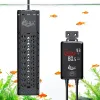
Submersible Aquarium Heater, Quartz Glass with External Controller...
Original price was: $39.59.$37.39Current price is: $37.39.












Add comment
You must be logged in to post a comment.