
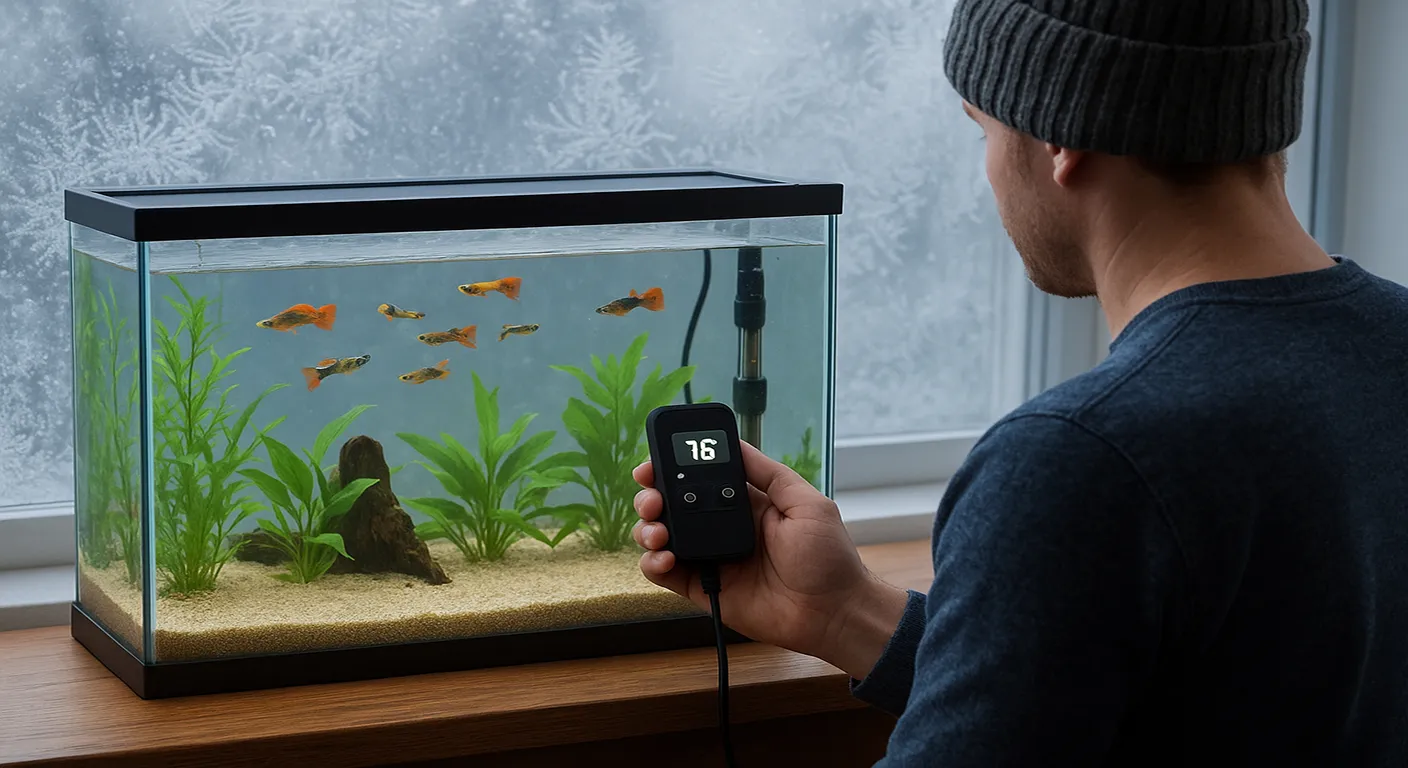
My first winter with tropical fish, I figured the heater would handle everything on its own. Wrong. I woke up one morning to my tetras acting all weird and my betta barely moving. Checked the thermometer and it was way lower than it should’ve been. Turns out winter throws a bunch of problems at you that nobody warns new fishkeepers about. Cold drafts sneaking in, temps dropping at night when you’re asleep, and the days getting shorter, which actually messes with how your fish’s body works.
Even if the temp drops just a little bit, tropical fish start getting lazy, stop eating, or straight up get sick. What you need to know is this isn’t something you can ignore and hope it goes away.
In this guide, we’ll walk you through 7 things that actually work to keep your fish alive through winter. Why temps need to stay steady, what can go wrong with your specific tank setup, and how to keep everything warm without stressing about it every day.
Why Tropical Fish Need Stable Temperatures in Winter
Tropical fish come from warm places near the equator. Places where water temps don’t really change. Your tetras, angelfish, bettas. Back home for them, the water might go up or down by 1 degree, maybe 2. Drop the temp on them suddenly and watch what happens. They get stressed out, stop fighting off diseases as well, and barely want to eat.
But temperature problems don’t just mess with your fish directly. They also mess with your water chemistry. Those good bacteria in your filter that break down fish waste? They slow down, too, when it gets cold. And that means ammonia and nitrate levels can creep up without you realizing it.
The usual suspects for winter temp problems are pretty predictable. Temps dropping at night while you’re sleeping. Cold air sneaking in through doors or windows. Your room cooling off after you turn the lights out. Any of these can throw off a tank that was doing fine all summer.
Common Tropical Fish Winter Temperature Range
| Species | Ideal Temperature (°F) | Notes |
| Neon Tetra | 72–76°F | Sensitive to drops under 70°F |
| Guppy | 74–82°F | Hardy but stressed when <72°F |
| Betta | 78–82°F | Prone to lethargy if <75°F |
| Angelfish | 78–84°F | Should not be kept <76°F |
| Cory Catfish | 72–78°F | Prefer stable, moderate warmth |
How to Assess Your Aquarium’s Winter Risk
Before you start changing stuff for winter, you need to figure out how your tank actually handles the cold. Here’s all the “how” about this:
Measure night-time temperature drops for 3–5 days. Grab a digital thermometer and check how low your temps go overnight. Do this for a few days in a row. You’ll start seeing patterns and figure out when things get risky.
Observe fish behavior. Your fish shows signs when they feel cold. Watch for them acting lazy, hiding more than usual, not eating much, or hanging out right next to the heater all the time.
Check heater size, placement, and condition. Make sure your heater’s big enough for your tank size. It should be near something that moves water around, like your filter output. And check if it’s actually turning on and off like it should.
Identify drafts, cold walls, and poorly insulated spots. Even a little bit of cold air coming in can mess with your water temp over time. Feel around your tank for cold spots on the walls or glass.
Inspect tank equipment for winter readiness. Cold temps can make your filter, pump, and lights work worse. And when they don’t run right, it affects your water temp too.
Monitor room temperature trends. Keep track of how your room temp changes during the day and at night. This matters way more if your room doesn’t have steady heating.
Look for signs of uneven heating in the tank. Got cold spots in the corners or near the top? That usually means your heater isn’t strong enough or the water isn’t circulating well.
Check for water evaporation patterns. If your water’s evaporating faster in winter, that can drop your water level and make temps jump around more. Especially in smaller tanks.
7 Steps to Help Your Tropical Fish Tank Safely Overwinter
We’ve done our research for you so you can avoid the surprises and find yourself helpless during the peak winter days. Here are some steps to keep your tropical fish tank safe.
Step 1: Monitor and Maintain Your Heater
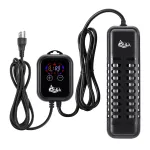
Your heater’s gotta be the right size and actually work properly if you want steady temps through those cold winter nights. Make sure it’s strong enough for how many gallons you’ve got. And check it regularly to see if it’s heating to the temp it says it is. Sometimes they get off, and you don’t notice until your fish start acting weird.
Heater Size Reference
| Tank Size | Recommended Heater Wattage | Notes |
| 5–10 gallons | 25–50 watts | Small tanks lose heat quickly—choose the higher end if the room is cold. |
| 20–30 gallons | 75–100 watts | Good for moderately cool rooms. |
| 40–55 gallons | 150–200 watts | Consider two heaters for even temperature distribution. |
| 75+ gallons | 250+ watts | Large tanks benefit from dual-heater setups. |
Step 2: Choose the Right Tank Location
Where you put your tank makes a huge difference in how it handles winter. You want a spot that stays warm on its own and doesn’t get blasted with cold air from random places.
Go for:
Interior walls that hold heat better
Spots that aren’t near drafts or vents
Stay away from:
Outside walls, windows, doors, and anywhere near your heating or AC vents.
Step 3: Insulate Your Aquarium
Insulation helps keep heat from escaping and takes a lot of pressure off your heater.
Foam backgrounds work great. You can also get side panels or insulated covers for the top of your tank.
What you get out of it: Your temps won’t swing as much, your electric bill goes down, and your heater doesn’t have to work as hard.
Stick with lightweight stuff if you’ve got a glass tank. Heavy insulation can put too much pressure on the glass.
Insulation Methods and Benefits
| Method | How It Works | Best For |
| Foam background | Reduces heat loss through the back panel | Tanks against exterior or cool walls |
| Side insulation panels | Covers cool sides exposed to drafts | Smaller tanks or thin-glass aquariums |
| Lid/cover | Traps warm, moist air and reduces evaporation | All tank sizes |
| Reflective blanket | Reflects heat back into the tank | Emergency cold nights or backup insulation |
Step 4: Use a Reliable Thermometer and Controller
You can’t fix temp problems if you don’t know they’re happening. That’s why you need good monitoring gear.
Benefit: You can watch your water temp all the time instead of guessing. Catches sudden drops before they happen and stops your heater from cooking your fish.
Digital thermometer recommended: These give you accurate numbers and make it easy to see if your temps are all over the place or holding steady.
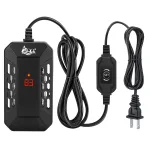
Optional temperature controller: This thing makes sure your heater turns on and off when it should. Keeps everything stable and your fish way less stressed out.
Step 5: Reduce Stress Through Environment and Enrichment
Keeping temps steady is only half the battle. You also need to keep your fish calm during winter. Give them places to hide, like plants, caves, or decorations. When their metabolism slows down, they want spots where they can chill out. Keep your water flow gentle, too. Strong currents wear them out and create cold spots in the tank. And watch how your fish are getting along. Schooling fish or territorial ones can get stressed if the tank feels crowded, especially when winter stuff like extra equipment takes up space.
Step 6: Adjust Lighting and Day/Night Cycle
Here’s something most people don’t think about. Your lights throw off a little bit of heat during the day. So if your room’s freezing, leave some low lights on longer to help when temps drop at night. Just don’t overdo it. Fish need their regular day and night cycle. Mess with that too much, and they get stressed.
Step 7: Maintain Water Quality and Fish Health
Water quality matters even more in winter because your fish are already dealing with colder temps.
Do your regular water changes but make sure the new water matches your tank temp. Cold water straight from the tap will shock them.
Don’t change things too fast during maintenance. No sudden temp swings or chemistry changes.
Feed a little less if your fish are moving slower from the cold. Their metabolism drops, and they can’t process as much food.
Watch for warning signs. Stress, disease, fins clamped against their body, or trouble breathing.
Why Your Aquarium Temperature Drops at Night
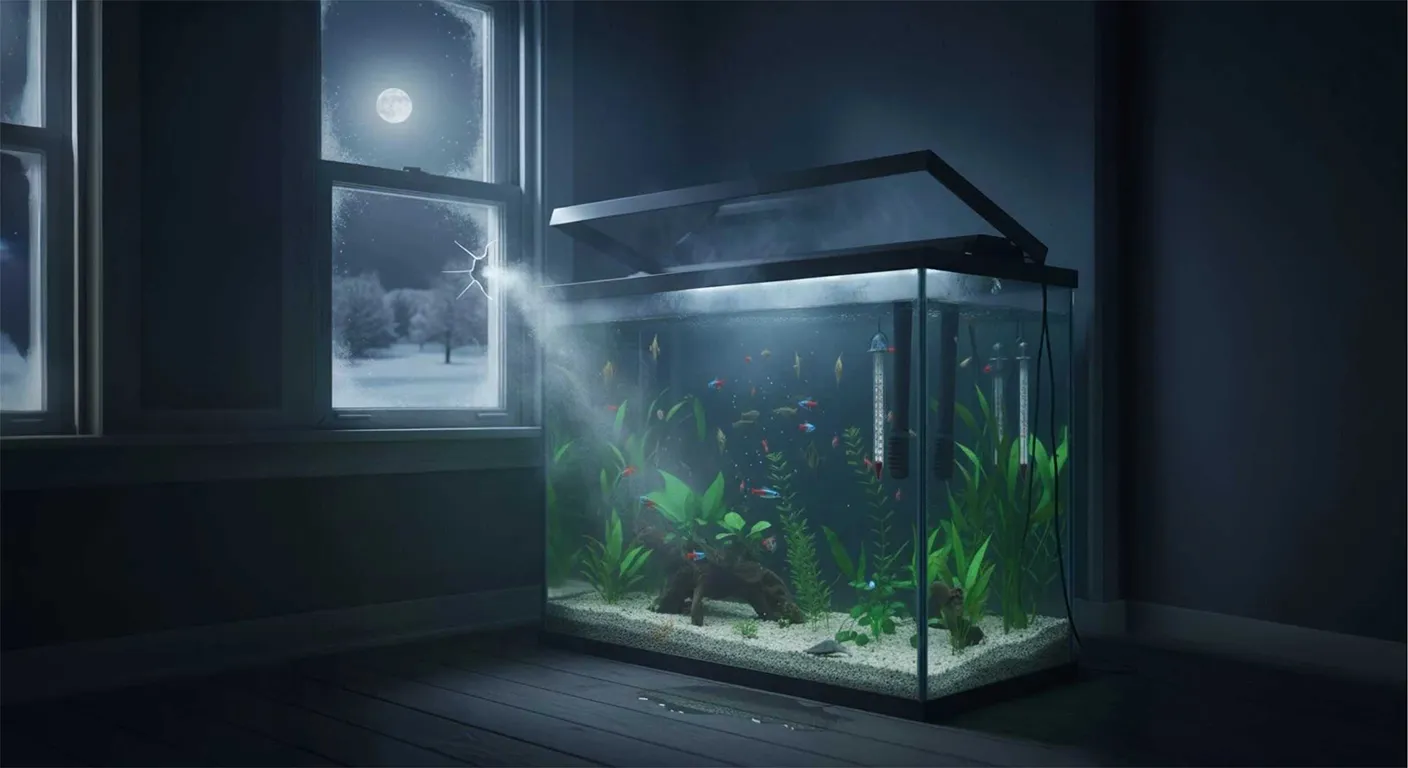
Nighttime’s when your tank’s most at risk.
Room Temperature Variations: Your house heat goes down at night. Sometimes, it’s enough to mess with your water temp.
Lights Turning Off: Tank lights add a little warmth. Turn them off, and the water cools fast, especially in smaller tanks.
Drafts and Window Placement: Cold air from windows, cracks, or outside walls can tank your temps quick.
Evaporation: Water evaporates and cools things down. Less humidity means even more heat loss.
Undersized or Malfunctioning Heater: If your heater’s too small or busted, it can’t keep up on cold winter nights.
Poor Insulation Around the Tank: Tanks against cold walls or sitting on freezing floors lose heat way faster.
High Tank Surface Area: Wide shallow tanks lose heat quickly than tall deep ones.
Nighttime Drafts from Doors or Vents: Random blasts of cold air create cold pockets in your water.
Additional Tips for Safe Overwintering
Keep an eye on room humidity. Stops water from evaporating as fast and losing heat.
Have backup heaters ready. Super important for big tanks or expensive fish.
Do maintenance during the day when it’s warmer. Avoids shocking your fish with sudden temp changes.
Wrap exposed sides of your tank with foam panels or even blankets if you need extra warmth.
Don’t do water changes at night. Cold tap water straight into the tank will freak your fish out.
Clean your filters regularly. Cold temps slow down the good bacteria, and your water quality takes a hit.
Check on your fish more often in winter. Catch problems early before they get bad.
Conclusion
Getting your tropical fish through winter comes down to a few things. Watch your heater. Stop those nighttime temp drops. Keep your water clean. Do these right, and your fish stay healthy and calm when it’s cold out.
You can’t just set it and forget it in winter. Check your temps regularly. Watch how your fish are acting. Look at what’s going on in your tank. Spot problems early and fix them before your fish start suffering. Sometimes it’s the little stuff that makes the difference. Moving your heater to a better spot or throwing some insulation on the tank sides can completely change things.
Bottom line is tropical fish need you to pay attention during winter. They’re not like outdoor pond fish or goldfish that can handle the cold. These guys need it warm all the time. Even small temp swings mess them up and make them sick. Stay on top of it, and your fish will do fine all winter long.
FAQ
1. How can I tell if my heater is too small for my tropical tank?
If your heater’s running nonstop but your temps still drop, it’s too small. A good heater should turn on and off, not stay on all the time. You need around 3 to 5 watts per gallon, more if your room gets freezing.
2. Are there alternative ways to keep my fish tank warm besides a heater?
Not really. Insulation helps, moving the tank to a warmer spot helps, and keeping your room warmer helps. But none of that replaces a heater. You need one.
3. Will fish get sick from sudden nighttime temperature drops?
Yep. Sudden drops hit their immune system hard, and diseases show up fast. Ich, fin rot, stuff like that. Keep temps steady, and you won’t deal with most of it.


Add comment
You must be logged in to post a comment.