
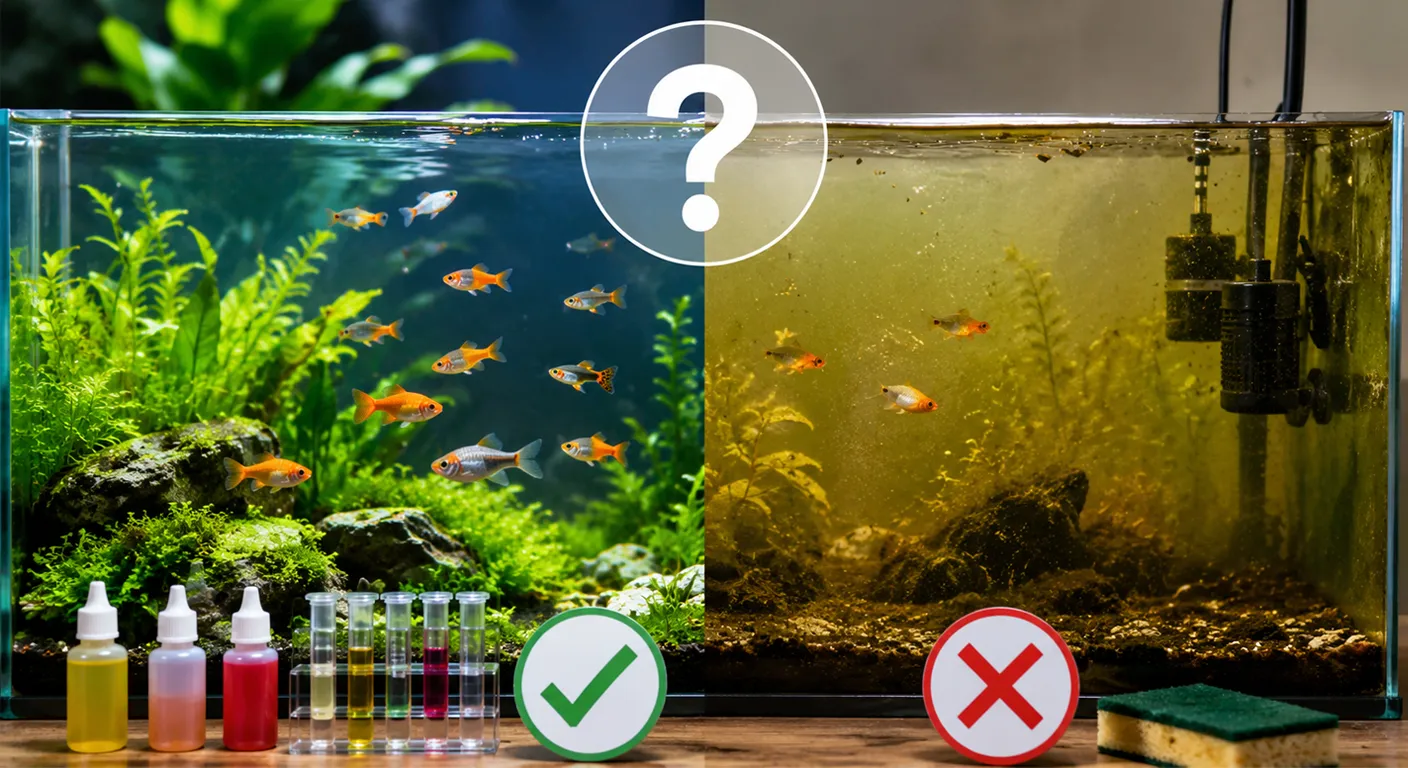
Aquarium advice sounds simple. Get a small tank. Wait a week. Add medicine if something looks off. The trouble is that many of these rules don’t hold up for every fish or every tank.
A small tank isn’t always easier. Clear water doesn’t mean good water. More treatments don’t always help a sick fish. Good care starts with knowing your species and your setup. What works for one fish might not work for another.
I believed half of these when I started. A store worker told me a tiny tank was perfect for a beginner. I lost fish before I understood why. I thought regular feeding and clean water were enough. Turns out, there was a lot I didn’t know.
The problem is that these myths sound reasonable. You hear them from friends, online forums, and even fish stores, so it’s easy to believe them.
This guide covers seven freshwater myths that lead to poor choices. Each section explains what’s really happening and what you should do instead.
Aquarium Myths at a Glance
| Common myth | Reality in brief |
| Small aquariums are always easier. | Small volumes leave less room for error. |
| Fish grow only to the size of their tank | Stunted growth is a health problem. |
| Every tank cycles on a fixed schedule | Timing depends on the setup. Tests tell you when it’s ready. |
| Clear water means healthy water. | Ammonia and nitrite are invisible. |
| Topping off replaces water changes. | A top-off adds water but doesn’t remove waste. |
| Live plants take care of the whole tank | Plants help but still need monitoring. |
| More treatments help sick fish best. | Diagnosis should come before products. |
1. Myth: Small Aquariums Are Always Easier to Maintain
Small tanks look easy. They fit on a desk. They cost less up front. But a convenient size is not the same as a stable tank.
In a small volume, everything changes fast. A little extra food or one skipped water change can push ammonia up quickly. A bigger tank forgives more mistakes. It also costs more and takes more work to clean. Neither one is maintenance-free.
What to do instead: Pick a tank that suits the adult size and behavior of your fish. Think about the equipment too. Then be honest about how much time you can give it each week.
2. Myth: Fish Grow Only to the Size of Their Tank
You’ve probably heard this one. It sounds comforting. It’s wrong.
A fish in a tank that’s too small doesn’t adapt. Its growth just gets held back. That can hurt its organs and shorten its life. The little fish in the store bag tells you nothing about how big it will get. Plenty of common fish grow much larger than people expect.
“It still fits” is not a welfare check. Adult size matters. So do swimming space and how well the fish get along.
What to do instead: Research the species before you buy. Plan the tank for the adult fish and not the baby in the bag.
3. Myth: Every Aquarium Finishes Cycling on a Fixed Schedule
Lots of guides say a tank cycles in four weeks. Mine didn’t. Yours might not either.
Cycling is how helpful microbes build up in your filter. Fish waste makes ammonia. One group of microbes turns ammonia into nitrite. Another group turns nitrite into nitrate. That’s your biological filter.
The real picture is messier. The microbe community is more varied than the simple two-bacteria story. Temperature and the amount of waste change the timeline. So do the filter media and how the tank was set up. A calendar can’t tell you when it’s done.
What to do instead: Trust your test kit. A cycled tank handles waste on its own. Ammonia and nitrite stay at zero while nitrate shows up. Counting days doesn’t prove it. A bottle of bacteria alone doesn’t either.
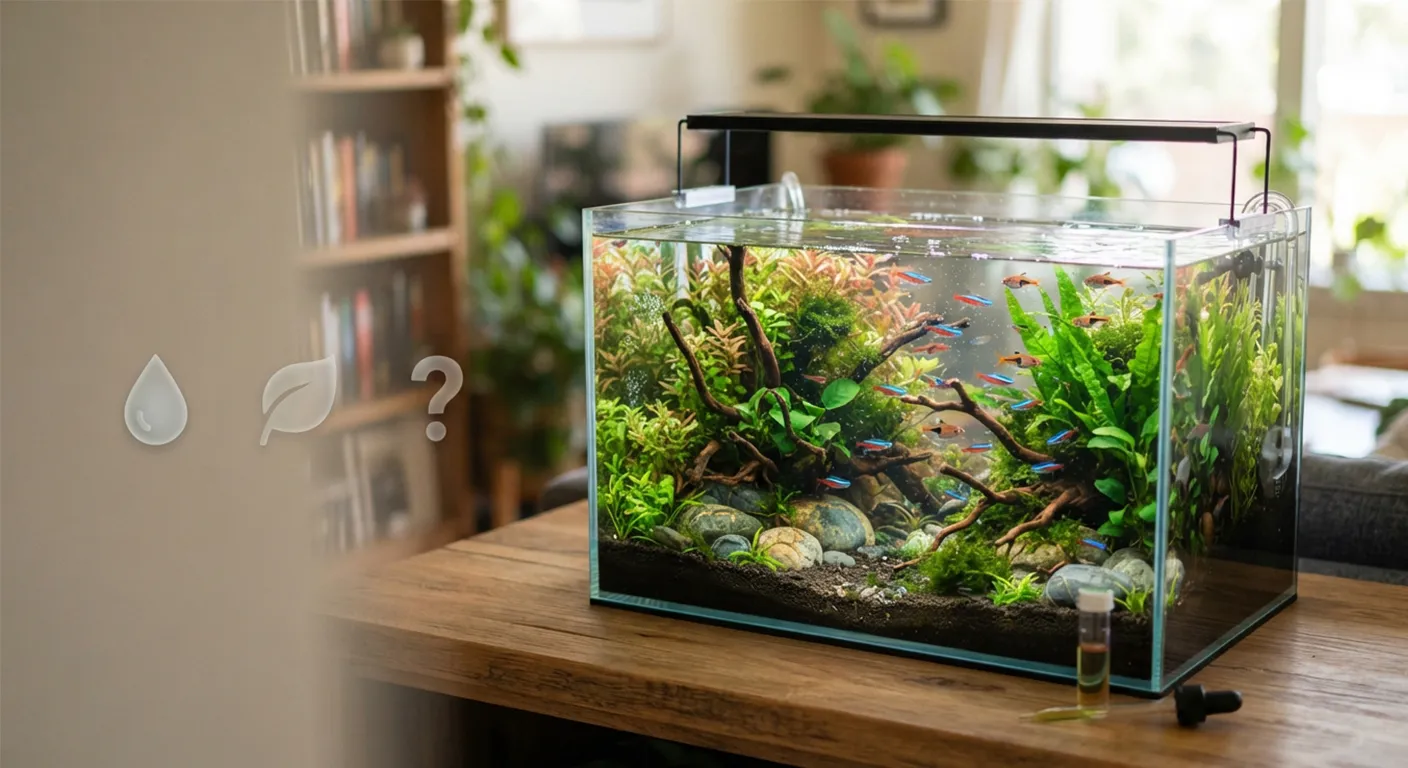
4. Myth: Clear Water Means Healthy Water
I once had a tank that looked like glass. My fish were gasping at the surface. The water test showed a nitrite problem I couldn’t see at all.
You can’t see ammonia. You can’t see nitrite. Both can hurt fish even at low levels. Nitrate matters too. So do pH and temperature. And species differ in what they need. A fish from soft and acidic water doesn’t want the same numbers as a livebearer.
What to do instead: Watch how your fish act. Test on a routine. Then read the results for your species and your setup.
5. Myth: Topping Off Water Replaces Water Changes
Water evaporates. But only the water leaves. The waste stays behind and gets more concentrated.
A top-off adds water. A water change removes old water and the waste dissolved in it. They sound alike but do different jobs. If you only top off, you can let problems build for months. The tank may look fine the whole time.
What to do instead: Treat them as two separate tasks. Top off when the level drops. Then set your water change routine by test results and what your tank needs.
6. Myth: Live Plants Take Care of the Entire Aquarium
Plants are great. They take up nutrients and give fish places to hide. I love them.
But they aren’t a cleaning crew. Plants also respire. At night, they use oxygen like everything else in the tank. They don’t guarantee good oxygen levels or clean water. And stronger lighting isn’t always better. Too much light can feed algae instead.
What to do instead: Choose plants that suit your setup and your lighting. Keep checking water quality and circulation. Keep watching your fish too.
7. Myth: Adding More Treatments Is the Best Way to Help Sick Fish
When fish get sick, it’s tempting to pour something in. I’ve done it. It rarely helped.
Poor water often plays a part in illness. Different diseases need different responses. Symptoms like spots or clamped fins aren’t a diagnosis. Salt isn’t a cure for everything. Antibiotics aren’t either. Using them when they aren’t needed can select for resistant bacteria. That makes the next illness harder to treat.
What to do instead: Check your water first. Write down what you see. Then try to get a real diagnosis. If the problem is serious, talk to a vet who treats fish.
Conclusion
Good aquarium keeping isn’t about following rigid rules. Tank size and fish growth depend on the species. Cycling time depends on the setup. Water changes and treatments depend on what’s actually happening in your tank. Plants help, but they don’t do everything.
So research the adult needs of every fish you plan to keep. Test your water instead of judging it by eye. Make choices based on real tank conditions. When this becomes a routine, you will know whenever something is off with your tank at a glance.
Treat general advice as a starting point. It’s not a universal rule. When something doesn’t fit your tank, trust what your tests and your fish are telling you. Pay attention to changes in their behavior, feeding habits, and activity levels. Over time, you’ll get better at spotting problems early and making small adjustments before things get worse.

Add comment
You must be logged in to post a comment.