
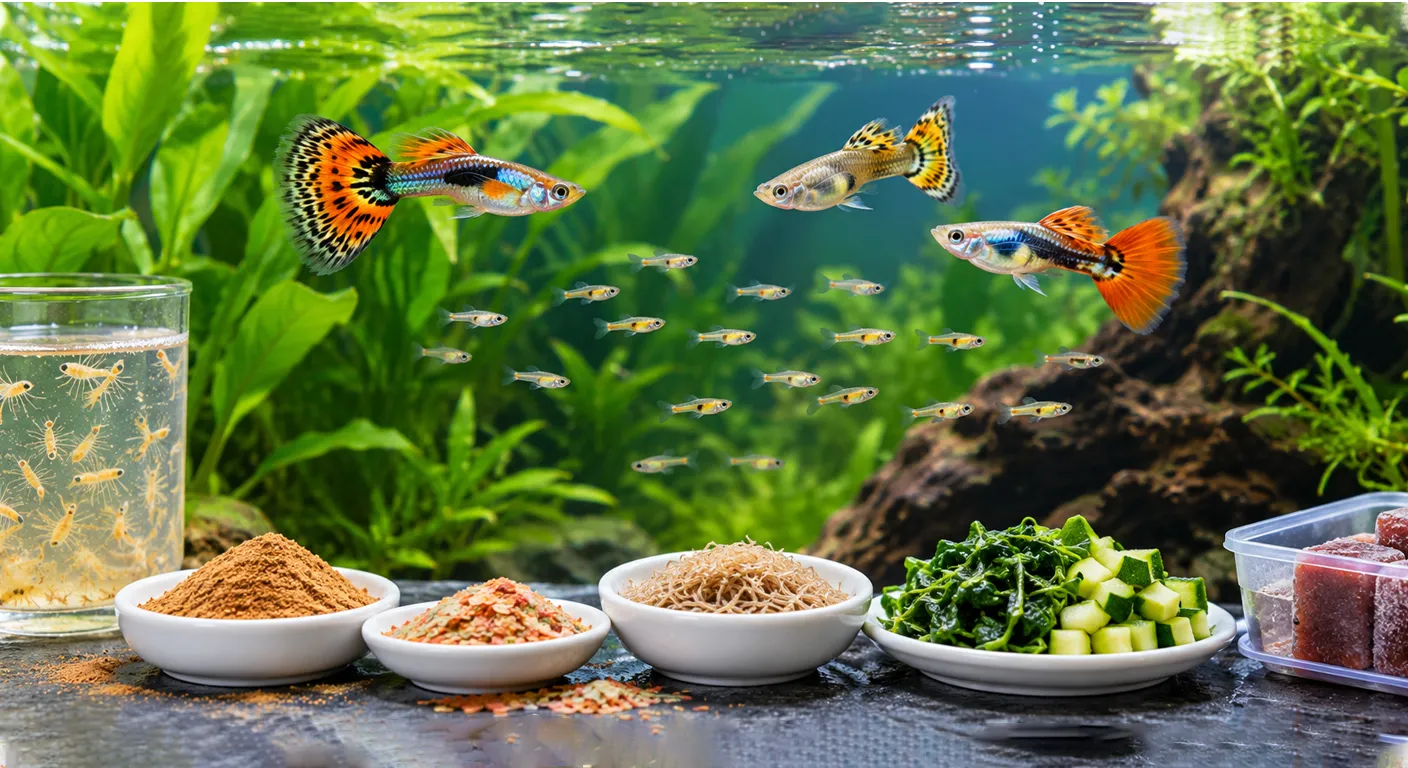
Guppies breed so easily that many keepers assume they can feed them anything. Fry tell a different story. Newborn fish grow quickly, and one wrong meal can cause real losses. Breeding females also need steady nutrition to carry healthy broods. This guide explains which foods suit each stage and how much to offer. It also covers what to avoid, so your fish stay strong and your water stays clean.
Feeding Newborn Guppy Fry
Newborn fry need food small enough to swallow without effort. Many first attempts fail because the particles are too large. A piece that looks tiny to you may still be too big for a fish that is only hours old.
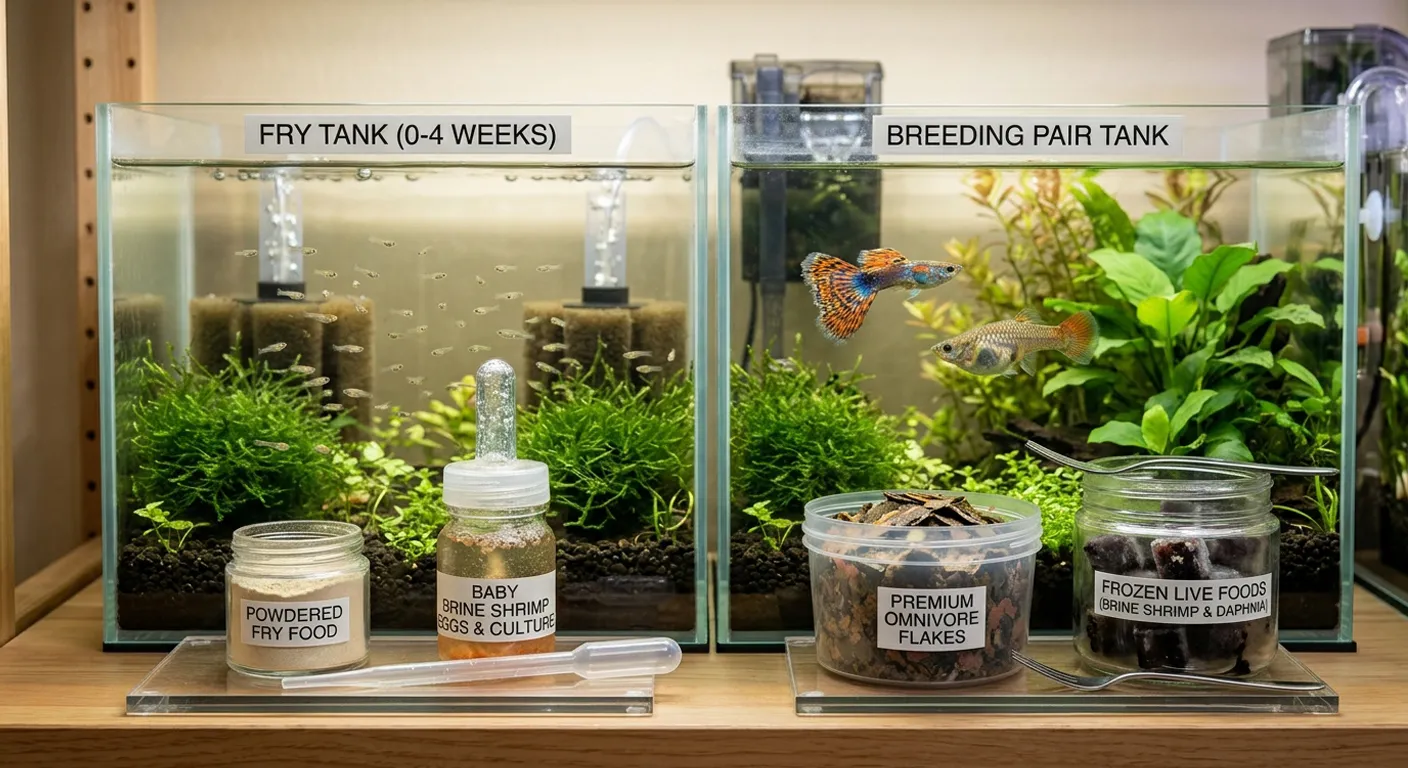
Separate newborn fry from the adults right away, because adult guppies will eat them. A breeding net or a small separate tank protects the fry until they are large enough to avoid being eaten. Most fry start searching for food within hours of birth, so have your food ready before the babies arrive.
Feed fry several small meals each day rather than one or two large ones. Frequent portions keep them growing at a steady pace. They also lower the chance that uneaten food rots on the bottom before a fry can reach it.
Baby Brine Shrimp for Growth
Newly hatched brine shrimp, known as nauplii, are one of the most popular live foods for guppy fry. They are rich in protein, and fry hunt them actively. You can hatch them at home using dry brine shrimp eggs. You will need a container of saltwater and a small air pump. The eggs usually hatch within one to two days at room temperature.
Rinse the hatched nauplii in clean water before adding them to a freshwater tank. This removes most of the salt they carry. Add only a small amount at a time with a pipette. Spread the shrimp across the area where the fry feed.
Portion control matters here. A large batch looks generous, but most of it will sink and decay. Remove any leftovers after about 15 minutes. Dead nauplii break down quickly and can raise ammonia in a small tank.
Powdered Fry Food and Crushed Flakes
These two options are practical staples for most fry tanks. Powdered fry food is made for very small mouths. It spreads across the surface where fry can pick it up. Sprinkle only a light dusting over the water. A pinch is usually enough for a small tank.
Crushed flakes work well once the fry grows a little larger. Grind a flake between your fingers or in a small mortar until the pieces look almost like dust. Coarse flakes often pass through the fry untouched and sink to the substrate. Remove any leftover pieces within a few minutes. They soften and foul the water fast.
Microworms and Infusoria
Microworms are tiny nematodes that fry can catch with ease. Infusoria are microscopic organisms that bloom in a jar of water containing decaying plant matter. Many keepers grow them from boiled lettuce or a banana peel left in water for several days. Both give fry a natural food source. That food stays in the water longer than most prepared options.
Clean sourcing matters more with live cultures than with any other food. Buy starter cultures from a reputable supplier or from a hobbyist with healthy stock. Discard any culture that smells sour or rotten. It can carry bacteria and parasites into your tank. Keep culture containers covered and rinse them regularly so unwanted growth doesn’t build up.
Feeding Breeding Guppies
Breeders need a consistent staple and some dietary variety. Bigger portions do not solve the problem. Excess food quickly raises ammonia and nitrite, both of which harm developing fry. A female that overeats can also develop bloating and stress the whole tank.
Guppies are livebearers, so a female carries her fry for roughly three to four weeks before birth. Females can store sperm for months. That means one mating can produce several broods. Steady feeding through each pregnancy helps her maintain her condition without wasting food. Feed in the same corner of the tank every time. Adults learn where food lands, and you can spot leftovers faster.
Flakes and Micro Pellets as the Base
Choose a quality freshwater omnivore formula as the main diet. Look for fish meal, krill, or spirulina near the top of the ingredient list. Manufacturers list ingredients by weight, so the first few matter most. Avoid products heavy on filler grains.
Micro pellets suit adult guppies because they are small enough to swallow without fuss. Pellets also sink slowly, which gives shy fish a fair chance at a meal. A simple test helps with portions. If adults finish the food in about two minutes, the amount is right. If food remains after that, offer less next time.
Brine Shrimp and Daphnia for Conditioning
Live or frozen foods work best as occasional supplements. Brine shrimp and daphnia add protein and encourage natural feeding behavior. Many breeders offer them two or three times a week. This keeps adults in strong condition before and during pregnancy.
Thaw frozen cubes in a small cup of tank water rather than dropping them in directly. Then drain off the excess liquid before feeding. That liquid can carry bacteria and cloud the water. It also adds waste the filter must handle.
Plant-Based Foods for Balance
Guppies graze on plant matter in the wild. Plant-based foods help balance a diet built mainly on animal protein. Spirulina-based foods are a convenient choice. Finely prepared vegetables such as blanched spinach or zucchini also work well. Blanch them briefly, cool them, and chop them into small pieces.
Offer plant foods once or twice a week at most. They supplement a balanced staple and should never replace it. Remove soft vegetable pieces after a few hours so they do not decay in the tank.
A Note on Pregnant Females
A rounded belly alone is not a reason to increase feeding. A pregnant female carries developing fry, and her abdomen grows as they mature. Look for the gravid spot, a darker area near the rear of her belly. It becomes more visible as delivery approaches. The belly may look squared off close to birth. That shape is normal and does not mean she needs a bigger meal.
Keep her portions the same as before pregnancy. Include live or frozen food only as part of the regular weekly rotation.
Feeding Schedule
Use these stages as a starting point. Adjust portions based on how quickly food disappears and how the fish look.
- Newborn fry in week one: three to four small feedings daily, using powdered food, infusoria, or microworms.
- Fry in weeks one to four: three feedings daily, shifting gradually toward crushed flakes and brine shrimp.
- Juveniles from one to three months: two feedings daily, with brine shrimp about three times a week.
- Breeding adults: one or two small feedings daily, with live or frozen food two to three days a week.
- Nonbreeding adults: one or two small feedings daily, with plant-based food once or twice a week.
Mistakes to Avoid
- Feeding large portions in one sitting, which leaves food to rot before fry can reach it.
- Leaving uneaten flakes or shrimp on the bottom, since they raise ammonia within hours.
- Using cloudy or sour microworm cultures, which can introduce bacteria and parasites.
- Giving whole flakes to fry, since they pass through untouched and waste food.
- Adding extra food to a pregnant female simply because her belly looks round.
- Relying on a single food type for every meal, which limits nutrition over time.
Signs Your Feeding Plan Needs Adjusting
Watch the water and the fish every day. Cloudy water, a film on the surface, or a sour smell usually means you are feeding too much. Flies that sit at the bottom with sunken bellies may be underfed or struggling to find food. Healthy fry looks active and round after a meal. Food shows as a darker line in the gut, which is easy to spot against a light background.
Adult guppies with a swollen belly that stays swollen for several days may be overfed or constipated. Change one variable at a time. That way you can see what actually improves the result.
If the water looks off, test it with a basic liquid kit. Any measurable ammonia or nitrite is a warning sign for fry. It means your feeding amounts need to drop right away.
Simple Weekly Plan
A repeatable routine built on prepared food, controlled supplements, and daily checks keeps things simple. You can follow it without much effort once it becomes a habit. Keep a short notebook of what you fed and when. Patterns in appetite and water changes show up faster that way.
For Fry
- Daily: three small feedings of powdered food, infusoria, or microworms.
- Most days: one feeding of brine shrimp after the midday meal.
- After each feeding: remove leftovers within a few minutes.
For Breeding Adults
- Daily: one or two small feedings of quality flakes or micro pellets.
- Two to three days a week: frozen brine shrimp or daphnia.
- One day a week: spirulina-based food or blanched vegetables.
- Daily check: look for leftover food and watch for bloating or lethargy.
Keeping Water Clean
Frequent feeding creates waste. Every uneaten crumb breaks down and adds ammonia to the water. Partial water changes of about 10 to 20 percent each week keep levels stable in fry tanks. Siphon debris from the gravel during each change, but leave a small area undisturbed. Light film and tiny organisms growing there give fry extra grazing between meals.
A sponge filter works well for fry. The sponge gives beneficial bacteria a place to grow. Its gentle flow will not pull tiny fish into an intake. Rinse the sponge only in water you have removed from the tank. That way, the bacteria survive the cleaning.
Conclusion
Guppy fry and breeding guppies do well on the same core principles. Choose foods that fit the mouth size, offer small portions, and remove leftovers quickly. Add variety through live, frozen, and plant-based options, but keep them as supplements. Watch the fish and the water every day. Those small habits will do more for your fry than any expensive food.


Add comment
You must be logged in to post a comment.