
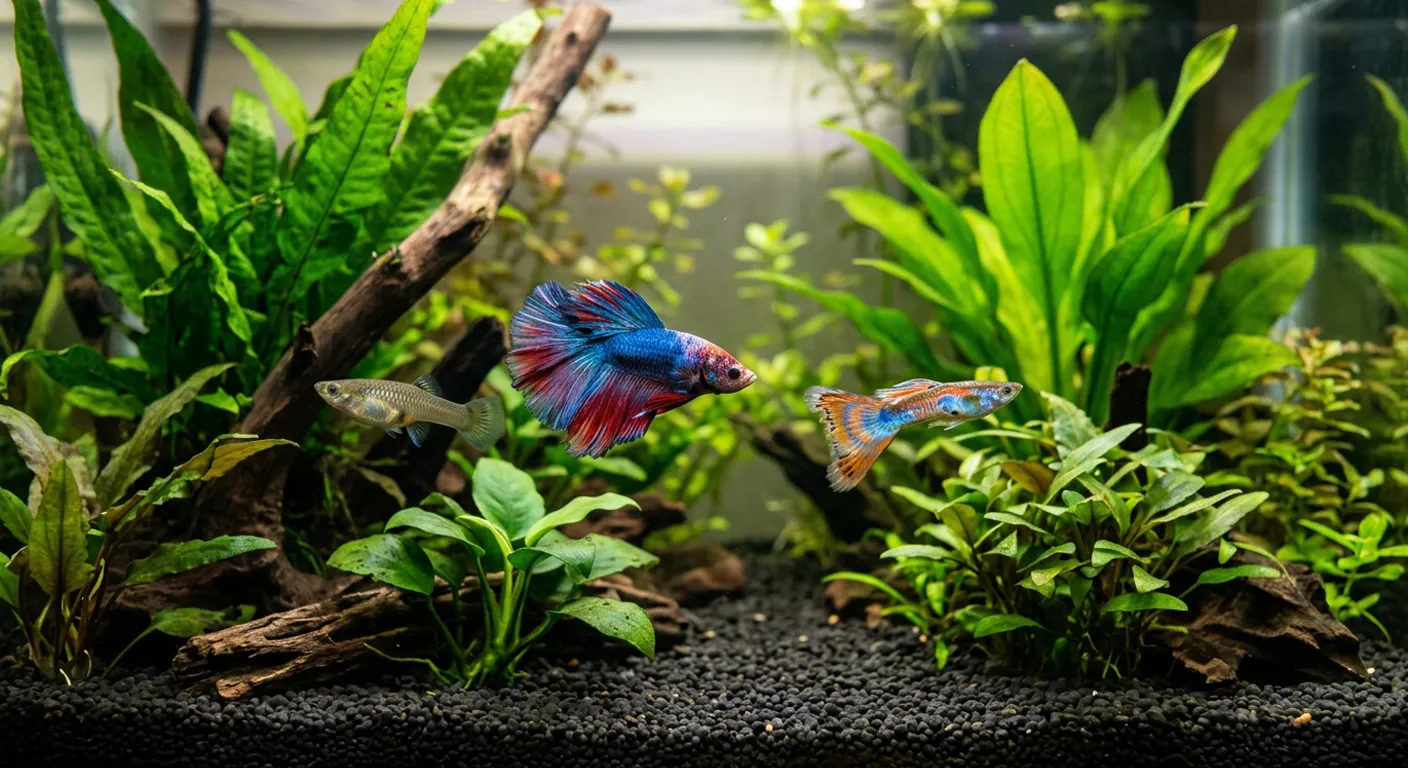
Guppies and bettas can share a tank in some situations, but it’s not a combination that works for every keeper. Territorial behavior, flashy guppy fins, tank size, and individual temperament all play a role in whether things stay peaceful or fall apart quickly.
In this guide, we’ll go through the main compatibility risks. How tank size and water conditions affect the decision. What to prepare before introducing the fish. And when separation is simply the safer option.
Can Guppies Live with Bettas
The honest answer is sometimes. It works in some tanks and fails in others. The difference usually comes down to the individual fish rather than any rule you can apply in advance.
Peaceful behavior on day one doesn’t mean things will stay that way. A betta that ignores guppies at first can turn aggressive weeks later. Compatibility isn’t a one time check. It needs ongoing monitoring.
Before trying this combination, ask three things. Is there enough space? Do the care requirements actually overlap? And do you have a separate tank ready if it doesn’t work out? If any of those answers is no the combination isn’t ready to try.
Why Can Guppies and Bettas Be a Risky Combination
Aggression and Fin Damage
Bettas are territorial. They claim space and defend it. A guppy moving through that space regularly will eventually draw a response. Male guppies with long, flowing, colorful fins are especially likely to trigger aggression because they look similar enough to another betta to provoke a reaction.
Fin nipping can go both ways too. Guppies occasionally nip at betta fins, especially in groups. Neither outcome is inevitable, but both are common enough that they need to be taken seriously before putting the fish together.
Stress and Feeding Competition
Aggression doesn’t always show up as visible injury. A guppy that spends most of its time hiding or avoiding certain areas of the tank is under stress even if its fins look intact. Chronic stress weakens immunity and shortens lifespan.
Feeding competition is part of this. If a guppy can’t reach food without being chased away, it will slowly decline. A fish that looks physically fine but is losing weight is telling you something is wrong.
Risks to Baby Guppies
Adult compatibility and fry safety are completely separate questions. Even a betta that tolerates adult guppies will hunt fry. If raising guppy fry is part of the plan, a separate rearing tank is not optional. The main tank is not a safe place for baby guppies regardless of how the adults are getting along.
Does the Male or Female Combination Matter
Male Bettas with Male or Female Guppies
Male guppies with long ornate fins are more likely to draw aggression from a male betta. Female guppies are less visually similar to a betta rival, which reduces that specific trigger. But switching to female guppies doesn’t remove the risk of aggression. A territorial betta may still chase and harass plain-looking fish. The fin appearance changes the likelihood. It doesn’t change the fundamental dynamic.
Fancy long-tailed guppy varieties are the highest risk pairing with a male betta. Short finned or plain guppy varieties are a safer choice if the combination is going to be attempted at all.
Female Bettas with Guppies
Female bettas are sometimes treated as automatically safe community fish. That’s not accurate. Individual female bettas vary significantly in temperament. Some are genuinely calm. Others are territorial and aggressive in ways that match male behavior closely. Sex alone is not a reliable predictor. The individual fish’s behavior is what matters, and that can only be assessed through careful observation after introduction.
Is Your Tank Suitable for Guppies and a Betta
Tank Size and Available Space
Tank size is one of the most important factors and also one where published recommendations differ. Chewy lists 10 gallons as suitable for guppies as betta tank mates. Betta Aquatic recommends 20 gallons or more. The difference reflects how much margin for error you want to build in.
| Tank Size | Main Questions to Assess | Article Verdict |
| 5 gallons | Is there enough space for territory separation? Is there room for plants and hides? | Not suitable. Too small to reduce conflict reliably |
| 10 gallons | Does the footprint allow visual breaks? Is stocking already at capacity? | Possible with a single short finned male guppy or a small female group. Monitor closely |
| 20 gallons or larger | Is there enough open swimming space alongside planted areas? Is filtration adequate? | Better chance of success. Still not guaranteed |
A larger tank doesn’t make the combination safe. It just gives both fish more room to avoid each other, which reduces how often conflict has a chance to happen.
Temperature and Water Parameters
Bettas prefer 76 to 82 degrees Fahrenheit. Guppies are comfortable between 72 and 82 degrees. The ranges overlap enough to find a shared temperature. pH ranges also overlap broadly between 6.8 and 7.8.
Overlapping ranges don’t automatically make the setup suitable. Forcing adjustments to water chemistry purely to make an incompatible pairing work creates instability that stresses both fish. The parameters need to work for both species without compromising either.
Plants, Cover, and Filtration
Dense planting and hardscape break up the line of sight across the tank. That reduces how often the betta sees the guppies and gives guppies places to retreat when they need distance. Java fern, Amazon sword, and floating plants all help with this.
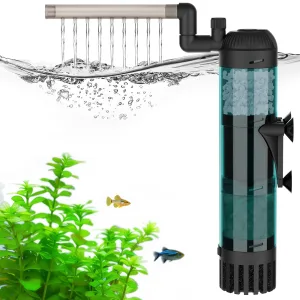
Filtration needs to handle the bioload of both species without creating strong current. Bettas don’t do well in high flow, and guppies prefer moderate movement. A sponge filter or a low-flow hang-on-back filter works well for this combination. Plants and equipment reduce conflict opportunities. They don’t prevent aggression from happening.
What Should You Prepare Before Combining Them?
Preparation doesn’t guarantee success. It just means you’re not scrambling to fix things after something goes wrong.
Confirm the tank size and stocking level are actually suitable before adding any fish
Quarantine new fish for at least two weeks in a separate tank before introduction
Have a fully cycled separate tank or divider ready before the introduction happens. Not after
Add the guppies to the tank before the betta when possible. Letting guppies establish themselves first reduces how strongly the betta claims the whole space
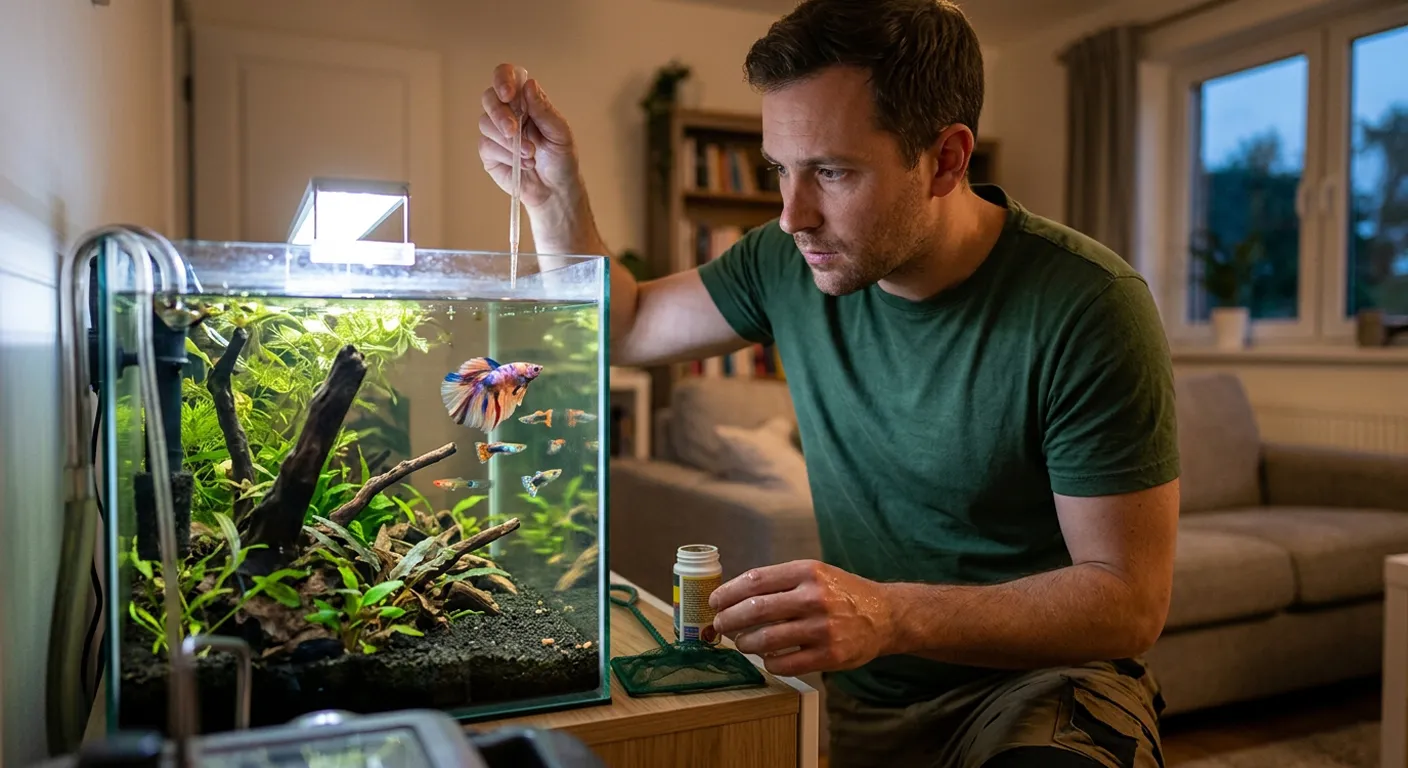
Watch closely for the first several days. Brief investigation is normal. Persistent chasing is not
Check that both species are getting to food during feeding time. A guppy that never gets to eat is being outcompeted even if no fins are damaged
No introduction method eliminates risk. Some pairings simply won’t work regardless of how carefully they’re set up.
What If Your Betta Is Chasing Your Guppies?
Warning Signs to Watch For
Persistent chasing that doesn’t settle down after the first day or two
Fin damage on the guppies or the betta
A guppy spending most of its time hiding or pressed into a corner
Reduced appetite in either fish
The betta fixating on one guppy repeatedly rather than exploring the tank normally
A betta briefly investigating a new tank mate is normal. A betta that keeps returning to chase or corner the same fish is not investigating anymore.
When to Separate the Fish
If chasing is persistent after 48 hours, separation is the right call. Waiting to see if they adjust is not a neutral choice. The fish being chased is under constant stress during that waiting period, and that stress does real damage over time.
A tank divider buys time, but it’s not a permanent solution if the goal is a shared tank. Separate tanks are the cleanest answer when a pairing isn’t working. Moving the guppies to their own tank removes the stressor completely, and both fish settle down quickly.
Don’t wait for injured fish to recover in the same tank as the fish that hurt them.
What Are the Alternatives
A betta kept alone in a well-planted tank is not a betta that’s missing out. Bettas don’t require tank mates, and many do better without them. A single betta in a 10-gallon planted tank with enrichment is a genuinely good setup.
If the goal is a community tank with guppies, a separate guppy-only tank is worth considering. Guppies are social and active, and they thrive in groups. A 20-gallon guppy tank with a small school of compatible fish is a more predictable setup than trying to make them work alongside a betta.
For keepers who want to try compatible tank mates for a betta specifically, there are species that carry less risk than guppies. Short-finned fish that don’t resemble a betta rival and aren’t fast enough to be seen as competition tend to do better. Research species-specific compatibility rather than applying general community fish logic to a betta tank.
Conclusion
Guppies and bettas can work in some tanks, but there’s no guarantee. Tank size, individual temperament, and water conditions all play a role. A pairing that looks fine on day one can still fall apart weeks later.
Be honest about what your tank can actually support before trying this. Have a separate tank ready before the fish go in together. Not after something goes wrong. Watch for persistent chasing, fin damage, hiding, and reduced appetite. Don’t wait and hope they adjust. Some pairings just don’t work.
If you’re not confident about the combination, separate tanks are the straightforward answer. Both fish do fine on their own. A failed pairing causes stress and injury that a separate setup would have avoided entirely.



Add comment
You must be logged in to post a comment.