

You set up a community tank for angelfish. Everything looks peaceful at first. The fish coexist, the water is clear, and the tank looks exactly as you imagined. Then, about six months in, the angelfish grows. They start claiming territory. Smaller fish disappear. The once-calm tank turns into a daily problem to manage. This is one of the most common experiences new angelfish keepers run into, and it happens almost entirely because the community was not planned around how angelfish actually behave as adults.
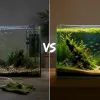
Successful angelfish community tanks tend to follow recognizable patterns. Three setups work particularly well for beginners:
The Serene “Blackwater” Setup
The Dynamic “River-Style” Community
The Large-Scale “Beginner-Friendly” Community
This guide covers all three in detail, with setup notes, compatibility guidance, a comparison chart, and practical advice for choosing the one that fits your situation.
Why Angelfish Need the Right Community
Angelfish are not naturally easygoing community fish. They are cichlids, and that matters. As juveniles, they appear calm and manageable, but adult angelfish are territorial, predatory toward smaller fish, and increasingly assertive as they establish pair bonds. A tankmate that was fine six months ago may become a target once the angelfish reaches full size.
Four factors determine whether a community setup will hold together over time:
Size: Any fish small enough to fit in an angelfish mouth is a potential meal, especially small tetras, nano fish, and juvenile livebearers.
Temperament: Fin-nipping species like tiger barbs cause chronic stress in angelfish, whose long trailing fins are a constant target.
Swimming level: Angelfish occupy the middle column of the tank, so tankmates that stay near the surface or bottom naturally reduce competition for space.
Tank shape: Angelfish are tall fish and need height. A standard 20-gallon long tank does not give them sufficient vertical space, which increases stress and aggression.
Getting these factors right before buying a single fish is what separates a tank that thrives from one that requires constant rearranging.

Archetype 1: Quiet Blackwater Community
What This Tank Feels Like
This is the calmest of the three setups, visually and behaviorally. The water has a slight amber tint from tannins. Fish move slowly and without urgency. There is no scramble at feeding time, no chasing, and very little visible aggression. The overall pace of the tank is unhurried, almost meditative. This setup suits someone who wants an aquarium that looks like a natural river scene and does not want to manage conflict between fish regularly.
Why It Works
The blackwater community is beginner-friendly because the fish selected for this style are naturally compatible with angelfish in temperament, size, and water preference. Species like rummy-nose tetras, cardinal tetras, keyhole cichlids, and dwarf cichlids such as Apistogramma cacatuoides all originate from soft, acidic South American river systems, the same type of environment angelfish come from. When the water parameters and tankmate preferences align, the whole system runs more stably with less intervention.
The lower activity level of the fish in this community also reduces stress on the angelfish. There is no nipping, no excessive competition for food, and no species competing for the same water column.
Basic Setup Notes
A blackwater setup typically includes driftwood, dried leaf litter such as Indian almond leaves, and low-light plants like Amazon swords, Java fern, and Vallisneria. The substrate is dark, either fine black sand or a dark aquasoil.
Lighting is kept dim or filtered through floating plants. Water parameters target a pH between 6.0 and 7.0 with soft to moderately soft hardness, which suits the entire community, not just the angelfish. A tank of at least 55 gallons works well for a pair of angelfish and a school of tetras alongside a small bottom-dwelling group.
Archetype 2: High-Activity River Community
What This Tank Feels Like
This setup has more energy. Fish are actively moving throughout the tank at different levels. There are visible schools, surface activity, and mid-column movement from the angelfish. The tank looks busy in a purposeful way rather than a chaotic one. It suits someone who enjoys watching a lot of fish interaction and wants a tank that looks dynamic rather than still.
Why It Works
A river-style community balances activity with compatibility by selecting fish that are fast enough to avoid angelfish aggression but not small enough to be eaten. Larger tetras, such as black skirt tetras or Congo tetras, work well here since they are too big to be targeted as prey and active enough to fill the tank without provoking territorial behavior in the angelfish. Corydoras catfish handle the bottom level and stay entirely out of the angelfish’s territory. Pearl gouramis can occupy the upper level without creating conflict.
The key principle in this archetype is layered stocking. Each species occupies a distinct zone of the tank, which naturally reduces direct competition and keeps the angelfish from feeling crowded.
Basic Setup Notes
The aquascape for a river-style community is less softscape-heavy and more structured. Driftwood branches, smooth river stones, and moderate planting with species like Vallisneria, Hygrophila, and background stem plants create visual separation and give fish distinct areas to occupy.
Moderate water movement from a well-sized canister filter mimics the flow of a river environment and keeps the water well-oxygenated for an active community. A 75-gallon tank or larger is appropriate here because the fish load and activity level require the extra space to remain stable.
Archetype 3: Beginner-Friendly 55-Gallon Community
What This Tank Feels Like
This is the most practical starting point for someone new to keeping angelfish. It is a straightforward, well-balanced community built around a 55-gallon tank, a manageable fish list, and forgiving water parameters. The tank looks attractive without requiring advanced aquascaping knowledge and stays stable without demanding daily monitoring.
Why It Works
The 55-gallon format is genuinely well-suited to angelfish because it provides adequate height for a pair while offering enough horizontal space for a school of compatible fish. This archetype is intentionally designed to work within normal tap water parameters, which removes the challenge of softening water or maintaining low pH.
Fish selected for this setup, such as swordtails, Bolivian rams, larger rasboras like the giant danio, and bristlenose plecos, are tolerant of a wider pH range and produce predictable, manageable behavior around angelfish.
The difficulty level is lower because the species involved are widely available, inexpensive, and well-documented. There is little guesswork about how fish will behave over time.
Basic Setup Notes
A practical aquascape for this setup includes a mix of artificial and live décor. Low-maintenance plants like Anubias, Java fern, and Cryptocoryne work alongside driftwood to provide cover without demanding specific lighting or CO2 supplementation.
A reliable hang-on-back or canister filter rated for the full tank volume keeps water quality consistent. Water temperature between 76 and 82 degrees Fahrenheit suits the entire community. This is also the easiest setup to find stocking advice online, which matters when you are new and making decisions week by week.
Comparison Table
| Archetype | Tank Style | Best For | Activity Level | Difficulty |
| Quiet Blackwater Community | Soft, tannin-rich, dimly lit | Hobbyists who want a natural, calm look | Low | Moderate |
| High-Activity River Community | Structured, moderate flow, layered planting | Fishkeepers who want visible movement and interaction | High | Moderate to Advanced |
| Beginner-Friendly 55-Gallon Community | Mixed décor, standard parameters, easy planting | True beginners with a standard 55-gallon tank | Moderate | Low |
How to Choose the Right Archetype
Match the Tank to Your Goals
Tank size is the first decision point. If you have a 55-gallon tank already or are buying one specifically for this purpose, the third archetype is the most logical starting point. It is sized for that format and requires the least amount of additional adjustment. If you want the most visually striking result and are prepared to manage water chemistry, the blackwater setup rewards that effort. If tank interaction and visible fish movement are priorities, the river community delivers that, but requires more space and a more deliberate stocking plan. The water source also matters. If your tap water is hard and alkaline, building a blackwater setup requires active effort to soften the water. Starting with the 55-gallon beginner community or the river community allows you to work with your existing water rather than against it.
Match the Tank to Your Comfort Level
The blackwater setup is the most natural-looking but requires some understanding of water chemistry and plant care in low-light conditions. The river community is the most dynamic but needs the most space and the most careful stocking decisions. The 55-gallon beginner community is the most forgiving and the easiest to course-correct if something goes wrong.
New fishkeepers who are still developing their routine should start with the 55-gallon setup. More experienced beginners who are comfortable with water testing and plant maintenance will get more from the blackwater setup. The river community is best approached after keeping angelfish successfully in one of the other formats first.
Common Mistakes to Avoid
Adding angelfish to an already overcrowded tank: Angelfish need space to establish territory. Introducing them into a tank that is already at capacity causes immediate stress and aggression
Choosing fish based on appearance rather than compatibility: Small, colorful fish that look good in the store are often small enough to be eaten by adult angelfish.
Ignoring how angelfish behavior changes with age: A juvenile angelfish at three months behaves very differently at twelve months. Tankmate decisions must consider adult behavior, not juvenile behavior.
Keeping angelfish in tanks that are too shallow: A standard 20-gallon long tank with a depth of only 12 inches is inadequate for adult angelfish, which can reach 6 inches in body height.
Skipping the quarantine step for new fish: New fish introduced directly into an angelfish community tank can introduce disease that spreads quickly through the entire setup.
Pairing angelfish with fin-nipping species: Tiger barbs, serpae tetras, and some barb species will target angelfish fins continuously, causing stress and physical damage.
Underestimating the filter requirement: Angelfish communities with multiple species produce a significant bioload. Filtration rated at the minimum for the tank volume will struggle under real stocking conditions.
Conclusion
This guide covers three practical community tank setups built around the specific needs and behavioral patterns of angelfish: the quiet blackwater community, the high-activity river community, and the beginner-friendly 55-gallon setup. Each archetype reflects a different philosophy for how a tank can be organized and maintained, and each has real advantages depending on your experience level, water source, and aesthetic goals.
The underlying theme across all three is that angelfish community tanks require deliberate planning. Regular inspection of filtration performance, water quality, heater function, and fish behavior is what keeps any of these setups running well over the long term. None of them is a set-and-forget system, but all three are genuinely manageable when the foundational decisions are made correctly.
Treat these archetypes as starting frameworks, not fixed rules. Real aquarium keeping involves ongoing adjustments: trying different plants, rearranging the landscape, and experimenting with stocking combinations. The experience you build through that process is what eventually makes the tank exactly what you wanted it to be from the beginning.
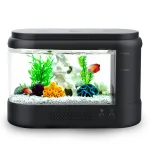
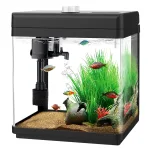
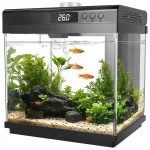
3.7 Gal Aquarium Kit: Filter, 10-Color Light, Self-Cleaning,...
Original price was: $81.99.$77.39Current price is: $77.39.













Add comment
You must be logged in to post a comment.