
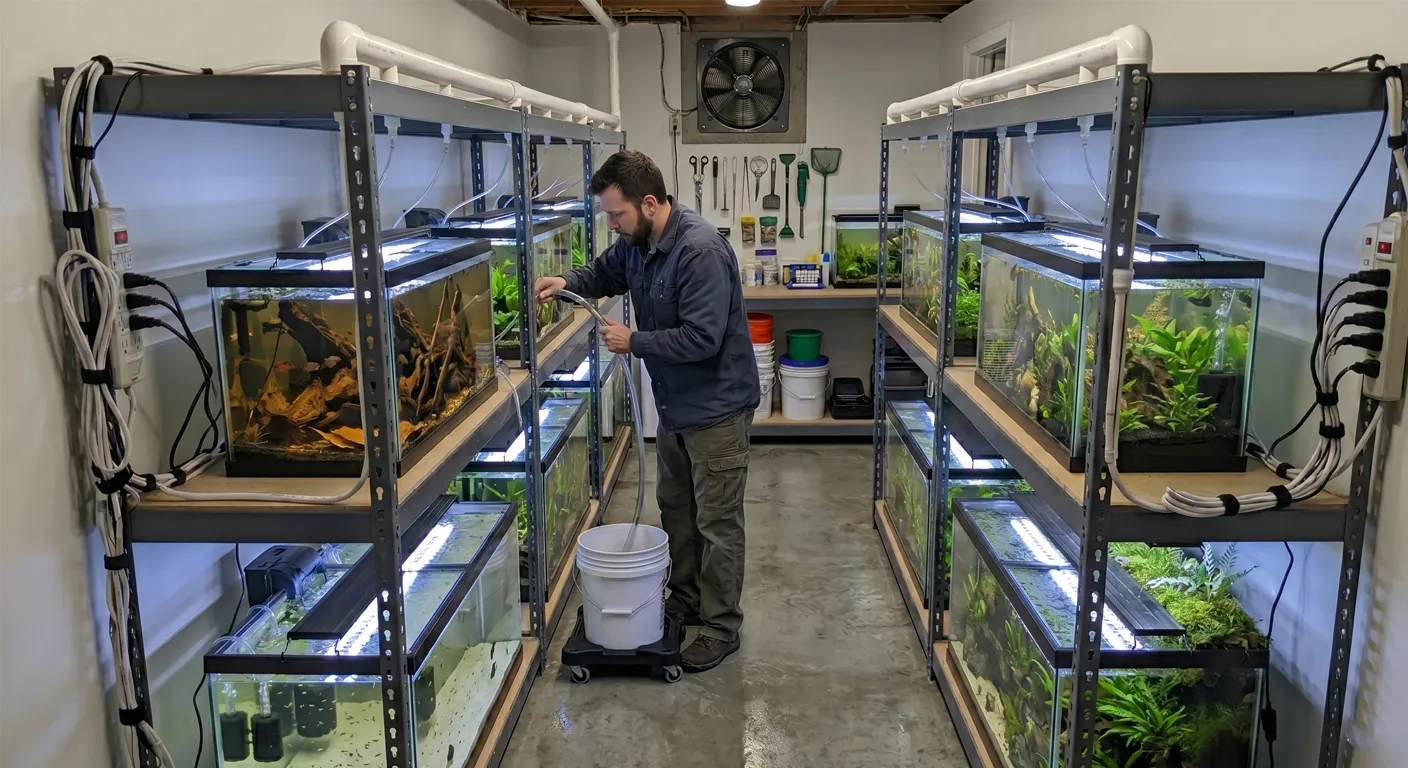
It started with one 10-gallon community tank on the living room shelf. Then a 20-gallon went on the kitchen counter because it seemed like a good spot. Then, there is a 5-gallon betta tank on the desk. A 55-gallon drum showed up in the spare room. Before long, every flat surface in the house had a tank on it, every outlet had something plugged into it, and Sunday maintenance meant running from room to room with buckets, nets, and a growing sense that this hobby had taken over the entire house.
That is what the aquarium community calls multiple tank syndrome. And the cure, it turns out, is not fewer tanks. It is one dedicated room for all of them.
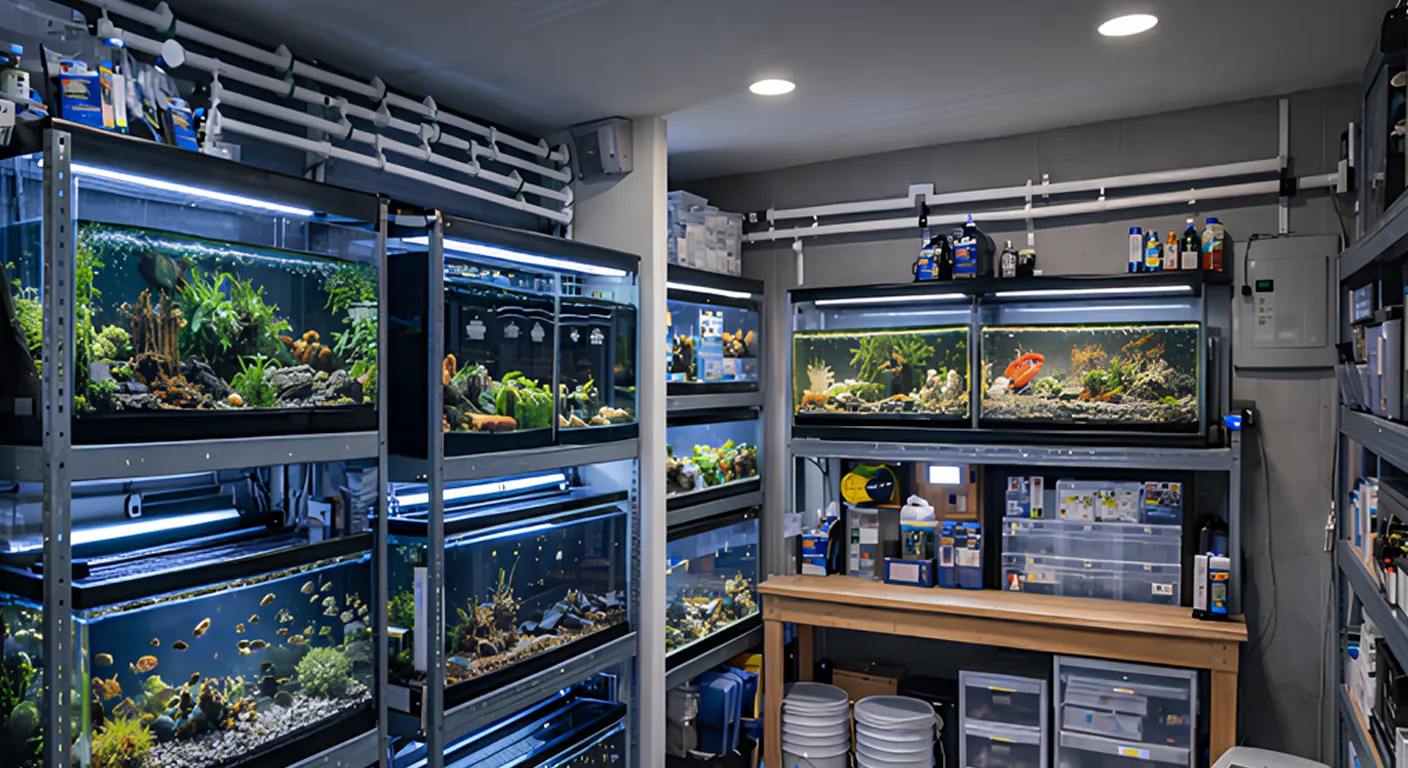
A fish room is a centralized space where all aquariums live together, share infrastructure, and get maintained in a fraction of the time it takes to service tanks scattered across a house.
This guide covers the full process of building one from scratch: structural planning, the three core systems that hold everything together, humidity and electrical safety, and the biosecurity risks most hobbyists walk straight into without realizing it.
What a Fish Room Actually Is
A fish room is a dedicated room, typically a basement, garage, or spare bedroom in a US home, where multiple aquariums sit on tiered rack systems and share centralized air, water, and heating infrastructure, instead of 15 individual filters and 15 individual heaters drawing power from outlets all over the house.
One system serves the entire room. Maintenance consolidates into a single location. Supply storage moves off countertops and into one organized space. The whole operation becomes manageable rather than overwhelming.
Why Centralization Makes a Real Difference
Scattered tanks mean scattered everything. Running 15 hang-on-back filters and 15 separate heaters costs significantly more in electricity than a centralized setup serving the same number of tanks. Each heater cycles on and off independently, drawing power in short bursts all day. Each hang-on-back filter runs its own motor. Add it up across a year, and the electrical cost is substantial.
Centralization groups those resources. One large air pump serving a room of sponge filters draws less combined wattage than multiple individual motorized filters. One ambient heating source stabilizing the room temperature eliminates the need for most individual heaters entirely.
Beyond cost, the maintenance time reduction alone justifies the setup. Servicing 15 tanks in one room with a central water line takes a fraction of the time that servicing 15 tanks spread across three floors of a house requires.
Confirming Your Room Structure Before Anything Gets Built
Water weighs 8.3 pounds per gallon. A single fully loaded 40-gallon tank on a rack sits at well over 400 pounds, including substrate and equipment. Multiply that across multiple racks, and the floor load in a fish room reaches levels that standard residential flooring was not always designed to handle without proper planning.

Several structural factors need to be addressed before a single piece of lumber is purchased:
Place racks perpendicular to floor joists. Floor joists run in one direction. Orienting racks perpendicularly distributes the concentrated weight load across multiple joists rather than resting the full weight on one or two.
Leave 30-inch aisles minimum. Moving a full bucket of water in a tight space is uncomfortable and increases the chance of spills. Thirty inches is the workable floor for comfortable maneuvering.
Waterproof the floor surface. Bare concrete is ideal. If the room has carpet or wood flooring, indoor/outdoor mat sections that can be lifted and dried are the practical alternative.
Designate a storage command center. Five-gallon buckets, nets, siphons, medications, and test kits accumulate fast. One dedicated shelving unit or cabinet keeps them organized and off the floor, where they become tripping hazards.
The Three Core Systems
Method 1: The Central Air Loop
Replace individual motorized hang-on-back and canister filters with a single large air pump running a loop of airline tubing through the room. Each tank gets a sponge filter powered by a drop from the main line. This is the simplest, most reliable, and lowest-biosecurity-risk filtration approach for a multi-tank fish room.
Specifics worth knowing:
Use a commercial-grade linear piston air pump rather than a diaphragm pump. Linear piston models like the Medo or Hakko run quieter, last longer, and maintain consistent pressure across longer airline runs.
Size the pump for 150 to 200 percent of the calculated room air demand to account for future tanks.
Run the main airline loop in rigid tubing secured to the wall or rack framing, with flexible drop lines to each tank. This prevents kinks that disrupt flow to individual tanks.
Sponge filters in this setup are fully independent per tank. A disease outbreak in one tank does not travel through the filtration system to another. That isolation is the main advantage over sump systems.
Method 2: Sump Systems and the Biosecurity Problem
A sump system connects multiple tanks through siphon tubes or drilled overflows into one large central filter. The appeal is obvious: one filter to maintain, one set of media to change, one chemical dosing point for the entire room.
The hidden risk is significant. A sump-connected system shares water between every tank on the circuit. A single fish carrying ich, velvet, or bacterial disease introduced to any one tank distributes that pathogen to every connected tank within hours. One sick fish becomes a room-wide outbreak with no natural firewall.
If a sump system is the chosen approach, these controls become non-negotiable:
Strict quarantine protocol. Every new fish spends a minimum of 4 to 6 weeks in a completely isolated, non-connected quarantine tank before joining any sump-linked system.
UV sterilization on the return line. A properly sized UV sterilizer on the sump return line reduces free-floating pathogen transmission significantly, though it does not eliminate it.
Valve isolation per tank. Every tank needs a shutoff valve that allows it to be isolated from the sump circuit immediately when disease is suspected.
Sump systems make sense for fish rooms housing large numbers of the same species with consistent health histories. They are considerably riskier in rooms with frequent new fish arrivals or mixed species collections.
Method 3: Ambient Room Heating
Individual aquarium heaters are expensive, occupy outlet space, and require individual calibration and monitoring. Heating the air in the fish room instead of heating 15 individual tanks is a legitimate approach for rooms where most species kept have similar temperature requirements.
How to deploy this effectively:
Insulate the basement or room walls properly before relying on ambient heating. Uninsulated concrete walls bleed heat continuously and make a stable ambient temperature nearly impossible to maintain cost-effectively.
A room dehumidifier running in space outputs heat as a byproduct of its operation. In a reasonably insulated basement fish room, a dehumidifier alone can maintain ambient temperatures around 74°F to 77°F during warmer months.
Reserve individual heaters only for species requiring temperatures above 80°F, such as discus, which need 82°F to 86°F, or certain wild-caught tropical cichlids. Running individual heaters only for the exceptions keeps the electrical load reasonable.
Method 4: Humidity Control and Electrical Safety
A room full of open aquariums produces a continuous output of moisture into the air. Left unmanaged, that moisture rots drywall, corrodes metal rack frames, encourages mold growth, and creates a structural problem that gets expensive fast.
Four installations that address this:
Humidity-sensing exhaust fan: A hydroponic-grade exhaust fan wired to a humidistat controller automatically pulls moist air out of the room when relative humidity climbs above 60 to 65 percent. Set it, and it runs only when needed.
Thermoplastic polycarbonate panels: Custom-cut panels placed over open tank tops significantly reduce surface evaporation, cutting both humidity output and heating demand simultaneously.
GFCI outlets throughout: Every outlet in a fish room should be GFCI protected without exception. Water and electricity share the same space in a fish room. Ground fault protection is not optional.
Emergency flood plan: Keep a shop vac accessible, know where the room water shutoff is, and keep a floor drain clear or a submersible pump staged for unexpected flooding scenarios. Sump overflows, cracked tanks, and split lines happen.
System Comparison Table
| System Type | Setup Cost (USD) | Maintenance Effort (1 to 5) | Biosecurity Risk | Ideal Setup Type |
| Individual Filters | $200 to $600 | 4 | Low | Small rooms, mixed species, frequent new arrivals |
| Central Air Loop with Sponge Filters | $150 to $400 | 2 | Low | Most fish rooms; best all-around choice |
| Centralized Linked Sump | $400 to $1,200 | 3 | High | Single-species breeding operations with strict quarantine |
Risk Assessment: Plumbed Together or Standalone
The choice between a connected sump system and standalone filtration comes down to buying habits more than anything else. A hobbyist who frequently buys fish from auctions, local breeders, and online vendors introduces new disease vectors regularly. A connected system in that context is a liability.
Watch list (monitor before making changes):
Any new fish showing clamped fins, flashing, or loss of appetite within the quarantine period
Unusual mortality in a single tank that shares a sump connection with others
Ammonia or nitrite readings are spiking in one section of a connected system
Treat triggers (act immediately):
Confirmed ich or velvet in any tank connected to a sump system. Isolate that tank valve immediately.
Two or more fish in connected tanks showing the same symptoms within 48 hours of each other.
Unexplained deaths in multiple connected tanks within a short window
Escalation path: Isolate the affected tank from the sump circuit first. Do not treat the entire sump system with medication before identifying the pathogen. Full sump treatment with copper or formalin-based medications destroys beneficial bacteria and crashes the biological filtration for every connected tank simultaneously. Treat the source, not the system.
Conclusion
Building a fish room starts with a floor plan, a weight calculation, and a realistic assessment of what the room structure can handle. Map the space before buying lumber, confirm the floor joist orientation, waterproof the floor, and plan for humidity management from day one. The three core systems, air, water, and heat, scale to fit almost any budget.
A central air loop with sponge filters is frequently the most practical starting point for most hobbyists: low cost, low maintenance, and the lowest biosecurity exposure of any multi-tank filtration approach. Draw the plan on paper first. Get the quarantine protocol in place before the first fish arrives. Those two steps prevent the majority of problems that turn a fish room from an asset into an expensive headache.
FAQ
1. How much space do I need between stacked aquariums?
A minimum of 12 to 14 inches of vertical clearance between tank tops and the shelf above allows for lid removal, equipment access, and comfortable feeding without contorting. Taller tanks on lower shelves and shorter tanks on upper shelves optimize this clearance across the rack.
2. Is a wooden rack or a metal rack better for a fish room?
Metal racks, specifically powder-coated steel shelving rated for the weight load, resist moisture damage better than wood over the long term. Wood racks swell, warp, and eventually rot in high-humidity environments unless sealed thoroughly. If wood is the chosen material, use pressure-treated lumber and apply a waterproof sealant to all surfaces before assembly.
3. How do I prevent my fish room from smelling?
Odor in a fish room comes from three sources: decaying organic matter in tanks, mold growth from unchecked humidity, and stagnant water in equipment. Regular siphoning of detritus, consistent humidity control, keeping relative humidity below 65 percent, and cleaning filter media on a rotating schedule rather than all at once address all three sources without disrupting tank biology.
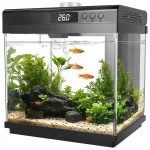
3.7 Gal Aquarium Kit: Filter, 10-Color Light, Self-Cleaning,...
Original price was: $81.99.$77.39Current price is: $77.39.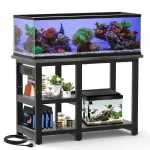



Add comment
You must be logged in to post a comment.