
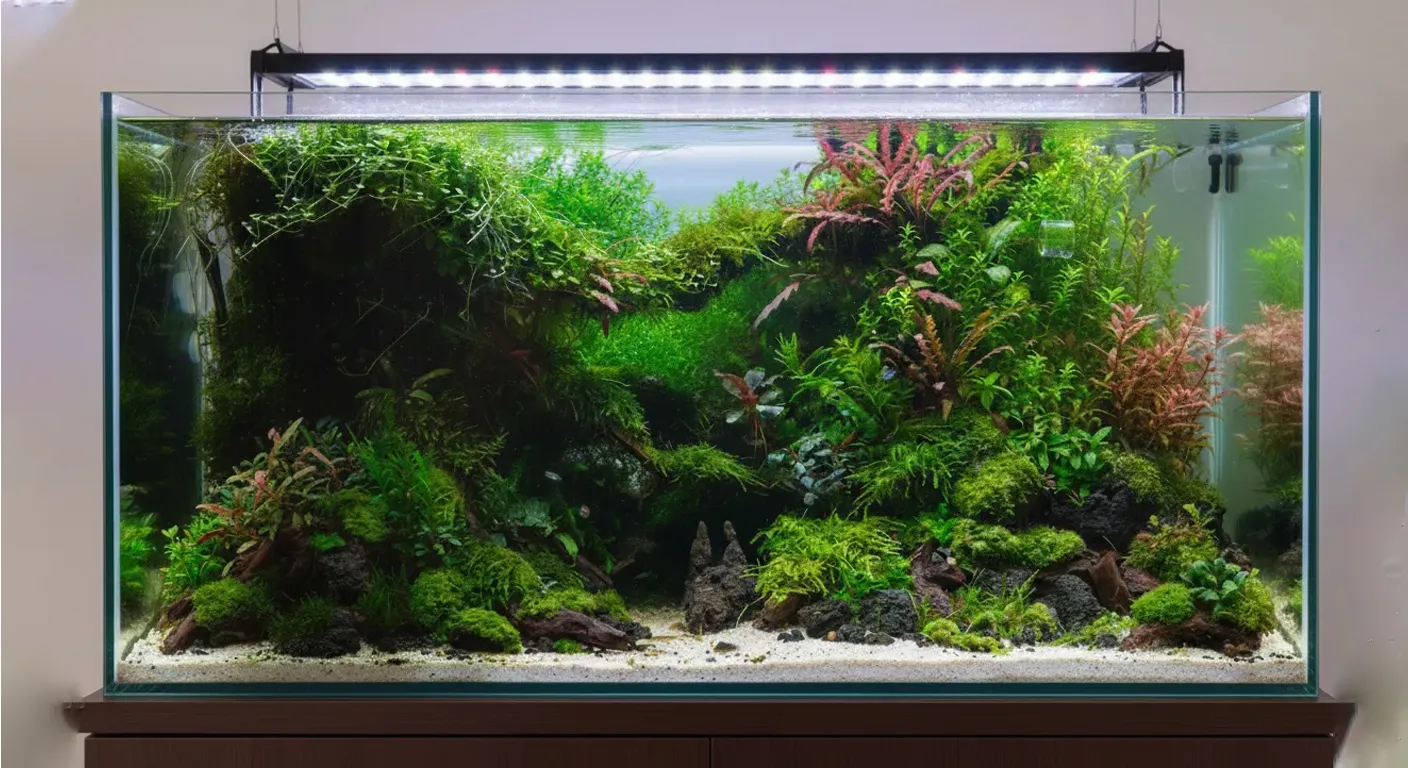
So picture this – you’re a beginner who just got your first aquarium all set up, and now comes the fun part: making it look good. You start throwing in some stones, grab a piece of driftwood, maybe even find a cute little pot to stick in there. But something’s still missing, right? Plants. That’s when plastic aquarium plants come into the picture, and honestly, they’re kind of perfect for this situation.
Plastic plants are actually amazing and a good addition, but only when you’re not trying to mess with live plants. No trimming, no fertilizing, no stressing about whether you’ve got the right lighting setup. They just look nice and stay that way. But – and this is super important – not all plastic plants are actually safe for your fish. Some can hurt their fins or leak weird chemicals into your water, which totally defeats the purpose of having a healthy tank.
Keep reading because we’re going to break down what makes plastic plants actually safe to use, how to pick good ones that won’t cause problems, and five specific types that are worth checking out for your tank.
Why Use Plastic Plants in Aquascaping
Aquascaping with plastic plants gives you that greenery look without the hassle of what real plants come with. Along with this they come with some cool benefits too. They stay bright and don’t fade or die on you, plus you can move them around whenever you feel like redoing your tank setup.
Benefits of Plastic Plants
No waiting for growth: Give your tank that full look right away instead of waiting weeks for plants to actually grow in.
No fertilizers needed: Works great for tanks that don’t have CO₂ systems or expensive lights.
Ideal for specific fish: Have goldfish or cichlids that eat live plants? Then you’ve got a better alternative now.
Low maintenance: Clean them after months and you’ve just renewed them.
Great for beginners: Way easier to deal with when you’re still new to fishkeeping.
Cons of Plastic Plants
No oxygen production: Plastic ones do not add oxygen to your water because of course its plastic.
No biological filtration: They don’t absorb nitrates or CO₂ like living plants do.
Potential safety issues: Cheaper plastic plants sometimes have sharp edges that might not be as much friendly to fish as live plants are.
Key Factors For Making Plastic Plants Safe
Plastic plants might be super convenient, but you can’t skip over safety. Picking the right materials and designs keeps your fish safe and your water quality solid.
Materials
Don’t just grab any fake plant from a craft store and throw it in your tank. You need ones that are actually made for aquariums. Here’s what’s safe to use:
Polyethylene (PE) – This stuff bends easily, holds up well, and won’t break down sitting in water for months.
Polypropylene (PP) – Pretty light and doesn’t fall apart over time like cheaper plastics do.
PVC labeled “aquarium-safe” – Solid choice as long as it’s specifically made for tanks, not just random PVC.
Silicone-based soft plants – These work really well if you’ve got fish with long, delicate fins that tear easily.
BPA-free and phthalate-free plastics – Basically means you won’t be dealing with that annoying leak gross chemicals into your water.
Stay away from anything with painted colors that can flake off, metallic wires poking through, or rough spots that’ll shred fins.
Shape & Texture
Edges need to be smooth or your fish will end up with torn fins.
Look for weighted bases so the plants actually stay put instead of floating around.
Skip anything with exposed wires or stiff stems that feel like they could stab something.
5 Safe Plastic Plants for Your Aquarium
Using fake plants doesn’t mean that you need to turn your whole aquarium fake. Just get picky with plastic plants and you can pull off that full, natural look. Here are five types that look great, stay safe for your fish, and actually add some character to your setup.
1. Plastic Anubias-Style Broad-Leaf Plant
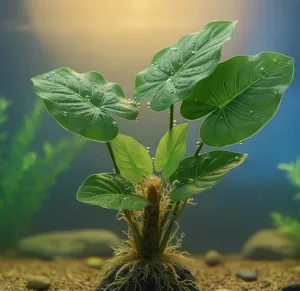
If you want something simple but classy, you can’t go wrong with an Anubias-style plastic plant. It’s modeled after real Anubias with those thick, rounded leaves everyone loves in planted tanks. Fish like tetras and bettas really dig these for hiding spots and resting areas.
Why It’s Great:
Those big, soft leaves make fish feel secure and look pretty realistic compared to other fake plants out there.
The weighted base actually stays down even when you’ve got active fish zooming around or strong filter flow pushing things.
Throw it in the midground or background and it fills out your tank without looking crowded.
The plastic’s smooth so it won’t rip fins, plus it’s super easy to wipe down when algae starts showing up.
Works in freshwater tanks, especially ones without crazy water flow.
Best for: Betta fish, guppies, neon tetras, and shrimp tanks.
2. Artificial Java Fern look-alike plant
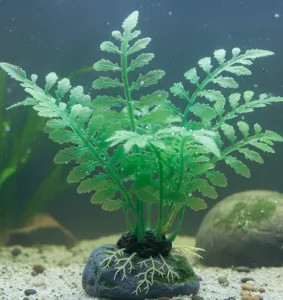
Java Fern is one of those plants everyone loves in planted tanks — but if you want that same look without stressing about lighting or waiting for it to grow, a plastic version does the job. The leaves have this nice arching shape that moves with the water and makes your tank look way more alive.
Why It’s Great:
Made from softer, bendable material so the leaves actually sway a bit when water moves past them, which looks pretty natural.
The tall, skinny leaves work great for covering up stuff in the back like your filter or heater that you don’t want staring at you.
Usually comes attached to a stone or resin base that blends in with your rocks or gravel instead of looking obviously fake.
Won’t hurt delicate fish like angelfish or gouramis since there’s nothing sharp or hard poking out.
Gives your tank some height and layers so it doesn’t look flat and boring.
Best for: Community tanks, shrimp tanks, and aquariums with tall layouts or corner scaping.
3. Safe Floating Plastic Plant Option
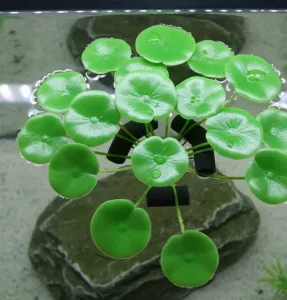
Floating plastic plants do more than just look nice — they create shade, cut down harsh lighting, and help skittish fish chill out. Bettas, gouramis, and other labyrinth fish go nuts for surface coverage since they’re naturally drawn to shaded spots.
Why It’s Great:
Made from light, safe materials like silicone or soft foam that just sits on top of the water without sinking.
Cuts down on glare from your tank lights and keeps algae from taking over in setups with bright lighting.
Gives bubble-nesting fish like bettas somewhere they actually want to hang out and build nests.
Super easy to grab and move when you’re cleaning or need to feed your fish.
Some of them even have little roots hanging down that look like real floating plants such as water lettuce or frogbit.
Best for: Betta tanks, nano aquariums, and tanks with timid or surface-dwelling species.
4. Neon Green Plastic Stem Plant

Want to add some serious pop to your tank? Neon green plastic stem plants create this bold splash of color that catches your eye right away. They look like real stem plants such as Ludwigia or Hygrophila but stay bright no matter what, even with weak lighting.
Why It’s Great:
That bright color really stands out against dark gravel or black backgrounds.
The stems bend and move around when water flows past them, so it doesn’t look totally stiff and fake.
Works well in the middle area or tucked behind driftwood and decorations to fill empty spaces.
Draws your eyes away from ugly equipment or cables you’ve got running in the tank.
Won’t hurt any fish since it’s smooth all over and made from solid aquarium-safe plastic.
Best for: Colorful community tanks, modern-themed setups, or beginner aquariums that need a pop of color.
5. Artificial Moss Mat
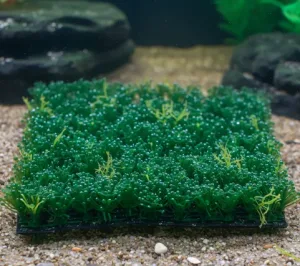
If you love that thick green carpet look but don’t want the hassle, artificial moss mats are your answer. They give you all the texture and fullness of real moss without needing CO₂, constant trimming, or blasting your tank with light.
Why It’s Great:
The soft, packed fibers give baby fish, shrimp, and bottom feeders somewhere safe to hide out.
You can cut it to whatever size you need — works great on rocks, driftwood, or even stuck to your background.
Looks legit even in dim tanks and won’t rot or mess with your water chemistry.
Perfect for breeding setups where baby fish need protection.
Creates this nice green base layer that looks awesome next to smooth rocks or sand.
Best for: Shrimp tanks, fry tanks, or aquariums that need lush greenery without live plant care.
How to Maintain Plastic Plants
Plastic plants don’t grow or anything, but they still get gross if you ignore them. You gotta clean them sometimes or they’ll be covered in algae and start looking nasty.
Cleaning Routine
When you do water changes, rinse the plants off with some of that old tank water.
Every month or so, take them out and stick them in a mild cleaning solution made for aquariums.
Use a soft brush to get the algae off if it’s stuck on there.
When to Replace Plastic Plants
If you see cracks showing up, colors getting dull, or paint coming off.
When the plastic starts feeling brittle or looks discolored.
If your fish’s fins are getting torn up after they touch the plants.
Mistakes to Avoid
Buying fake plants from craft stores that aren’t meant for fish tanks.
Stuffing too many plants in your tank so there’s no room for fish to swim.
Never cleaning them and just letting algae pile up everywhere.
Getting plants that have sharp parts or metal pieces on them.
Conclusion
Plastic plants work really well if you’re new to this or just busy. This is because live plants require the same care you will provide for your fish. So, we don’t recommend overwhelming so many things when you’re actually new to this.
With these plants, you get a tank that looks full and green without having to mess with fertilizers and special lights. All that matters is that you shop the right ones. Make sure to check that they don’t have rough edges, and clean them every now and then. Your water stays cleaner that way and your fish won’t get hurt.
Start with a couple plastic plants and throw in some rocks or driftwood too. Move stuff around till it looks how you want. You’ll have a good-looking tank without spending forever maintaining it, and your fish will be fine.
FAQs
1. Are plastic plants safe for all types of fish?Yeah, they’re fine for pretty much any fish as long as you get the aquarium-safe kind with no sharp edges. Fish with long fins like bettas work with them. Just don’t get the cheap ones with rough spots that’ll rip their fins.
2. Can plastic plants replace live plants entirely?
For looks, sure. But they don’t do anything for your tank like real plants do. Live plants make oxygen and soak up nitrates and stuff. Plastic ones just sit there. So you’ll have to do more water changes to keep things clean.
3. Do plastic plants affect water quality (pH, oxygen, etc.)?
Nah, not if they’re actual aquarium plants. They won’t change your pH or leak bad stuff into the water. But they also don’t help with oxygen or filtering anything out, so don’t expect them to do what real plants do.
3.7 Gal Aquarium Kit: Filter, 10-Color Light, Self-Cleaning,...
Original price was: $81.99.$77.39Current price is: $77.39.




Add comment
You must be logged in to post a comment.