
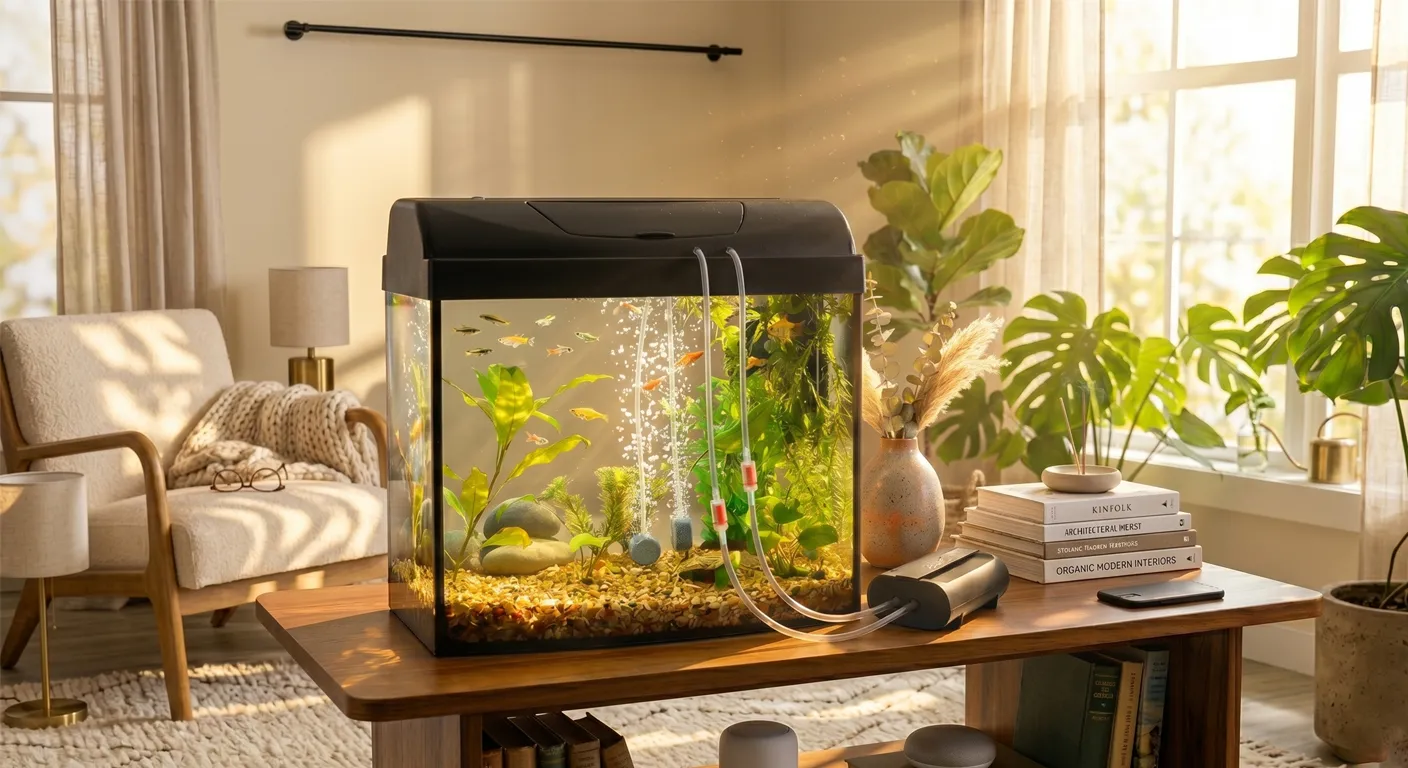
For many enthusiasts, a home aquarium is more than just a glass box; it is a living piece of art, a tranquil escape, and a thriving ecosystem. Whether you are keeping a solitary betta or a complex community of tropical cichlids, the health of your aquatic residents depends on a delicate balance of water chemistry and gases.
At the heart of this balance is oxygen. While filters provide some surface agitation, an Aquarium Air Pump is the most reliable tool for ensuring your fish never gasp for breath. But with hundreds of models ranging from tiny “nano” bubbles to industrial-strength compressors, how do you find the “Goldilocks” pump for your specific setup?
This comprehensive guide expands on the essentials of air pump selection, helping you navigate the technical specs and practical needs of your underwater world.
Table of Content
ToggleDetermine the Size and Depth of Your Aquarium
The relationship between your tank size and your air pump isn’t just about the volume of water; it’s about pressure.
The “Volume” Rule
A general rule of thumb is to look for a pump that provides an output of at least 1 liter of air per minute (L/min) for every 10 gallons of water. However, this is just a baseline. If you have a heavily stocked tank or high-oxygen-demand species like Goldfish, you should aim higher.
The “Depth” Factor
Water creates resistance. The deeper your tank, the harder the air pump has to work to push air down the airline tubing to the air stone at the bottom.
-
Standard Tanks: Most basic pumps handle depths up to 18 inches.
-
Extra-Deep Tanks: If your tank is 24 inches or deeper, look for a “High Pressure” or “Deep Water” rated pump. Using a weak pump in a deep tank will lead to premature motor failure and weak bubbling.
Here’s a calculator for your reference:
Aquarium Air Pump Selector
Calculate the ideal airflow (L/min) for your setup.
Prioritize Noise Levels and Vibration Control
In a quiet living room or bedroom, the hum of an air pump can quickly turn from “white noise” to a major annoyance. Air pumps create airflow through a vibrating diaphragm, which inherently creates sound.
How to Identify a Quiet Pump
-
Decibel (dB) Ratings: Look for pumps rated below 35 dB for near-silent operation.
-
Internal Construction: Premium silent pumps use a double-chamber design or thick rubber casings to trap sound internally.
-
External Features: Look for pumps with thick rubber feet. These don’t just stop the pump from “walking” across your cabinet; they absorb the vibrations that would otherwise be amplified by the hard surface the pump sits on.
Pro Tip: Even the quietest pump can become loud if the airline tubing is touching the tank glass. Use suction cups to keep your lines organized and isolated.
Balance Power with Energy Efficiency
In the modern age of fishkeeping, we want a thriving tank without a skyrocketing electricity bill.
Understanding Wattage
Most hobby-grade air pumps are incredibly efficient, consuming between 1.5W and 10W. However, if you are running multiple tanks or a large fish room, these watts add up over 24/7 operation.
Adjustable Flow Control
Rather than buying a pump that is “just enough,” it is often better to buy a slightly more powerful pump with an adjustable flow knob. This allows you to:
-
Increase oxygen during a heatwave (warmer water holds less oxygen).
-
Dial back the flow for smaller fish that might be stressed by high turbulence.
-
Save energy by running the pump at 50% capacity when the full blast isn’t needed.
Durability, Maintenance, and Longevity
An air pump is a mechanical device with moving parts. Over time, the rubber diaphragm—the part that actually moves the air—will wear out or lose elasticity.
What to Look For:
-
Replaceable Diaphragms: Check if the manufacturer sells “Repair Kits.” It is much cheaper and more eco-friendly to replace a $5 rubber diaphragm than to buy a whole new $40 pump.
-
Heat Dissipation: Metal-cased pumps or those with cooling fins tend to last longer because they dissipate the heat generated by the motor more effectively than cheap plastic models.
-
Air Intake Filters: Quality pumps have a small felt or sponge filter on the air intake. This prevents dust from entering the motor and clogging your air stones. Ensure these are easy to access and clean.
The Critical Importance of Brand and Safety
When it comes to electrical equipment running 24/7 near water, “cheap” can be expensive in the long run.
Why Brand Matters
Well-known brands provide UL or CE certifications, ensuring the device has passed rigorous safety standards. Furthermore, reputable brands offer warranties that they actually honor. If your pump fails at 3:00 AM on a Saturday, a reliable brand is more likely to have a replacement available at your local fish store immediately.
Essential Safety Accessory: The Check Valve
Regardless of which brand you choose, always use a check valve. If the power goes out, water can be siphoned back through the airline tubing into the pump, ruining the device and potentially emptying your tank onto your floor. A $2 check valve prevents this entirely.
Advanced Considerations: Beyond the Basics
To truly optimize your aquarium’s aeration, consider these professional-level factors:
Surface Agitation vs. “Bubbles”
Contrary to popular belief, the bubbles themselves don’t provide much oxygen as they rise. The real oxygenation happens when the bubbles break the surface. This surface agitation breaks the surface tension and allows for gas exchange ($CO_2$ out, $O_2$ in).
Battery Backups
In areas prone to power outages, consider a Piezoelectric air pump or one with a built-in lithium-ion battery. These pumps automatically switch to battery power when the wall outlet fails, potentially saving your fish’s lives during a storm.
Summary Comparison Table
|
Feature |
Small Tank (5-20 Gal) |
Medium Tank (29-55 Gal) |
Large Tank (75+ Gal) |
|
Typical Wattage |
1.5W – 3W |
3W – 6W |
6W – 12W+ |
|
Flow Rate |
1.0 – 2.0 L/min |
2.5 – 5.0 L/min |
5.0+ L/min |
|
Outlet Count |
Single |
Single or Dual |
Dual or Quad |
|
Primary Goal |
Quietness / Small Footprint |
Reliability / Adjustable Flow |
High Pressure / Durability |
Conclusion
Choosing the right aquarium air pump is a vital step in becoming a successful hobbyist. By matching the pump to your tank’s depth, prioritizing low-noise designs, and insisting on quality brands, you create a stable, oxygen-rich environment where your fish can thrive for years to come.
Remember, the “best” pump isn’t always the most expensive one. It’s the one that provides consistent, quiet, and efficient performance tailored to your specific slice of the aquatic world. Happy fishkeeping!
FAQ
1. I am new to fish keeping; do I need an air pump at the beginning?
Yes. While some filters (like HOB or Canister filters) provide some aeration, a dedicated air pump acts as a vital safety net.
2. Can I have “too much” air in my tank?
Technically, yes. If the air pump is too powerful, it can create a “whirlpool” effect that exhausts small fish like Neons or Bettas.
3. Why did my air pump get louder over time?
This is usually caused by backpressure. If your air stone is clogged with algae or mineral deposits, the pump has to work harder, causing the diaphragm to vibrate more violently.
4. Where should I place my air pump?
Ideally, place the pump above the water level of the aquarium.
Related Reading
Related Products For Your Reference
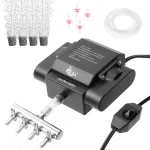
AQQA Adjustable Aquarium Air Pump, 4-Outlet Oxygen Aerator...
Aquarium Air Pump, 15W 356GPH, 4 Outlets, for...










Add comment
You must be logged in to post a comment.