
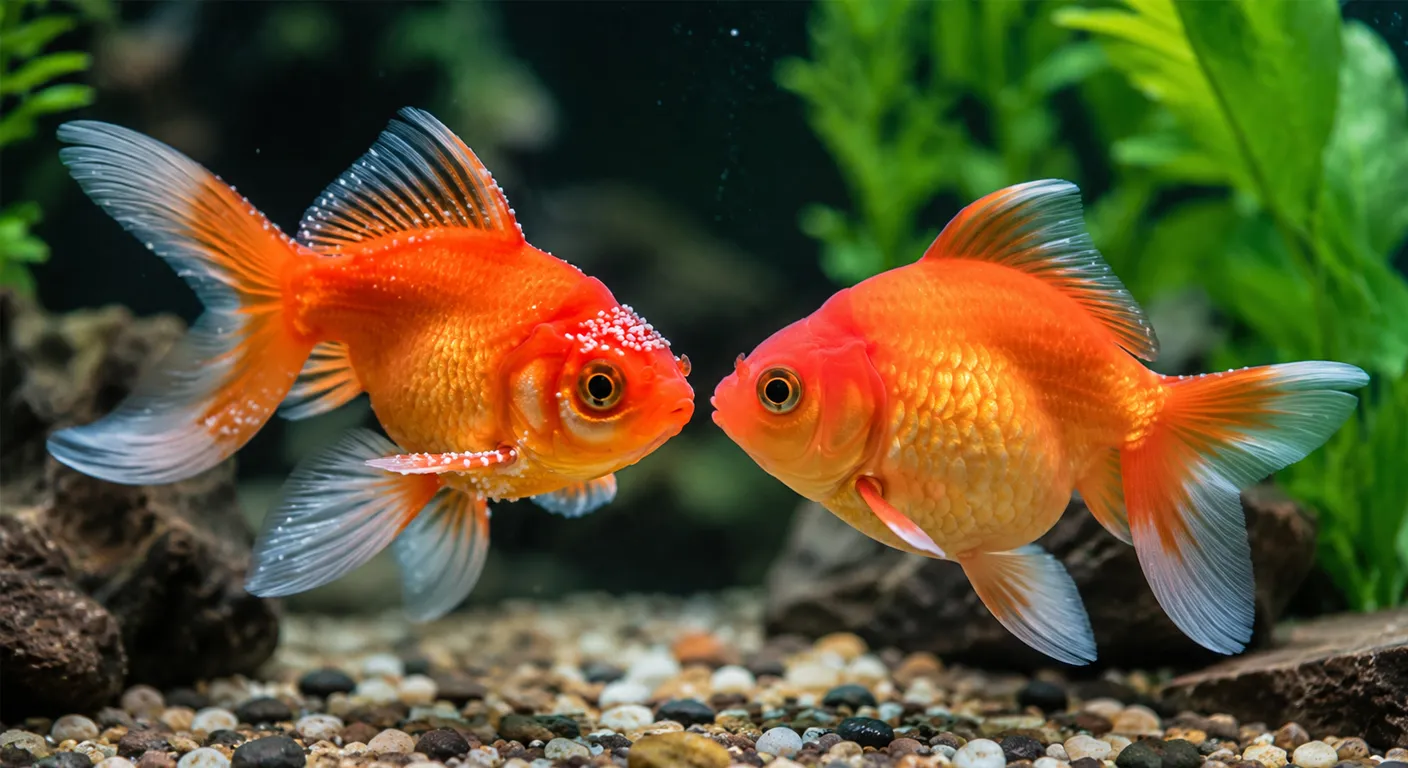
You set up your tank, picked out a goldfish, and now you want a second one to pair with the first. Maybe you want them to reproduce. Maybe you just want a compatible pair. Either way, you run into the same wall: how do you actually tell whether a goldfish is male or female?
It is not obvious at first glance. Unlike some fish species, goldfish do not come with bright color differences or obvious markings that separate males from females. Sexing them requires observing four specific physical and behavioral signs: breeding tubercles, vent shape, body profile, and spawning behavior.
This guide covers all four signs in detail, explains when each one is most reliable, and points out the mistakes that lead most beginners to the wrong conclusion.
Is It Easy to Tell a Goldfish’s Sex?
Telling a goldfish’s sex at a glance is rarely reliable, especially in young or immature fish.
Goldfish typically reach sexual maturity at about a year old. Before that point, the physical differences between males and females are almost nonexistent, and even experienced keepers cannot sex them accurately. Attempting it earlier is mostly guesswork.
The breeding season changes things considerably. During spring and summer, when water temperatures rise and daylight hours extend, the physical markers become far more pronounced, and behavioral differences become unmistakable. Outside that window, the signs are still present, but subtler.
Body shape alone is not enough to go on. Neither is fin length, color, or any single feature in isolation. Accurate sexing requires reading multiple signs together. The four below are the most dependable.
Sign 1: Breeding Tubercles
Breeding tubercles are the most definitive visual sign that a goldfish is male. When they appear, there is little room for doubt.
What Breeding Tubercles Look Like
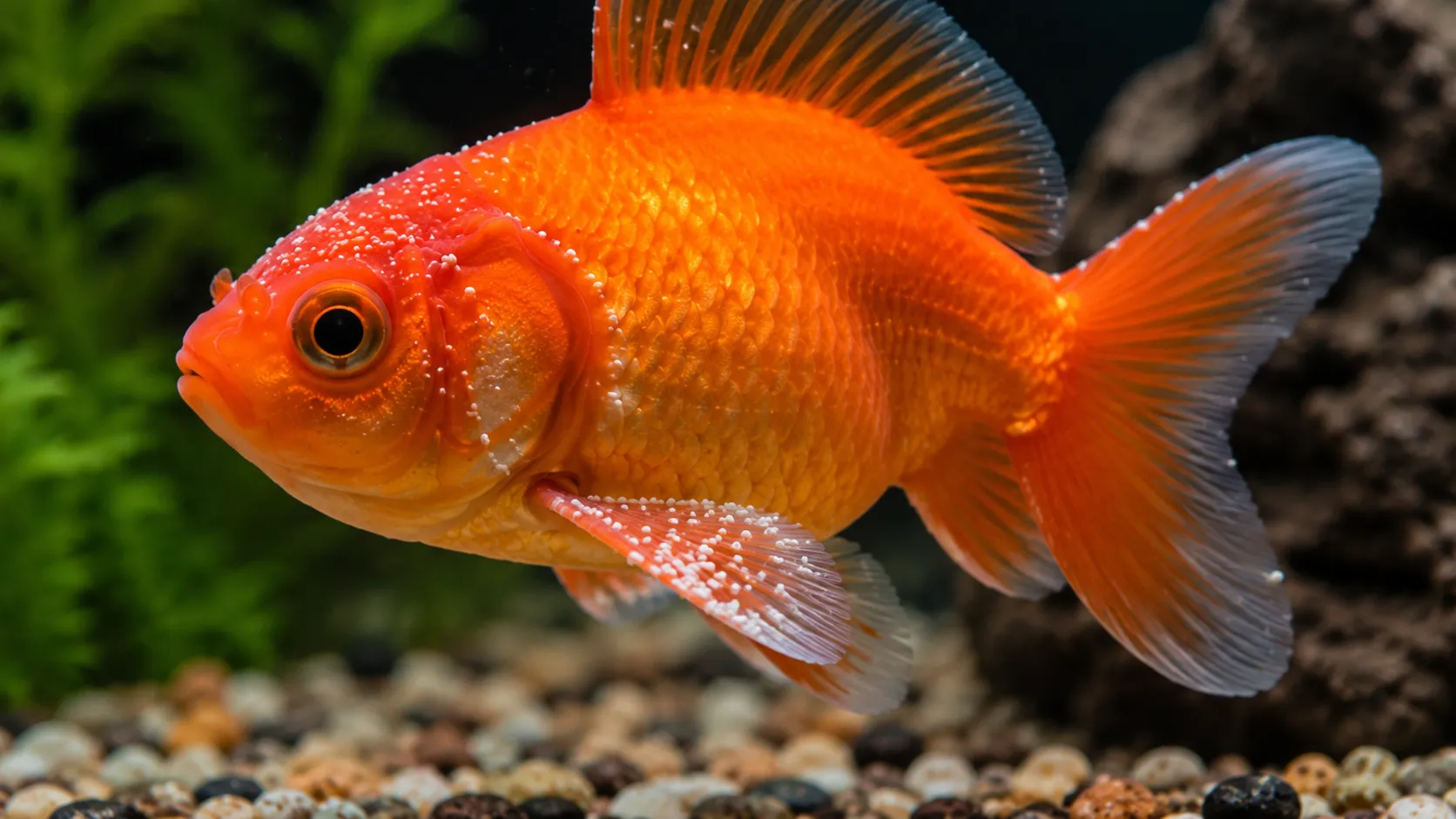
Breeding tubercles are small, white, raised bumps that develop on sexually mature males. They appear most consistently on the gill covers and pectoral fins, though some males also develop them on the head or along certain scales.
The pattern matters. Tubercles cluster in an organized arrangement, slightly raised above the skin surface, with a rough texture when touched. During peak breeding season, they are easy to see under good aquarium lighting.
Why This Sign Is Useful
Among all the physical markers, breeding tubercles are the most consistent indicator of a male goldfish. Older males may show them throughout the year, not just during spawning season. When present, they confirm sex with a high degree of certainty.
How to Avoid Mistaking Them for Illness
Not every male displays tubercles outside of breeding season, which creates some confusion. More importantly, beginners sometimes mistake ich (white spot disease) for tubercles, or vice versa.
The distinction is straightforward. Tubercles follow an organized, clustered pattern concentrated on the gills and pectoral fins. It spreads randomly across the body, including the tail, dorsal fin, and body surface, and is typically accompanied by other symptoms such as scratching against tank surfaces, lethargy, or loss of appetite. If you have already identified a fish as female through other signs and then notice white spots, suspect it rather than tubercles.
Sign 2: Vent Shape
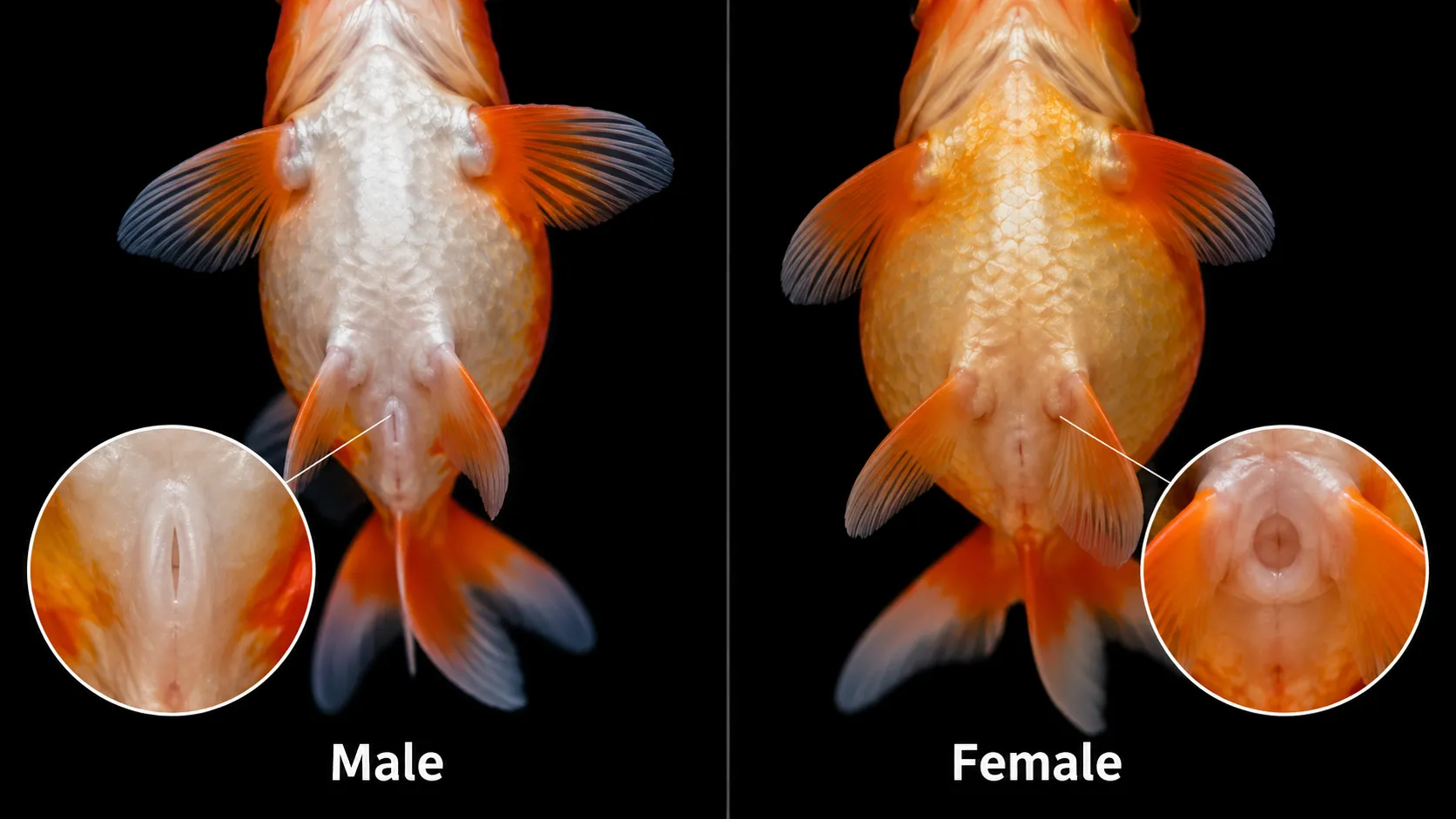
The vent, which is the small opening located between the anal fin and the abdomen, differs noticeably between males and females in mature goldfish. It does not require a breeding season to be visible, which makes it one of the more dependable signs year-round.
Male Vent Characteristics
In males, the vent is smaller, narrower, and sits slightly concave or flush against the body. It has a tighter, more elongated appearance, and the surrounding area is generally flat.
Female Vent Characteristics
In females, the vent is wider and rounder. It often appears slightly raised or protruding, particularly in fish that are carrying eggs. The area around the vent tends to be softer and more prominent, especially when the fish is close to spawning.
Why Vent Inspection Is One of the More Dependable Signs
Vent shape does not depend on the breeding season to be visible, which gives it an advantage over tubercles. It is best observed from below, or when a fish is briefly held in shallow water for a close look.
That said, vent differences in young or recently matured fish can still be quite subtle. Always combine this sign with at least one or two others before concluding.
Sign 3: Body Shape and Profile
Body shape can support a sexing assessment, but it should never carry the whole argument on its own.
Female Body Shape
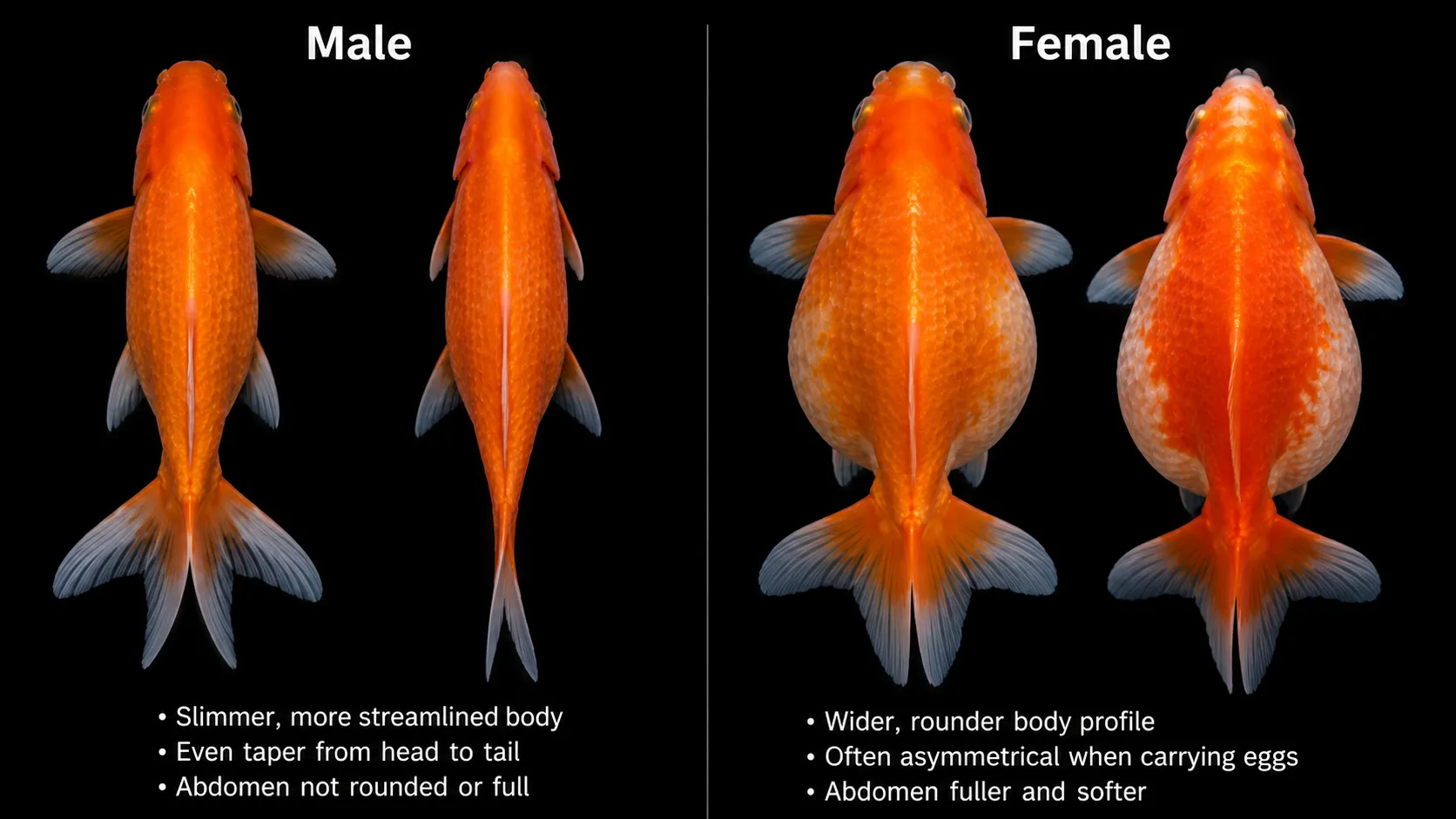
Females tend to have a wider, rounder body profile, particularly noticeable when viewed from above. A female carrying eggs will appear distinctly asymmetrical when seen from above, with one side bulging more than the other. The abdomen generally looks fuller and softer.
Male Body Shape
Males are typically slimmer and more streamlined. Viewed from above, the body taper is more even on both sides, and the abdomen does not carry the same rounded fullness as a gravid female.
Why Body Shape Has Limits
Body shape is affected by feeding habits, overall health, and age. An overfed male can easily look rounder than a lean female, which means relying on this sign alone will lead to errors. Certain fancy goldfish breeds, such as Orandas or Ryukins, have naturally round bodies regardless of sex, which reduces the usefulness of this sign even further in those varieties.
Use body shape as supporting evidence, not as a primary indicator.

Sign 4: Breeding Behavior
Behavior during spawning season is one of the easiest signs to observe without handling the fish at all. It is also highly reliable when the context is right.
Male Behavior
Males chase females persistently and nudge at the female’s abdomen and vent area. This behavior is purposeful and relentless during spawning. A male may follow a female continuously for hours, and multiple males will often compete to follow the same female.
Female Behavior
Females are the ones being chased. During active spawning, a female will release eggs while swimming through plants or near the substrate, and the males following her will fertilize them in the water.
Why Behavior Is Especially Useful
Behavioral signs are hard to misread once you know what you are watching for. During the breeding season, the dynamic between males and females is obvious. This is particularly helpful when the physical signs are still subtle, such as in fish that have recently reached maturity. Chasing behavior also confirms what physical inspection suggests, or alerts you to look more closely at fish you had not yet examined.
One caveat: occasional chasing between goldfish can be territorial rather than reproductive. Context and timing matter. If the behavior is happening in spring or summer alongside other spawning indicators, it is likely reproductive.
Does Fin Shape or Color Reveal a Goldfish’s Sex?
No. Color variation in goldfish reflects genetics and environmental conditions, not sex. Two goldfish of the same sex can look entirely different in color, and two goldfish of different sexes can look nearly identical.
Fin shape is similarly unreliable. In certain fancy breeds, there are slight anatomical differences between males and females in fin structure, but these differences are inconsistent across individuals and across breeds. They are weak secondary signals at best, and using them as standalone clues will produce inaccurate results more often than not.
Common Mistakes When Sexing Goldfish
Several patterns lead beginners and even intermediate keepers to the wrong conclusion:
Relying on body shape as the only sign is especially problematic with fancy goldfish varieties.
Attempting to sex fish under one year old, before any reliable physical differences have developed.
Confusing ich or injury-related bumps with breeding tubercles.
Concluding a single observation rather than tracking signs across multiple days.
Assessing only one fish instead of comparing it alongside others in the same tank.
The Best Time to Sex Goldfish
The most accurate time to sex a goldfish is during or just before breeding season, when the fish is sexually mature. In home aquariums, spawning behavior can be triggered by warmer water temperatures and longer daylight exposure, most commonly in spring and summer, though some aquariums maintained at stable warm temperatures may see spawning behavior year-round.
During this window, tubercles are more visible, vent differences are more distinct, females appear noticeably fuller, and behavioral differences are obvious. If you are outside of breeding season, focus on vent shape and body profile, both of which remain present throughout the year, though they are harder to read.
How to Sex Goldfish More Accurately
Accuracy comes from combining multiple observations, not from finding one perfect sign.
Look for at least two or three signs at the same time, rather than relying on one indicator.
Observe the fish over several days, not just once, since signs can vary day to day.
Compare fish against others in the same tank, as differences between individuals are far easier to spot in contrast.
If the fish is under one year old or has not yet displayed any spawning behavior, the answer may remain uncertain. Continue observing as the fish matures rather than forcing a conclusion.
Conclusion
Distinguishing male goldfish from female goldfish is entirely possible, but only once the fish have reached sexual maturity. Before that point, there is no reliable method that works consistently.
The four signs covered here are breeding tubercles, vent shape, body profile, and spawning behavior. No single sign is sufficient on its own. Tubercles confirm a male when present, vent shape provides year-round evidence in mature fish, body shape offers supporting context, and behavior during the breeding season brings it all together.
When selecting goldfish, take the time to observe individuals. A few minutes of close observation before purchase can save a lot of uncertainty later.



Full Spectrum Aquarium LED Light (14W for 12″-18″)...
Original price was: $18.99.$13.99Current price is: $13.99.













Add comment
You must be logged in to post a comment.