

At the time I had installed my fish tank, I underestimated the importance of a water pump. I believed that a filter would suffice, but soon I realized that the water was cloudy and the fish was moving slowly. Then I understood that a water pump is the heart of an aquarium system. It maintains water flow, proper oxygenation, and a stable environment between fish and plants. Without it, the tank soon becomes a sick habitat.
If you are a beginner, it can be overwhelming to select the appropriate water pump. There are too many models, flow rates, and types. You may be asking yourself whether you require a submersible pump, an external pump, or a wave maker. Then there are the practical considerations: tank size, level of noise, fresh or saltwater installation, and price.
This is a step-by-step guide to all you should know about aquarium water pumps. At the end, you will know the types and how to select one when you are setting up something specific, and how to keep it proper way.
What Are the Main Types of Aquarium Water Pumps?

1. External Water Pump
There is an external water pump outside the aquarium and connected by tubing. It is strong enough to fit bigger tanks or complicated filtration structures. These types of pumps are commonly installed in professional systems, marine tanks, or aquariums with heavy stocking and where high water turnover is a requirement. When you would prefer that the inside of your tank remain clean without a lot of bulky equipment, external pumps are also a great choice.
Pros:
Handles high flow rates for large tanks.
Keeps heat out of the aquarium water.
Easy to maintain without disturbing the tank.
Cons:
Usually more expensive than submersible pumps.
Installation requires more space and effort.
Louder than internal models.

2. Submersible Water Pump
The pumps are installed in the aquarium and are usually submersible in the sump or the bottom. They are simple to operate and best suited to novices. They are less visible and cause fewer visual distractions in your aquarium since they are submerged. Submersible pumps can be used with freshwater or saltwater aquariums, particularly in smaller or medium-sized aquaria. A lot of these models have adjustable flow options as well, so they can be used in various aquatic settings.
Pros:
Simple to install and operate.
Quiet operation compared to external pumps.
Budget-friendly for small and medium tanks.
Cons:
Adds slight heat to aquarium water.
Harder to access for cleaning and repairs.
Less powerful than external models.

3. Wave Maker
Wave makers generate movement of water just like ocean currents. They particularly work in reef or saltwater aquariums. The appliances are used to replicate the natural environment of the coral, invertebrates, and fish in the ocean that thrive in a heavy water flow. Wave makers also ensure that the substrate does not accumulate waste and the tank is healthier in general by improving the circulation. Even high-tech models permit programmable flow patterns, providing the aquarium environment with more play and naturalness.
Pros:
Provides natural water circulation for corals and marine fish.
Prevents debris buildup in dead zones.
Enhances oxygen exchange.
Cons:
Not necessary for most freshwater aquariums.
It can be noisy at higher settings.
Requires careful placement to avoid stressing fish.
What You Should Consider When Choosing a Water Pump
Now we have discussed the various kinds of aquarium water pumps. So, in case you are going to purchase one, what are the main aspects that you should consider? The right pump is not merely the ability to transfer the water, but to provide your fish with a comfortable, stable, and healthy environment.
1. Tank Size
The type of pump to use depends on what size tank you have. A 10-gallon tank will need a totally different installation than a 75-gallon tank. One of the general rules is that your pump should be able to circulate at least 4 to 6 times the tank volume per hour. The bigger the aquarium and the quantity of fish or plants, the higher the turnover that might be needed to keep the balance.
2. Flow Rates
Low rate refers to the amount of water that the pump can pump in an hour, in GPH (gallons per hour). The flow rate is critical in selecting a correct flow rate. Keep in mind that an overpowering pump may strain your fish, and an underpowering pump keeps your tank in poor health.
Here’s a simple table for reference:
| Tank Size (Gallons) | Recommended Flow Rate (GPH) |
| 10 – 20 | 40 – 120 |
| 30 – 40 | 120 – 200 |
| 50 – 75 | 200 – 400 |
| 100+ | 500+ |
3. Noise Level
Aquariums are usually located in bedrooms, offices, or living rooms. A pump that runs on noise is annoying. Underwater pumps tend to be less noisy, as opposed to external pumps that can create humming sounds. Always read reviews regarding sound before purchasing. There are high-end pumps that have vibration-dampening technology, and this makes them a good choice when you value peace.
4. Freshwater vs Saltwater
Pumps do not necessarily have to be designed to work in a freshwater or saltwater aquarium. Saltwater systems, particularly reef tanks, usually require more powerful pumps and wave generators. Freshwater pumps are typically designed to provide simple circulation, whereas marine pumps deal with increased loads, salt beds, and complicated tank ecology. Ensure you select a pump that specifically states compatibility with your type of tank.
5. Cost
Budget is a significant factor in your choice. The submersible pumps are often cheap and are therefore ideal for the beginner. The external pumps and wave makers are more expensive but worth having in large or specialized aquariums. Along with the first price, it is necessary to pay attention to energy efficiency and duration. A pump that will cost you a little more will save you electrical money and should last longer and making it a better long-term investment.
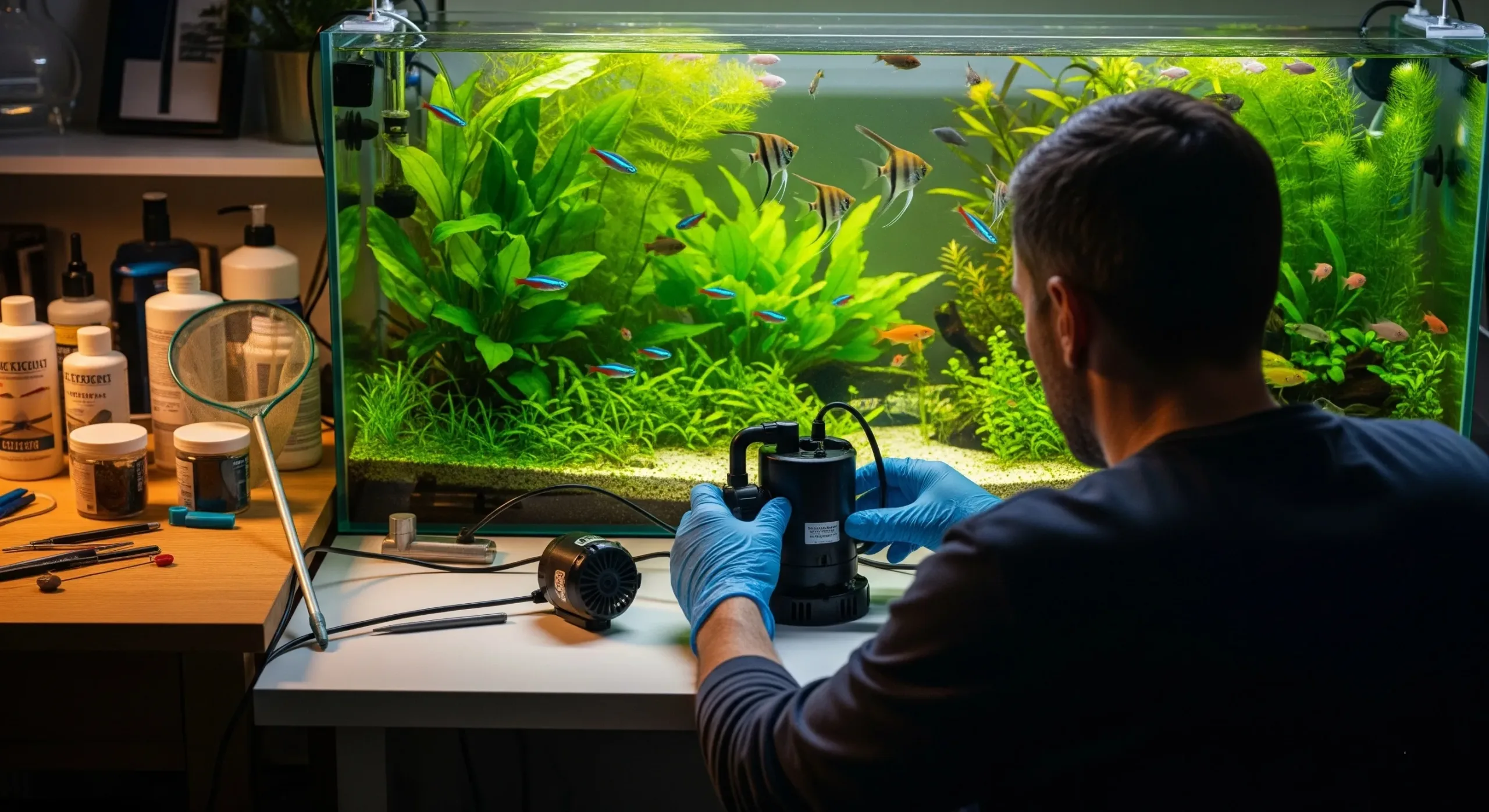
How to Maintain an Aquarium Water Pump
Buying a pump is only the beginning—you also need to maintain it. Proper care ensures efficiency and extends its lifespan.
Cleaning the Water Pump
Step 1: Unplug the pump and remove it carefully.
Step 2: Disassemble according to the manufacturer’s guide.
Step 3: Rinse parts with warm water. Use a soft brush to remove algae buildup.
Step 4: Avoid using soap or harsh chemicals, as they can harm your fish.
Step 5: Reassemble and test before placing it back into the tank.
Servicing or Replacing Pumps
Routine servicing: Clean the pump every 4–6 weeks.
Check for wear: Look for damaged impellers or clogged intakes.
Replacement: If your pump shows reduced flow or unusual noise, it may be time to replace it. Most pumps last 2–5 years with proper care.
Common Mistakes Beginners Make
Even those who are well-trained aquarists tend to miss very important aspects when choosing a pump. The following are the most prevalent beginner errors.
1. Forget the Size Before Buying
Most novice hobbyists purchase pumps and fail to look at the size of the tank. This usually causes poor flow or full gushing water streams. An oversized pump may overstress the fish and upset the plants, and an undersized one does not supply sufficient oxygen. Always adjust the flow rate of your pump to the size of your aquarium.
2. Ignore the Head Height
The vertical distance that the water has to travel when pumped is known as head height. Otherwise, the pump is not going to work as intended. Thus, a pump with a rated capacity of 400 GPH at zero height may only be half the output when raising water two feet. Before purchasing a product, always look at the head height chart of the manufacturer.
3. Operating a Pump on a Faulty Power Source
Pumps cannot withstand unstable electricity. Operating them with faulty plugs will lead to the destruction or even electrical risks. It is always important to have a reliable source of power and be grounded. A surge protector is also a good idea, particularly when one resides in a place where power outages are common. This keeps your pump safe as well as the health of your entire aquarium system.
Conclusion
Selecting a proper aquarium water pump can be at first sight a daunting task, but it is most certainly worth it. A quality pump helps keep your tank clean, aerated, and stable for your fish. We have talked about the major categories of pumps–external, submersible, and wave makers–as well as tank size, flow rate, and noise levels. Maintenance is equally important, and you should clean your pump on a regular basis as well as change it when you need to.
Stronger upgrade or a first-time buyer, you should have time to consider what your tank needs before you shop. The right pump not only increases the level of water quality but also contributes to the enjoyment of your fish-keeping experience. Keep learning, stay patient, and your fish will thank you with vibrant health.
FAQ
1. How do I know the sign of a broken water pump?
When you notice that the flow of water is reduced, or excessive grinding sounds, or overheating, it is probable that it is failing. You can also observe stagnant bodies of water or cloudy water even after filtration.
2. My new water pump is noisy. What happened?
New pumps can be noisy when fitted incorrectly or when there is an entrapment of air. Check the installation, make sure it is completely submerged (with submersible models), and leave it to run for a few hours.
3. Should I run the water pump all day?
Yes, the pumps in the aquarium must always be running. They maintain water flow and circulation that is essential to fish and plant life. Switching them off upsets the balance.
15W Wave Maker Pump (2100GPH) with 360 Degree...
Original price was: $18.69.$17.59Current price is: $17.59.
800-3200GPH Multifunction Controllable Water Pump for Salt/Freshwater
Original price was: $109.99.$104.49Current price is: $104.49.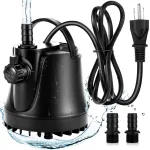
Ultra-quiet 265-800GPH Submersible Water Pump with High Lift,...
Original price was: $18.99.$16.14Current price is: $16.14.





Add comment
You must be logged in to post a comment.