
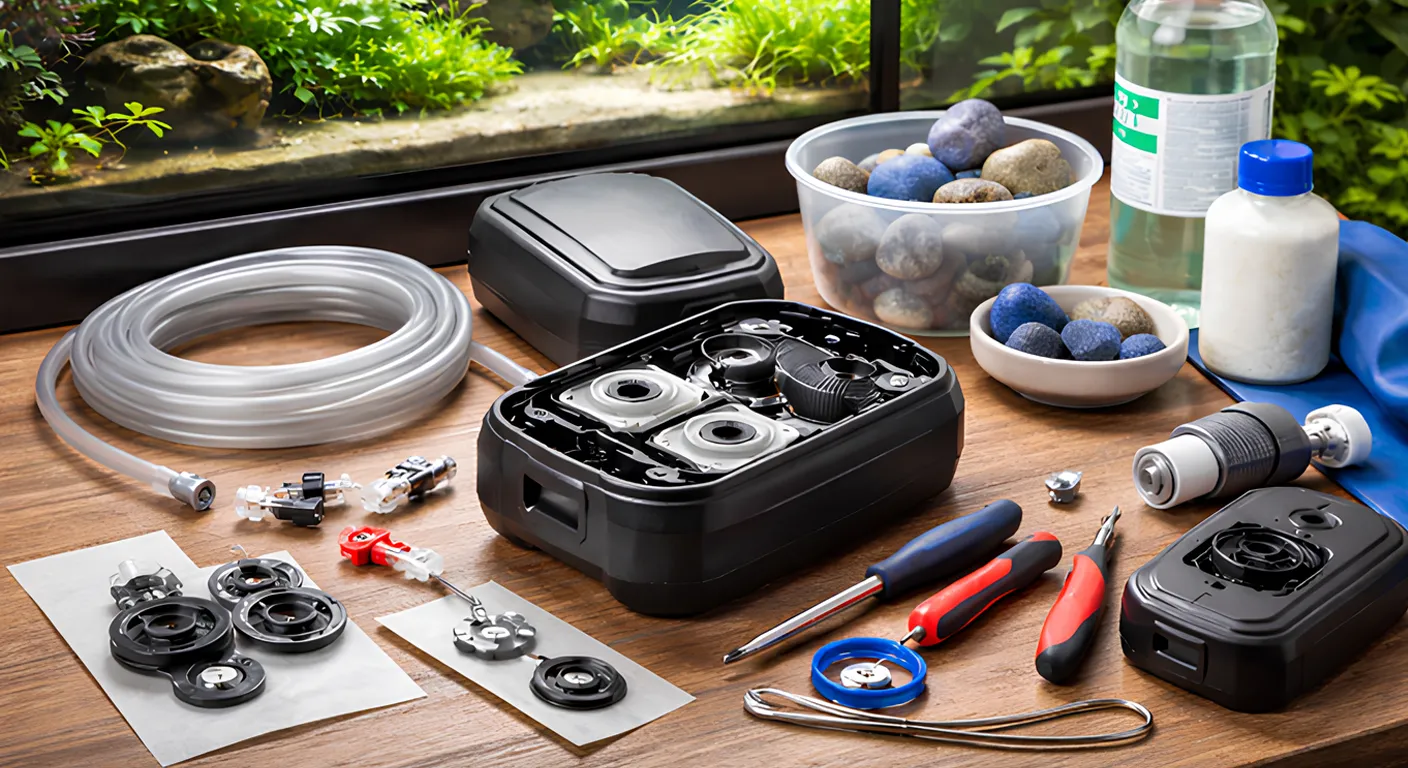
Your aquarium air pump goes silent. The bubbles stop. Within a few hours, your fish are swimming in still, oxygen-poor water. It is one of those problems that feels small at first but can turn serious very quickly if you do not act on it.
Without proper aeration, oxygen levels in the tank drop steadily. Waste gases that would normally escape through surface movement begin to build up. The whole environment becomes unstable, and your fish feel it before you even notice anything is wrong. The good news is that simple, fixable issues like a blockage, a loose connection, or a worn-out part cause most air pump failures. A full replacement is rarely necessary.
This guide walks you through 7 practical fixes for a broken aquarium air pump, helps you identify what is actually causing the problem, and shows you how to get proper airflow back as quickly as possible.
Read Your Fish Before You Touch the Pump
Before you open anything or start replacing parts, take a moment to look at your fish. Their behavior will tell you how urgent the situation actually is.
The 3-Tier Urgency Scale
Tier 1 — No rush: Fish are active, swimming normally, and showing no signs of stress. You have time to troubleshoot carefully.
Tier 2 — Move soon: Fish appear lethargic, are visiting the surface more than usual, or seem less interested in food. The oxygen level is dropping. Address the problem within the next hour.
Tier 3 — Stop reading, act now: Fish are gasping at the surface with their gill plates visibly flaring. This is an emergency. Get a battery-powered backup pump running or perform an immediate partial water change to introduce fresh, oxygenated water while you fix the main pump.
What to Look For in Your Tank Right Now
Fish gather near the surface or hover around any area with water movement.
Fish becoming unusually still or staying near the bottom of the tank
A slower or weaker response from fish during feeding time
Visible stress signs appeared shortly after the pump stopped working
Once you know how urgent the situation is, you can proceed with the appropriate approach.
Inside the Pump: A Quick Anatomy Lesson
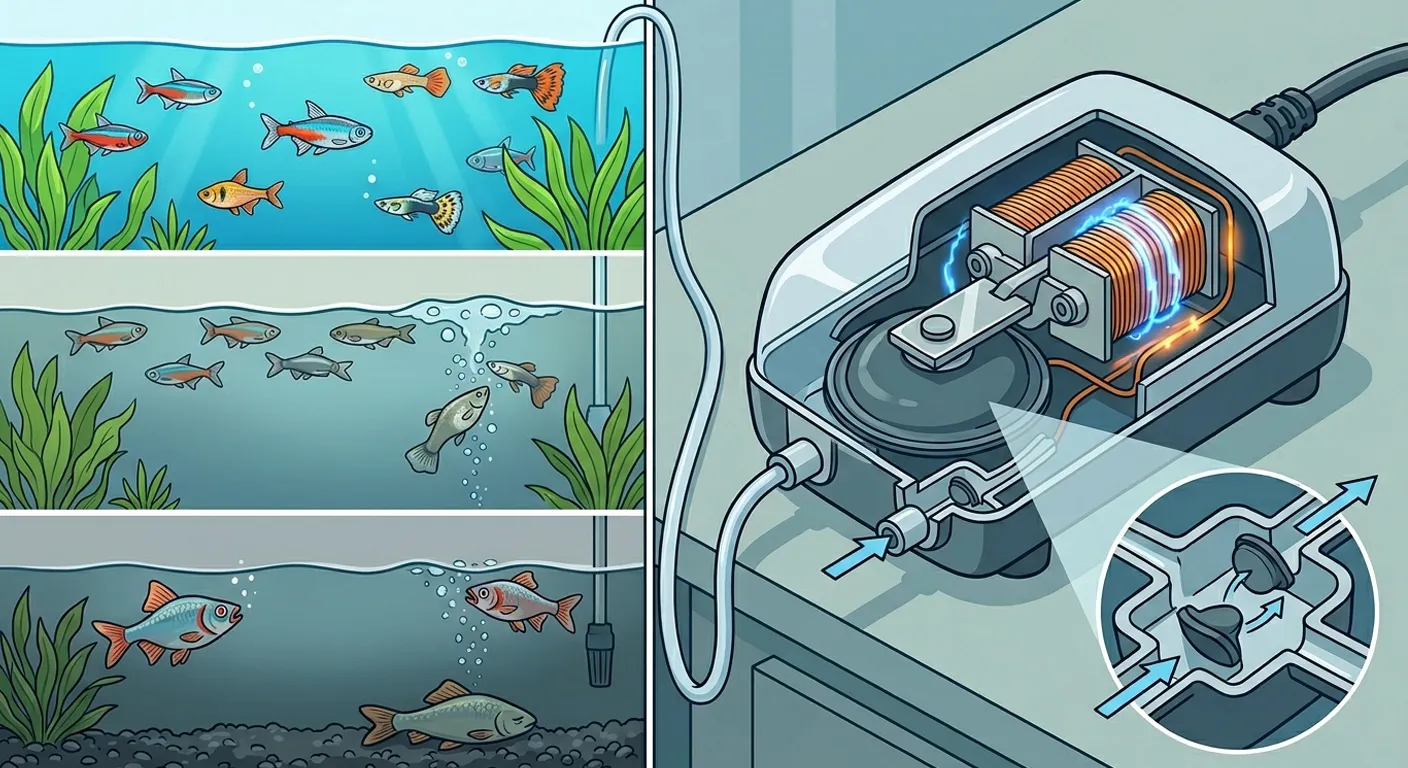
Understanding how an air pump works makes every repair step feel logical rather than like a guessing game. A standard aquarium air pump moves air through five components in this order:
Power cord and fuse
Electromagnetic coil
Vibrating armature plate
Rubber diaphragm
Internal check valves
The electromagnetic coil pulses at 60 Hz, which is the standard for US power. This pulls the armature back and forth, which flexes the rubber diaphragm. The flexing motion creates suction and pressure, pushing air down through your airline tubing and into the tank.
The Part Everyone Misses: Internal Check Valves
Most hobbyists know about the diaphragm, but the internal check valves are far less talked about, even though they are responsible for a surprising number of pump problems.
These are tiny rubber flap valves located at the inlet and outlet ports inside the pump chamber. Their job is simple: they make sure air flows in one direction only. When air is pushed out, the outlet valve opens. When the diaphragm pulls back to create suction, the inlet valve opens to draw in fresh air. If either valve becomes sticky, stiff, or warped, it can partially block airflow or disrupt the rhythm of the pump entirely. In many cases, people replace the diaphragm when the check valves were the actual source of the problem all along.
The 7 Symptoms and How to Fix Each One
Most pump failures show up as one of seven recognizable symptoms. Here is a quick reference before we go through each fix in detail:
| Fix | What You Observe | Most Likely Cause |
| Fix 1 | Pump completely silent | Power issue or coil failure |
| Fix 2 | Pump hums, but no air comes out | Failed diaphragm |
| Fix 3 | Air output is noticeably weak | Clogged air stone or check valves |
| Fix 4 | Air output cuts in and out | Loose connections or overheating |
| Fix 5 | The pump works, but fish still gasp | Water depth or temperature issue |
| Fix 6 | Pump rattles or buzzes loudly | Vibration or loose internal parts |
| Fix 7 | Water is visible inside the airline tubing | Backflow from the tank |
Fix 1: Pump Completely Silent
A pump that produces no sound at all is the most urgent symptom because it means zero airflow. Start with the basics before assuming the worst.
Power checks first:
Test the outlet using another device to confirm it has power
Check your circuit breaker if the outlet appears dead
Inspect the power cord for any visible damage, fraying, or bent sections
If the power is fine and the pump is still silent:
Place your hand on the pump casing. A working pump will produce a faint, steady vibration that you can feel clearly. If there is no vibration whatsoever, the internal electromagnetic coil has likely burned out. This is not a repair that can be done at home. The coil is sealed inside the unit, and replacement parts are not available for most consumer-grade pumps. In this situation, replacing the pump entirely is the most practical solution.
Fix 2: Pump Hums But No Air Comes Out
This is the most common internal repair you will encounter. The pump sounds like it is working, but nothing comes out of the airline.
Confirming the diaphragm is the problem:
Disconnect the airline tubing from the pump outlet and hold your finger near the opening. You should feel a light, rhythmic pulsing of air. If there is nothing at all, or if the airflow feels extremely faint, the diaphragm has failed. Weak airflow that does not improve even when the tubing is disconnected also points to a damaged diaphragm that still needs to be replaced.
How to replace it:
1. Unplug the pump completely before opening it
2. Remove the casing screws and open the pump body
3. Locate the rubber diaphragm inside the pump chamber
4. Inspect it for cracks, tears, or any warping around the edges
5. Replace it with a compatible diaphragm kit, which is widely available and inexpensive
One important safety note: Some online repair guides suggest using general-purpose adhesives like expanding glue for temporary diaphragm patching. This is genuinely dangerous in an aquarium setting. Expanding adhesives release compounds during the curing process that are toxic to fish. For any patch work on a pump returning to a live tank, use only silicone-based aquarium-safe sealant such as GE Silicone I or DAP Aquarium Sealant, both of which are available at major hardware stores.
Fix 3: Pump Runs But Air Is Weak
Reduced airflow without a complete stop is one of the most misdiagnosed symptoms. People often assume the pump is failing when the problem is actually somewhere along the air path.
Start with the air stone:
Remove it from the tank and try blowing through it by mouth. If it requires significant effort to push air through, it is clogged with mineral deposits or algae. Soak it in white vinegar for a couple of hours, rinse it thoroughly with clean water, and test again. If air now passes through easily, you have found the problem.
Check the tubing and connections:
Look for any visible kinks in the airline tubing, small cracks along its length, or fittings that have worked themselves loose. Even a tiny gap in the line will cause noticeable airflow loss, especially in smaller or older pumps.
If tubing and the air stone are both fine:
Open the pump and examine the two small rubber flap valves at the inlet and outlet ports. These should move freely and return to their resting position with a quick snap. If they feel sticky or show any sign of deformation, replace them. Replacement valve kits are sold separately from diaphragm kits at most aquarium supply retailers.
Fix 4: Air Output Cuts In and Out
An intermittent pump is frustrating because the problem is not always present when you go to investigate it.
Check every connection point in the airline system and make sure fittings are fully seated.
Replace any worn check valves between the pump and tank, as a partially sealed valve can flutter and disrupt flow.
If the pump works normally when first turned on but weakens after running for a while, it may be overheating. Make sure the pump is sitting in an open space with room for airflow around it. A pump tucked inside an enclosed cabinet will build up heat quickly. Consistent overheating that does not improve with better ventilation usually means the internal coil is reaching the end of its service life.
Fix 5: Pump Works Fine, but Fish Still Gasp
This situation points to a cause that has nothing to do with the pump mechanism itself.
Every air pump has a maximum working depth. If your air stone is placed too deep in the tank, the pump may not generate enough pressure to push air down effectively. Keep the air stone positioned within the depth range listed in your pump’s specifications.
Warmer water also holds less dissolved oxygen than cooler water. A setup that runs perfectly through the winter may struggle noticeably during summer months. If warm conditions are affecting your tank, increase surface movement, add a second air stone, or consider running a small fan across the water surface to bring the temperature down slightly.
Fix 6: Loud Buzzing or Rattling
Noise complaints are common with aquarium pumps, particularly in bedroom or apartment setups.
Place the pump on a soft, non-slip surface such as a folded towel or rubber mat.
Make sure the pump body is not touching the tank glass, the aquarium stand, or any wall surface, as contact with hard surfaces amplifies vibration
If the noise is coming from inside the unit, check whether any external screws on the casing have worked loose. Tighten them and test again. If the rattling continues, internal wear is likely the cause, and replacing the pump or ordering a full rebuild kit will resolve it.
Fix 7: Water Inside the Airline Tubing
Water should never appear inside the airline tubing running from your pump to the tank. When it does, it means water is flowing backward through the system.
This happens when the pump is positioned below the tank’s water level. When the pump shuts off, water from the tank siphons back through the tubing toward the pump. If it reaches the pump body, it can damage the internal components within minutes.
The solution is to install a one-way check valve in the airline tubing between the pump and the tank. These are inexpensive and install in seconds. Make sure the valve is oriented correctly, with the flow direction pointing toward the tank. If water has already entered the pump, unplug it immediately and allow it to dry fully before powering it on again.
Conclusion
A broken aquarium air pump is rarely a reason to panic. In most cases, the problem comes down to something straightforward: a clogged air stone, a worn diaphragm, sticky check valves, or a loose connection somewhere in the line. Working through the symptoms in a logical order helps you identify the actual cause without replacing parts unnecessarily.
By checking each component and applying the right fix, you can restore proper aeration, maintain healthy oxygen levels, and keep your fish stable without spending money on a new unit. Regular inspection of your pump, tubing, and fittings every few months will also help you catch small problems before they become urgent ones. A well-maintained pump runs quietly, lasts longer, and gives you one less thing to worry about.
Frequently Asked Questions
1. Do I even need an air pump if I already have a filter running?
It depends on the type of filter. Many hang-on-back and canister filters create enough surface movement to support adequate gas exchange in a moderately stocked tank.
2. My brand-new pump arrived, and it is not working. Is it defective, or did I do something wrong?
Start by confirming the outlet has power and that all tubing connections are fully seated. New pumps occasionally ship with a kink in the tubing or a fitting that was not properly attached during packaging.
3. Can I run two air stones from one pump?
Yes, but with some limitations. Splitting one pump between two air stones reduces the airflow going to each one.
Multifunctional Rechargeable Aquarium Lithium Battery Air Pump (1.7W)
Original price was: $20.99.$18.99Current price is: $18.99.
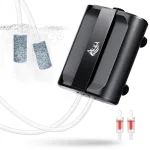
Multifunctional Aquarium Lithium Battery Air Pump (2.5W/5W) with...
Original price was: $25.99.$20.99Current price is: $20.99.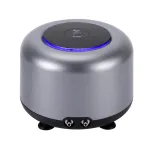






Add comment
You must be logged in to post a comment.